
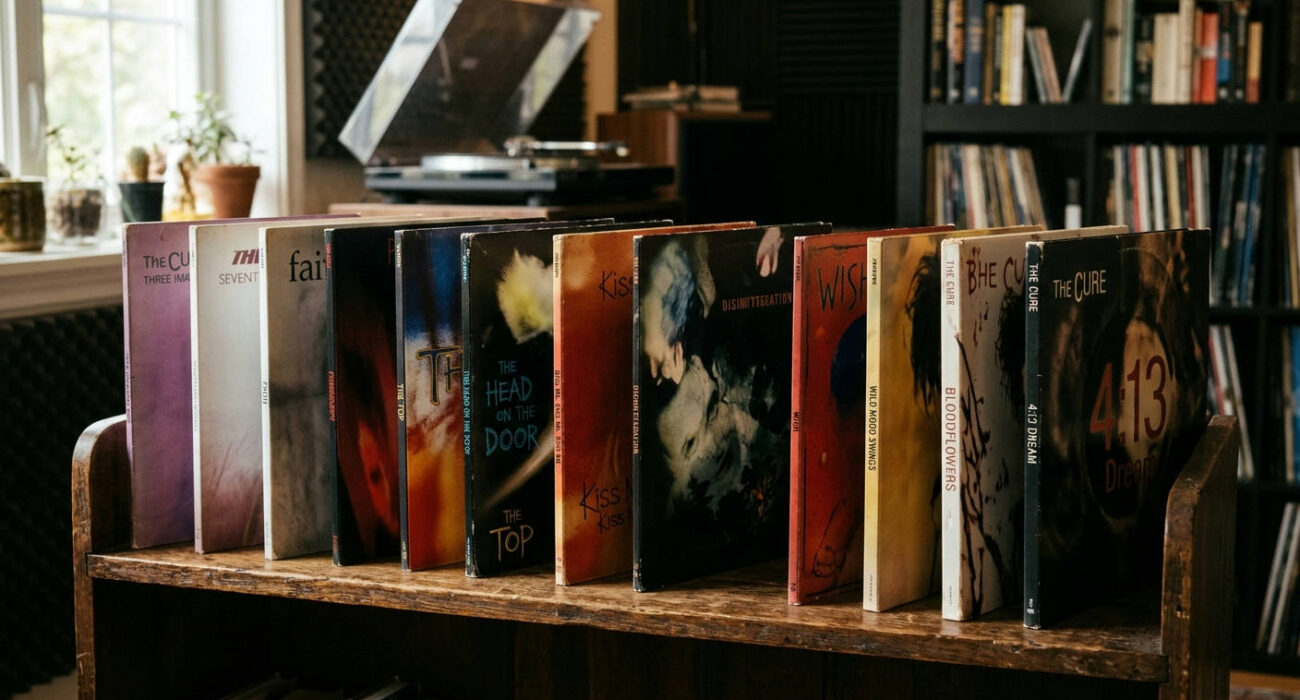
Few bands can claim a career as long, varied, and emotionally resonant as The Cure. For anyone looking to truly understand Robert Smith’s singular vision, a deep dive into The Cure studio albums discography is not just a suggestion, it’s a necessity. This isn’t just a list of records; it’s a five-decade journey through post-punk anxiety, gothic despair, psychedelic weirdness, and perfect pop joy. Here at Vinyl Gold UK, we live and breathe this stuff, so let’s get into the records that defined a generation and continue to inspire.
This is your definitive guide to every studio album, from their nervy beginnings to their modern-day epics. We’ll unpack the sound, the stories, and the legacy of one of music’s most important bands.
The Early Years: Post-Punk Angst and Gothic Seeds (1979-1982)
The Cure didn’t emerge fully formed in a cloud of hairspray and eyeliner. Their initial sound was sparse, angular, and deeply rooted in the post-punk movement that swept the UK in the late 70s. This era is where the foundation was laid, brick by miserable brick.
Three Imaginary Boys (1979)
The debut is a jarring experience for those who only know the band for “Friday I’m in Love.” It’s a minimalist, twitchy, and almost aggressively sparse record. Robert Smith’s voice is yelpy and raw, a world away from the mournful croon he’d later perfect.
Tracks like “10:15 Saturday Night” and “Grinding Halt” are quintessential post-punk, built on wiry guitar lines and Lol Tolhurst’s metronomic drumming. The record company infamously took control of the final track selection and even the album art, a decision Smith has lamented for decades. Despite this, Three Imaginary Boys is a fascinating snapshot of a band finding its feet.
Seventeen Seconds (1980)
This is where the shift happened. Seventeen Seconds is the sound of The Cure turning inward, trading nervous energy for atmospheric dread. The arrival of bassist Simon Gallup was a critical moment, his melodic, driving basslines becoming a cornerstone of the band’s sound.
The album is painted in shades of grey. The production is stark, with instruments given space to echo and decay. “A Forest” is the obvious centrepiece, a hypnotic and terrifying masterpiece that remains a live staple. It’s the first true glimpse into the dark, immersive world The Cure was about to build.
Faith (1981)
If Seventeen Seconds opened the door to darkness, Faith walked right through it and locked it from the inside. This is an album of suffocating gloom, a meditation on loss, religion, and the erosion of belief. The tempo slows to a crawl on many tracks, like the funereal title track and “The Holy Hour.”
Robert Smith’s lyrics became more abstract and poetic, his vocals more desperate. The music is relentlessly grey and melancholic, a challenging listen but an incredibly powerful one. Faith is a core text for the burgeoning goth scene, an album that wasn’t just sad but truly desolate.
Pornography (1982)
“It doesn’t matter if we all die.” That opening line says everything you need to know about Pornography. This is the nihilistic endpoint of their early sound, an album so bleak and aggressive it nearly destroyed the band. The sessions were fuelled by conflict and excess, and you can hear it in every distorted, pounding note.
This is arguably the most intense record in The Cure studio albums discography. Tracks like “One Hundred Years” and “The Hanging Garden” are aural assaults, driven by thunderous drums and layers of psychedelic, flanged guitar. It’s a claustrophobic, ugly, and utterly brilliant piece of work that stands as one of the darkest albums ever committed to tape.
Charting New Territory: Pop Detours and Global Fame (1983-1989)
After the soul-crushing experience of Pornography, something had to give. Robert Smith dismantled the band, took a sharp left turn, and began experimenting with pop music. This pivot would, ironically, set them on the path to becoming one of the biggest bands in the world.
The “Pop” Interlude: Singles and Japanese Whispers (1983)
Following the band’s temporary collapse, Smith released a series of standalone singles that were a complete shock to the system. The jazzy, nonsensical “Let’s Go to Bed” and the synth-driven “The Walk” were pure, unadulterated pop. These tracks, along with the fantastical “The Lovecats,” were later collected on the compilation Japanese Whispers.
While not a true studio album, this period is crucial. It proved Smith could write a killer pop hook and showed that The Cure was not a one-trick pony. It cleansed the palate after the suffocating darkness of the previous years.
The Top (1984)
Often considered Robert Smith’s “solo” album in all but name, The Top is a weird, psychedelic, and inconsistent record. Smith played most of the instruments himself, resulting in a chaotic and drug-fuelled sound that pulls from Middle Eastern scales and nursery rhyme melodies.
“The Caterpillar” is the album’s quirky hit single, but tracks like “Shake Dog Shake” and “Give Me It” retain some of the ferocity of Pornography. It’s a transitional album, the sound of one man trying to figure out what The Cure should be next.
The Head on the Door (1985)
This is it. This is the album where everything finally clicked. With a new, stable line up, The Cure perfected the formula they’d been chasing: a seamless blend of their gothic moodiness and newfound pop sensibilities.
The Head on the Door is a masterclass in song writing. It gave them two massive international hits with the driving “In Between Days” and the flamenco-tinged “Close to Me.” Yet, it also contains dark, atmospheric tracks like “Kyoto Song” and “A Night Like This.” For the first time, all sides of The Cure coexisted perfectly on one record.
Kiss Me, Kiss Me, Kiss Me (1987)
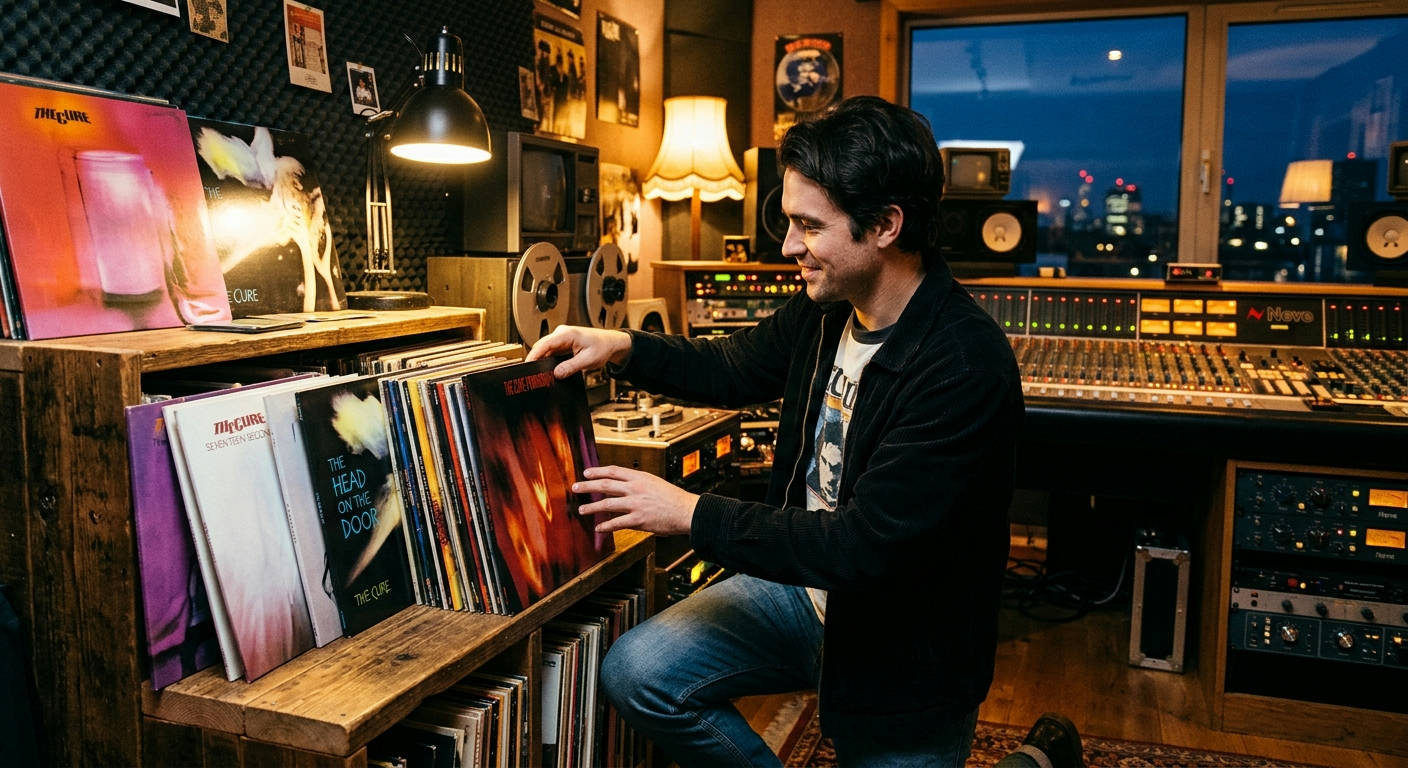
If The Head on the Door was the blueprint, Kiss Me, Kiss Me, Kiss Me was the sprawling, ambitious double album that took it to the extreme. It’s a kaleidoscopic whirlwind of styles, veering from blistering rock (“The Kiss”) to slinky funk (“Hot Hot Hot!!!”) to heart-wrenching ballads (“If Only Tonight We Could Sleep”).
The album’s biggest hit, “Just Like Heaven,” might just be the perfect pop song, a moment of pure, dizzying romance. But the album’s depth is its true strength, a testament to a band at the absolute peak of its creative powers. It’s an essential, expansive part of their catalogue.
Disintegration (1989)
Robert Smith, approaching his 30th birthday, felt a deep-seated dread that the band’s pop success had diluted their artistic integrity. His response was to create a monumental, brooding masterpiece that returned to the gloom of Faith and Pornography, but with the grand, symphonic scope they had since mastered.
“I wanted to make a record that was just one sound, one feeling, from beginning to end. It was about me turning 30 and thinking, ‘I don’t really have anything to believe in.'”
From the chiming, epic-length “Plainsong” to the desperate ache of “Pictures of You,” Disintegration is a flawless artistic statement. It became their most commercially successful album, proving that profound sadness could sell millions. Its influence on the five alt rock albums from the 1990s that followed cannot be overstated. It’s not just The Cure’s best album; it’s one of the greatest albums of all time.
Ready to own this masterpiece on wax? You can find a vinyl copy of Disintegration here: https://www.amazon.com/s?k=The+Cure+Disintegration+Vinyl&tag=vinylgolduk-21
Navigating the 90s: A Deep Dive into The Cure Studio Albums Discography
How do you follow up a career-defining masterpiece like Disintegration? For The Cure, the 1990s were a period of grappling with massive fame, line up changes, and the pressure to deliver. This decade saw them reach their commercial zenith before entering a period of creative uncertainty.
Wish (1992)
Riding the wave of Disintegration‘s success, The Cure became one of the biggest stadium bands on the planet. Wish reflects this, with a bigger, more guitar-heavy sound. It spawned their most universally recognized song, the ridiculously upbeat “Friday I’m in Love.”
But to dismiss Wish as just a pop album is a huge mistake. For every joyful moment like “High,” there’s a sprawling, shoegaze-influenced epic like “From the Edge of the Deep Green Sea” or the devastatingly sad “Apart.” It’s a brilliant, emotionally complex record that captures the dizzying highs and crushing lows of a band at the height of its fame.
Wild Mood Swings (1996)
After a four-year gap and the departure of two key members, The Cure returned with their most divisive album. Wild Mood Swings is exactly what the title suggests: a messy, unfocused, and stylistically jarring collection of songs. It careens from mariachi-inflected pop (“The 13th”) to mopey ballads and bizarre experiments.
For many fans at the time, it was a profound disappointment. However, time has been kinder to the album. Buried within the stylistic whiplash are some genuine gems like “Want,” “Jupiter Crash,” and “Treasure.” It’s an album that demands patience, but it’s not the disaster its reputation suggests.
The Modern Era: Maturity and Millennium Blues (2000-2026)
Entering the new millennium, The Cure seemed less concerned with chasing hits and more focused on cementing their legacy. Their 21st-century output is sparse but often sees them returning to the sounds and themes that first defined them.
Bloodflowers (2000)
Billed by Smith as the final part of a “trilogy” with Pornography and Disintegration, Bloodflowers is a deliberate return to the long, introspective, and melancholic epics of their past. The songs are lengthy and meditative, dealing with themes of ageing, regret, and the passage of time.
Tracks like “Out of This World” and “The Last Day of Summer” are beautiful, world-weary statements from a songwriter looking back on his life and career. It’s a deeply rewarding album for long-time fans and serves as a powerful, cohesive statement. Many consider it their best work since Disintegration.
The Cure (2004)
Working with producer Ross Robinson, known for his work with nu-metal bands like Korn and Limp Bizkit, was a surprising move. The result was a raw, heavy, and often abrasive self-titled album. The intention was to capture the energy of their live performances.
The album is loud and direct. “Lost” is a harrowing, screaming opener, while “The End of the World” is a classic slice of Cure-pop, albeit with a much heavier guitar sound. It’s an uneven record, but its aggressive energy is undeniable and stands as a unique entry in The Cure studio albums discography.
4:13 Dream (2008)
Initially conceived as a double album, 4:13 Dream was pared down to a single disc of mostly upbeat, energetic tracks. The darker, slower material was shelved, a decision that arguably robbed the album of some much-needed balance.
The result is an album that feels relentlessly optimistic and a bit one-note. Songs like “The Only One” and “Freakshow” are fun but lack the emotional depth of their best work. It’s a solid, enjoyable record, but it feels like a minor work in a discography filled with major statements.
The Long Wait: What We Know About Songs of a Lost World (2026 and beyond)
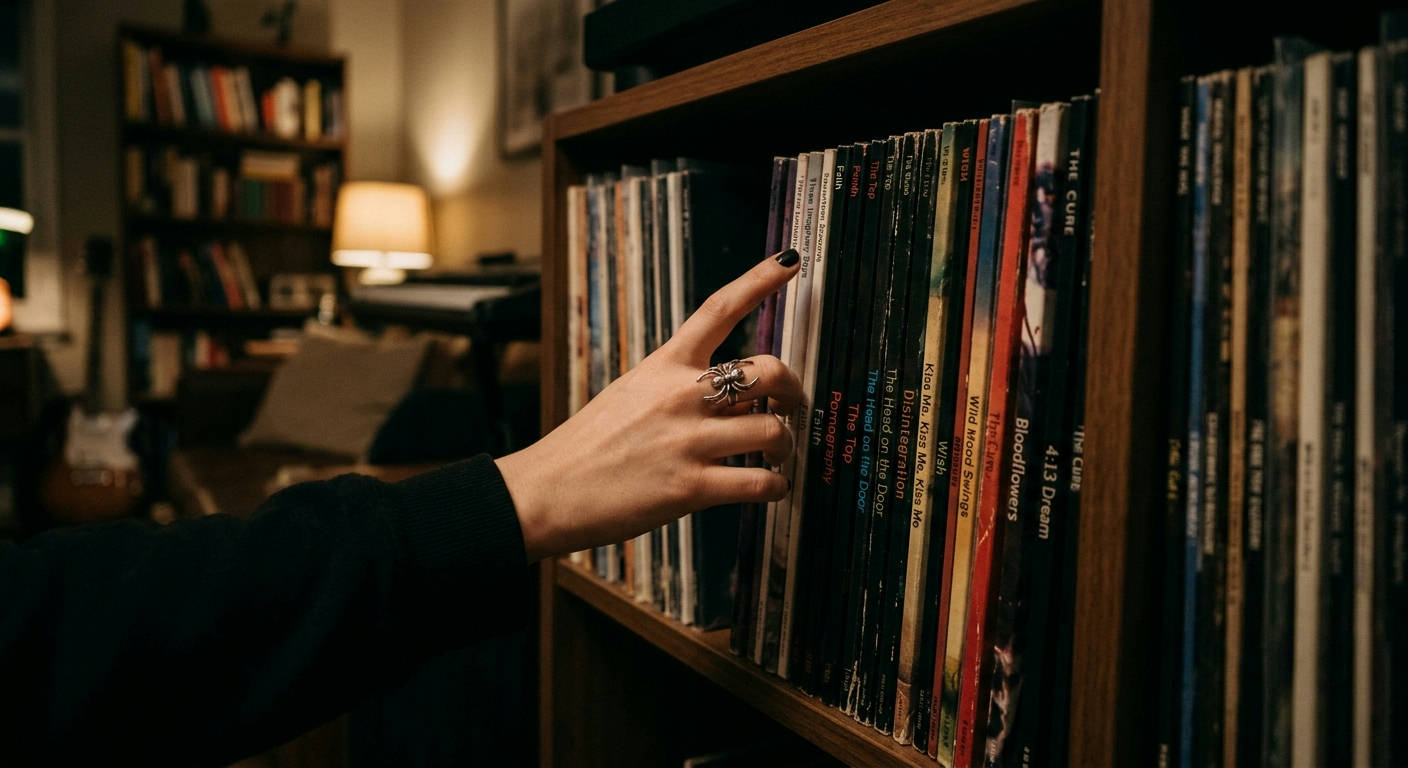
For over 15 years, fans have been eagerly awaiting the follow-up to 4:13 Dream. The new album, tentatively titled Songs of a Lost World, has become something of a myth. The band has been performing new, incredibly dark material from it live since 2022.
As of early 2026, Robert Smith continues to promise its imminent release, describing it as relentlessly gloomy and intense, much in the vein of their darkest work. According to a recent interview with The Guardian, the album is finished but Smith is wrestling with the final details. Whenever it finally arrives, it promises to be a major event for music fans.
Collecting The Cure on Vinyl: A Buyer’s Guide
Exploring The Cure studio albums discography on vinyl is one of the most rewarding experiences for any music collector. The large-format artwork and the warmth of the analogue sound bring a new dimension to these classic albums. Here’s how to get started.
First Pressings vs. Reissues: What’s the Difference?
A “first pressing” is part of the very first batch of records produced when the album was originally released. These are often sought after by collectors for their historical value and, in some cases, superior sound quality. Reissues are newer pressings, often released years or decades later.
For The Cure, original UK pressings on the Fiction Records label are the holy grail for many. However, the 2010s and 2020s have seen a fantastic series of reissues, often remastered by Robert Smith himself. These are more affordable and widely available, and they sound incredible on a good setup. If you’re looking for a quality setup, check out our guide to the best turntables under £300 in the UK.
### Where to Start Your Collection: The Essential LPs for The Cure Studio Albums Discography
If you’re just starting, it’s easy to get overwhelmed. Here’s a quick rundown of the must-have LPs to kick off your collection:
- Disintegration: The absolute, non-negotiable starting point. It’s a sonic masterpiece that was made for vinyl. The sprawling soundscapes and deep bass sound immense.
- The Head on the Door: A perfect record from start to finish. It’s a great representation of their pop and goth sides coming together.
- Pornography: If you want to experience the band at their most intense, this is the one. The raw, abrasive production sounds terrifyingly good on vinyl.
- Seventeen Seconds: For fans of their early, minimalist sound. The space and atmosphere on this record are a joy on a quality turntable.
You can start your search for these essential LPs right now. Here’s an Amazon search link for The Head on the Door on vinyl: https://www.amazon.com/s?k=The+Cure+The+Head+on+the+Door+Vinyl&tag=vinylgolduk-21
Identifying Key Pressings and Avoiding Fakes
When buying older records, do your homework. Use resources like Discogs to check the matrix numbers etched into the run-out groove of the record. This unique code can help you identify the exact year and country of pressing, ensuring you’re getting what you paid for.
Be wary of prices that seem too good to be true, as bootlegs or counterfeits do exist, especially for highly sought-after albums like Disintegration. Stick to reputable sellers and ask for photos if you’re buying online.
Beyond the Studio: Compilations, Live Albums, and B-Sides
While our focus is The Cure studio albums discography, a full appreciation of the band requires a look at their other releases. The Cure has always had an incredible wealth of non-album material that is essential listening.
Why Japanese Whispers Isn’t a True Studio Album
As mentioned earlier, Japanese Whispers collects the standalone singles from 1982-83 and their B-sides. While it flows like an album, it was never conceived as one cohesive project. It’s more of a snapshot of a band in transition, a bridge between the despair of Pornography and the psychedelic weirdness of The Top.
The Importance of Staring at the Sea and Galore
The Cure are fantastic singles artists. Staring at the Sea (1986) collects all their A-sides up to that point and is a flawless run of hits. Its companion B-sides compilation, Standing on a Beach, is arguably even better, filled with hidden gems. The 1997 follow-up, Galore, covers the singles from 1987 to 1997. For a casual fan, these compilations are an excellent entry point.
Live Albums: Capturing the Onstage Magic
The Cure are legendary for their marathon live shows, often playing for three hours or more. Albums like Paris (1993) and the more rock-oriented Show (1993) do an excellent job of capturing this energy. The 2011 release Bestival Live 2011 is another fantastic document of their power as a live act in the modern era.
“A lot of what we do on stage is about the sound, the atmosphere. We’re not a ‘showbiz’ band. It’s about getting lost in the music for three hours.”
The Enduring Legacy of The Cure’s Music
Decades after their debut, the influence of The Cure is everywhere. They are more than just a band; they are a subculture, an aesthetic, and a source of comfort for anyone who has ever felt like an outsider.
From Goth to Indie: Tracing the Influence
Their impact is immeasurable. They are considered the architects of gothic rock, but their melodic basslines and shimmering guitars also laid the groundwork for countless indie and alternative rock bands. From Nine Inch Nails to The Smashing Pumpkins to modern acts like Interpol and The xx, you can hear The Cure’s DNA. They made it acceptable for rock music to be vulnerable, romantic, and profoundly sad.
Robert Smith: The Reluctant Icon
At the centre of it all is Robert Smith. With his smudged lipstick, bird’s nest hair, and unflinching lyrical honesty, he became an icon for generations of misfits. He has always been a songwriter of incredible range, capable of writing the silliest pop songs and the most soul-crushing dirges, often on the same album.
The Cure’s journey is one of constant evolution, of near breakups and triumphant returns. Their discography isn’t just a collection of albums; it’s a map of the human heart, charting all of its ecstatic peaks and devastating lows. It’s a body of work that remains as vital and necessary in 2026 as it ever was.