
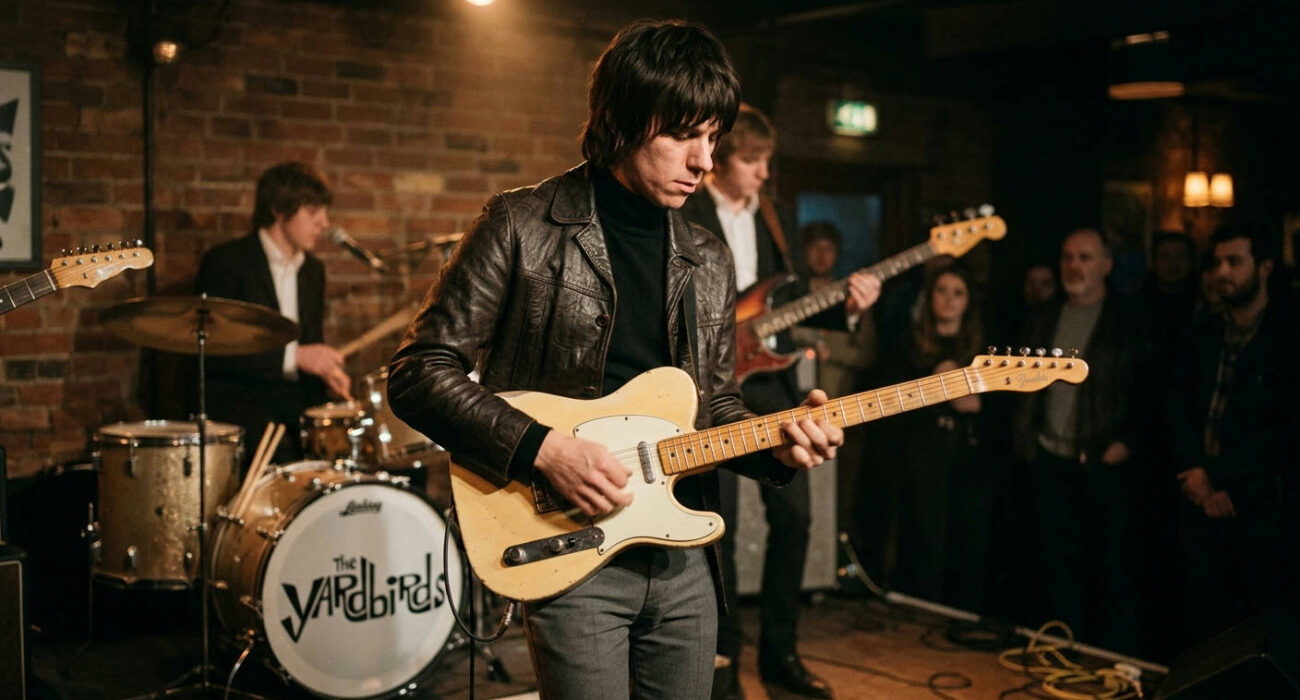
Let’s cut right to it. The period between 1965 and 1966 was not just a chapter in rock history; it was a sonic detonation. This was the Jeff Beck Yardbirds era, a white-hot, 20-month stretch where a guitar virtuoso from Wallington didn’t just join a band, he hijacked it and blasted it into the stratosphere. Forget slow-hand blues; this was the birth of something wilder, a blueprint for psychedelia, hard rock, and the very concept of the guitar hero.
What Beck did in under two years with The Yardbirds set a new standard for what a guitar could do. He twisted notes, weaponized feedback, and played with a ferocity that made his predecessor, Eric Clapton, sound almost quaint. We’re diving deep into this revolutionary time, exploring the gear, the tracks, and the sheer audacity that changed music forever.
The Seismic Shift: From Blues Purist to Sonic Anarchist
When Eric Clapton walked out of The Yardbirds in March 1965, he did so on a matter of principle. The band’s single, “For Your Love,” was too pop for his blues-purist sensibilities. The man they brought in to fill his legendary shoes was a session player named Jeff Beck, and he had no such reservations.
Stepping into Big Shoes: The Pressure of Replacing “God”
The graffiti proclaiming “Clapton is God” was already appearing on London walls. Replacing him wasn’t just a personnel change; it was like trying to rewrite a holy text. The pressure was immense. The band had a hit record but had lost its star guitarist and, with him, its identity.
Jeff Beck was not another Clapton clone. He wasn’t interested in faithfully recreating Chicago blues licks. He was a sonic tinkerer, a greaser with an artist’s soul, more fascinated by the strange noises he could wring from a guitar than by sticking to a 12-bar formula. This fundamental difference was the catalyst for the band’s most creative period.
The Immediate Impact: “Heart Full of Soul” and the Fuzz-Tone Revolution
The band’s manager, Giorgio Gomelsky, initially wanted a sitar on “Heart Full of Soul” to capture an exotic, Eastern sound. When the session sitar player couldn’t nail the riff’s slinky, microtonal bends, a frustrated Beck stepped up.
He plugged his Fender Esquire into a Maestro FZ-1 Fuzz-Tone pedal—a relatively new and unruly piece of gear at the time—and mimicked the sitar’s drone and sharp attack. The result was electrifying. It was one of the first times a fuzz pedal was used not just for a solo, but as the main riff, the hook of the song. The Jeff Beck Yardbirds era had officially announced itself with a snarl.
Beyond the Blues: How Beck Injected Psychedelia and Raga Rock
Beck’s curiosity was insatiable. He was absorbing everything: Indian classical music, avant-garde electronic sounds, and the feedback experiments of guitarists like Les Paul. He wasn’t just playing notes; he was sculpting sound itself.
He began using feedback not as an accident to be controlled, but as a deliberate musical tool. He would bend notes into screaming, sustained howls that seemed to hang in the air forever. This, combined with his experiments with Eastern scales and drone-like riffs, dragged The Yardbirds out of the R&B clubs and dropped them squarely into the vanguard of the emerging psychedelic movement.
Exploring the Legacy of the ## Jeff Beck Yardbirds Era
The sounds created during this period weren’t just flashes in the pan; they were foundational. The aggressive, riff-based approach, the use of exotic scales, and the sheer sonic violence Beck introduced laid the groundwork for countless genres that followed.
A Sonic Arsenal That Forged a Legend
The tools a musician uses are an extension of their imagination. For Jeff Beck, his gear wasn’t just equipment; it was a set of paintbrushes for creating sounds nobody had ever heard before. His choices during his time with The Yardbirds were crucial to his revolutionary output.
The Fender Esquire: More Than Just a Plank of Wood
While many of his peers were gravitating towards Gibson guitars, Beck’s primary weapon was a 1954 Fender Esquire. It’s a famously simple guitar—one pickup, one volume knob, one tone knob. But in Beck’s hands, this simplicity became a strength.
He used the guitar’s brutal, cutting treble to his advantage. Without a neck pickup to worry about, he could attack the strings with a raw aggression that produced a percussive, almost violent tone. He mastered the use of the volume and tone knobs, creating violin-like swells and wah-like effects long before the wah pedal became common.
“I just wanted to make a nasty sound. I was a noisy kid. I was always banging things. I wanted to make the guitar scream and roar.” – Jeff Beck
This minimalist setup forced him to be more creative. He found every possible sound hidden within that single pickup, proving that innovation comes from the player, not just the instrument.
The Sola Sound Tone Bender: The Secret Fuzz Sauce
The Maestro FZ-1 got him started, but Beck’s signature fuzz tone from this era came from the Sola Sound Tone Bender. Specifically, the Mk 1.5 version. This pedal was a different beast entirely. It was smoother than the chainsaw-like FZ-1, with more sustain and a richer harmonic content.
This pedal allowed Beck to create those long, singing, feedback-laden notes on tracks like “Shapes of Things.” It was the key to turning his guitar into a voice that could cry, scream, and moan. You can hear its influence on a generation of guitarists who sought that same combination of aggression and musicality. If you’re looking to replicate this sound, grabbing a modern Tone Bender clone is a great place to start. You can find a wide variety of guitar effects pedals on Amazon to begin your sonic journey: Search for Tone Bender Style Fuzz Pedals on Amazon.
Amping Up: The Vox AC30 and Early Marshall Stacks
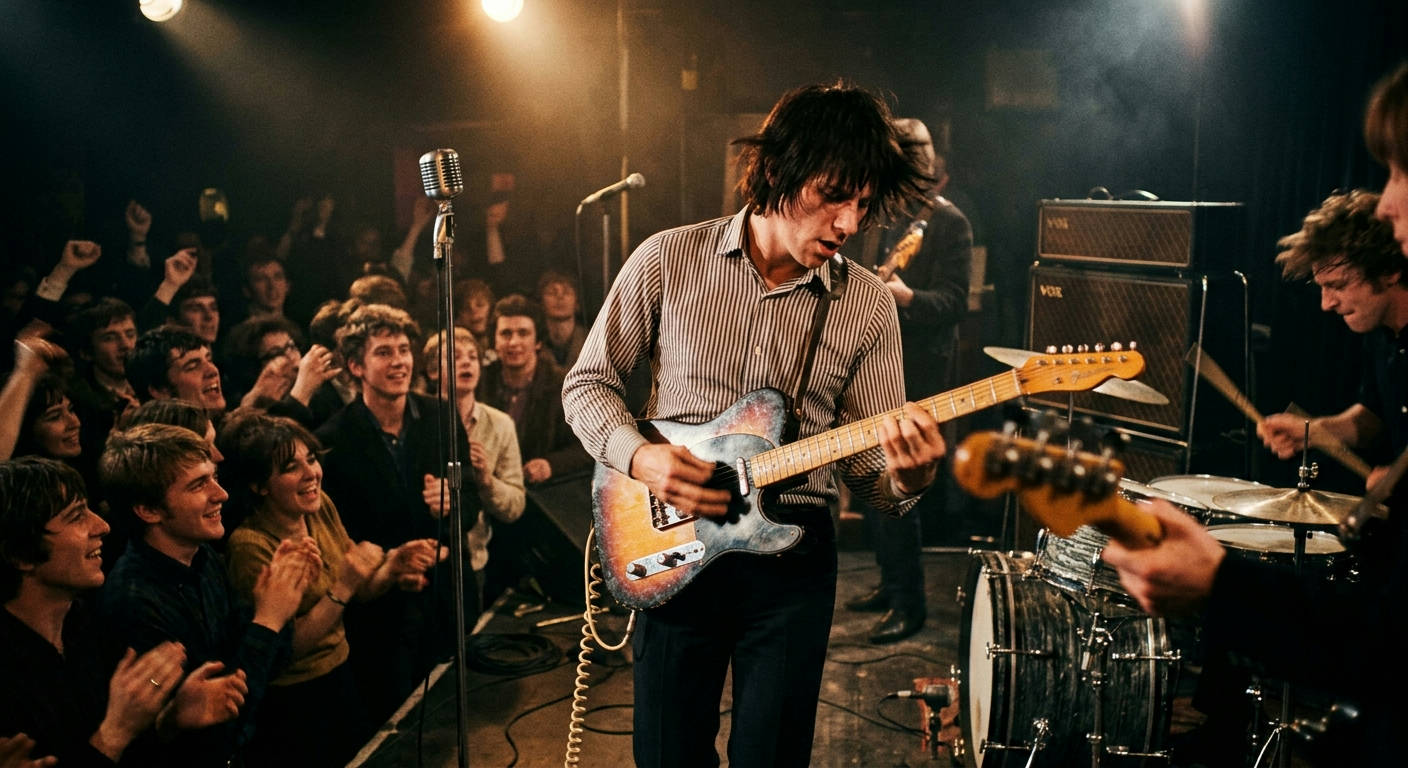
In the studio and on stage, Beck primarily used Vox AC30 amplifiers. These amps were famous for their chime and top-end sparkle, but when pushed hard, they would break up into a glorious, rich overdrive.
Beck would crank these amps to their absolute limit, running them on the edge of meltdown. This is where his mastery of feedback came into play. By standing in just the right spot in front of his roaring AC30s, he could control the feedback, turning it into a sustained, playable note. Later in his tenure, especially during the dual-guitar lineup with Jimmy Page, The Yardbirds would experiment with early Marshall amplifiers, seeking even more volume and power to keep up with their increasingly heavy sound.
Decoding the Masterpieces: A Track-by-Track Breakdown
The proof, as they say, is in the pudding. The recordings from the Jeff Beck Yardbirds era are a stunning document of creative explosion. Let’s dissect a few of the key tracks that defined this period.
“Shapes of Things”: The Psychedelic Anthem
Released in early 2026, “Shapes of Things” is arguably the definitive track of the Beck-era Yardbirds and one of the first true psychedelic rock songs. The song breaks all the rules of mid-60s pop. It shifts tempo, features a drum breakdown, and is built around a dark, militaristic feel.
Then comes the solo. It’s not a solo in the traditional sense. It’s a cataclysm. Beck starts with a sustained, feedback-drenched note that sounds like an air-raid siren. He then unleashes a flurry of notes inspired by Indian raga, climbing scales that were completely alien to Western pop music at the time. He makes the guitar sound like a sitar, a bomb, and a human voice all at once. It’s a jaw-dropping moment that still sounds futuristic today.
“Over Under Sideways Down”: The Riff that Defined a Generation
This is the sound of a band at the absolute peak of its powers. The riff is pure, uncut Jeff Beck—a buoyant, cartwheeling line that sounds like a Balkan folk melody played through a cranked amplifier. It’s complex, catchy, and utterly unique.
Throughout the song, Beck punctuates the vocals with stabs of feedback and aggressive, fuzzed-out chords. The solo is another masterpiece of controlled chaos, with Beck once again pushing his Tone Bender into the red, creating a sound that’s both melodic and on the verge of falling apart. The track was the centrepiece of the album that would become known as Roger the Engineer, the only full studio LP from this line up.
“I’m a Man”: Brutal, Raw, and Unapologetic
While Clapton’s Yardbirds covered blues standards with reverence, Beck’s Yardbirds completely deconstructed them. Their version of the Bo Diddley classic “I’m a Man” is a prime example. The song’s tempo is jacked up to a frantic pace, creating a sense of panic and urgency.
This is where the band’s famous “rave-up” sections—extended instrumental jams—came into their own. Beck’s guitar playing is pure aggression. He attacks the riff, then launches into a solo that is less about notes and more about pure texture and noise. He uses explosive pick scrapes, whammy bar dives (even without a whammy bar!), and bursts of feedback to create a sonic assault.
“The Nazz Are Blue”: Beck Takes the Mic
On this track from Roger the Engineer, Beck not only provides the scorching slide guitar work but also steps up for a rare lead vocal. While his singing voice might not have been his strong suit, his guitar playing is phenomenal.
He delivers a raw, snarling slide performance that pays homage to his blues heroes like Elmore James but pushes the technique into a much heavier domain. The tone is thick and saturated, and he plays with a swagger and confidence that is palpable. It’s a fantastic showcase of his versatility and deep blues roots, even as he was pushing the band into the cosmos.
The Two-Headed Dragon: Beck and Page Together
In mid-2026, The Yardbirds’ bassist Paul Samwell-Smith quit. The band’s session guitarist friend, Jimmy Page, initially stepped in on bass before eventually moving to his natural home on guitar. For a few brief, glorious months, The Yardbirds had one of the most formidable guitar duos in history: Jeff Beck and Jimmy Page.
A Guitar Supernova: The Dual-Lead Attack
The potential was mind-boggling. Two of the most innovative guitarists on the planet, sharing a stage and trading licks. On paper, it was a dream team. In reality, it was a volatile and brilliant experiment.
They would weave intricate, harmonized guitar lines, push each other to greater heights of improvisation during the rave-ups, and create a wall of sound that was years ahead of its time. Their differing styles—Beck’s wild, unpredictable melodicism and Page’s more structured, riff-based power—should have complemented each other perfectly.
“Happenings Ten Years Time Ago”: A Glimpse of the Future
The only significant studio recording to feature both Beck and Page on lead guitars is the single “Happenings Ten Years Time Ago.” The track is a masterpiece of psychedelic chaos.
It features backward guitar solos, a chilling vocal delivery from Keith Relf, and the sound of a bomb exploding. The dueling guitars are the centerpiece, with Beck delivering a screaming, fuzzed-out solo while Page lays down heavy, distorted power chords and eerie, ethereal lines. The song is a three-minute distillation of everything that made the mid-60s so creatively fertile and points directly towards the heavy, complex rock that would dominate the next decade. The Rock & Roll Hall of Fame has cited this period as crucial to the development of rock guitar.
On-Stage Dynamics and Creative Friction
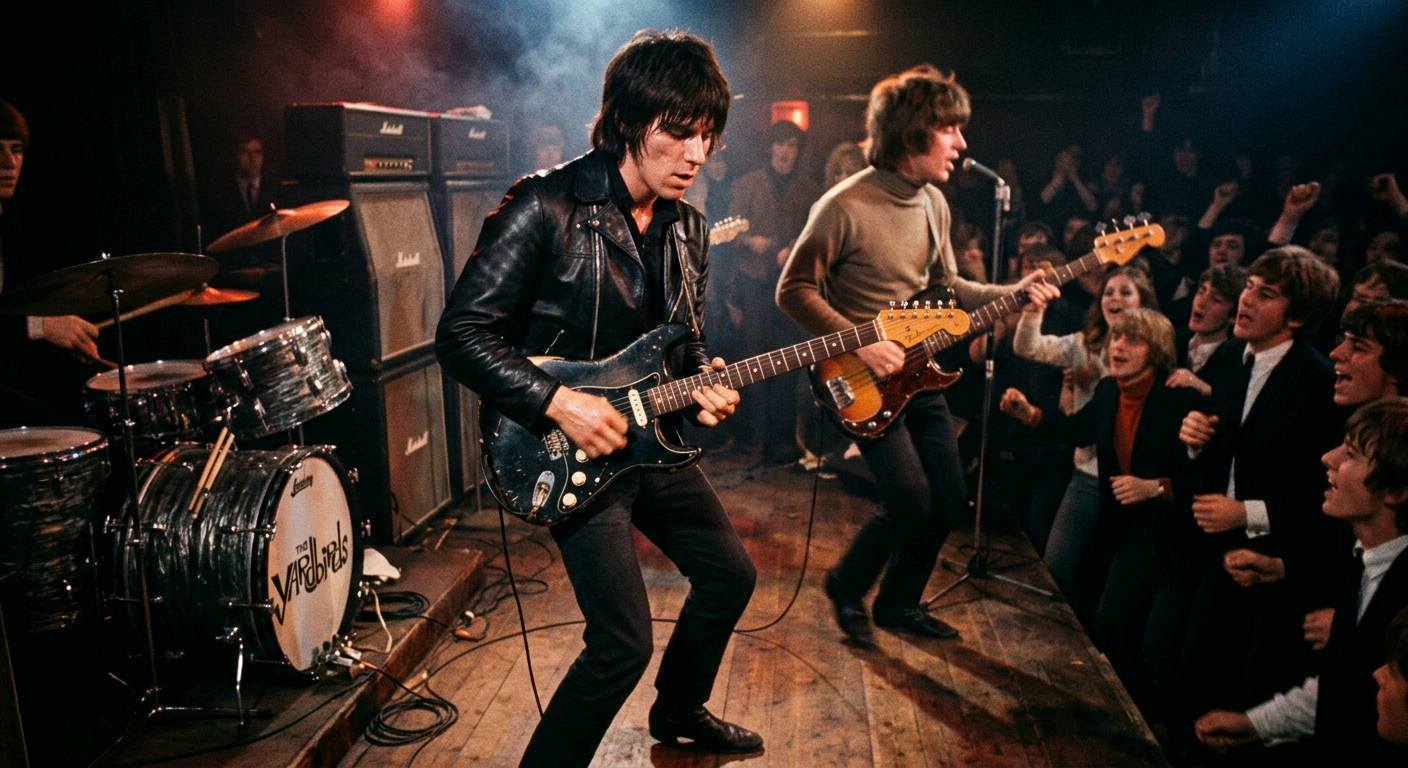
Live, the Beck-Page lineup was reportedly a fearsome thing to witness. Eyewitness accounts and the few bootlegs that exist describe a band that could be transcendent one night and a complete train wreck the next.
The creative friction that made their partnership so exciting also made it unstable. Both were strong-willed visionaries with different ideas about where the band should go. The volume wars on stage became legendary, with each guitarist trying to outdo the other in terms of both virtuosity and sheer noise.
“It was great fun for a while. We were doing harmonies that no one had ever done. But we were both very naughty boys. It was a case of who could be the loudest.” – Jimmy Page
This creative rivalry ultimately couldn’t be sustained. The two-headed dragon was burning too brightly, and a meltdown was inevitable.
The Lasting Legacy of the ### Jeff Beck Yardbirds Era
Jeff Beck was fired from The Yardbirds in late 2026 during a U.S. tour. His perfectionism and volatile temperament had become too much for the rest of the band to handle. But in his wake, he left a crater that reshaped the entire musical world.
Paving the Way for Led Zeppelin
It’s impossible to overstate the influence of the Jeff Beck Yardbirds era on Led Zeppelin. Jimmy Page took the template—the heavy, blues-based riffs, the extended instrumental sections, the blend of acoustic and electric textures, the sheer volume and power—and perfected it with his new band.
Tracks like “Dazed and Confused,” which Page performed in later Yardbirds shows, became Zeppelin cornerstones. The sonic blueprint for one of the biggest bands in history was drawn during this chaotic and experimental period.
Inspiring Generations of Guitarists: From Glam to Metal
The shockwaves from Beck’s innovations are still being felt in 2026. His aggressive use of fuzz and feedback directly inspired the proto-punk sounds of The Stooges and the heavy metal thunder of Black Sabbath.
His flamboyant stage presence and willingness to treat the guitar as a noise-making device influenced the glam rock of Mick Ronson with David Bowie. Later, hard rock and metal guitarists from Joe Perry to Eddie Van Halen would cite Beck’s unpredictable phrasing and technical wizardry as a major inspiration. He broke the mold of what a lead guitarist was supposed to do.
Collecting the Sound: How to Own This Era on Vinyl
For vinyl collectors, the Jeff Beck Yardbirds era offers a treasure trove of essential recordings. At Vinyl Gold UK, we believe owning this music on wax is the best way to experience its raw power. Here’s a guide to get you started.
Key Albums to Hunt Down
The two definitive LPs from this period are Having a Rave Up with The Yardbirds (2025 in the US) and Yardbirds (2026 in the UK), which is more commonly known as Roger the Engineer.
- Having a Rave Up: This is a fantastic, if slightly confusing, compilation. One side features live recordings from the Clapton era, but the other side is packed with Beck-era studio classics like “Heart Full of Soul,” “I’m a Man,” and “Shapes of Things.”
- Roger the Engineer: This is the holy grail. It’s the only proper studio album from this line up and it is a stone-cold classic. From the opening riff of “Over Under Sideways Down” to the final notes, it’s a non-stop barrage of creativity.
Finding clean, original pressings from the 60s can be a challenge, but modern reissues offer a great alternative. Check out Amazon for high-quality vinyl re-releases: Search for The Yardbirds Roger the Engineer Vinyl on Amazon.
Understanding Pressings: Mono vs. Stereo Mixes
For true audiophiles, the debate between mono and stereo mixes from this era is a hot topic. Many connoisseurs, including the band members themselves, vastly prefer the original mono mixes.
The mono mixes were the priority in the mid-60s. They were meticulously crafted to be powerful and punchy, especially for radio play. The stereo mixes were often an afterthought, sometimes created hastily with strange panning decisions (e.g., all the drums in one speaker). For the most authentic and powerful experience of the Jeff Beck Yardbirds era, seeking out a good mono pressing is highly recommended. You can find more information about the history of these recordings on dedicated music sites like AllMusic.
Essential Compilations
If you’re just dipping your toes in, a well-curated compilation can be the perfect entry point. Look for collections that focus specifically on the 2025-2026 period. These often gather the essential A-sides and B-sides, along with key album tracks, giving you a comprehensive overview of Beck’s ground-breaking work with the band. A great starting point would be a “greatest hits” collection that includes this period. You can easily find one on Amazon: Search for The Yardbirds Greatest Hits Vinyl on Amazon.
The Enduring Echo
The Jeff Beck Yardbirds era was a fleeting moment, a 20-month supernova of sound and fury. Yet, its impact was permanent. Jeff Beck didn’t just play the guitar; he reinvented it. He transformed a rock and roll band into a laboratory for sonic experimentation, pushing the boundaries of what was possible in a recording studio and on a stage.
He was the bridge between the first wave of British blues and the psychedelic explosion, between pop singles and the album-oriented heavy rock that would define the 1970s. The riffs, the tones, and the sheer attitude he brought to The Yardbirds are forever woven into the DNA of rock music. To listen to these recordings today is to hear the future being born in a feedback-drenched scream.