
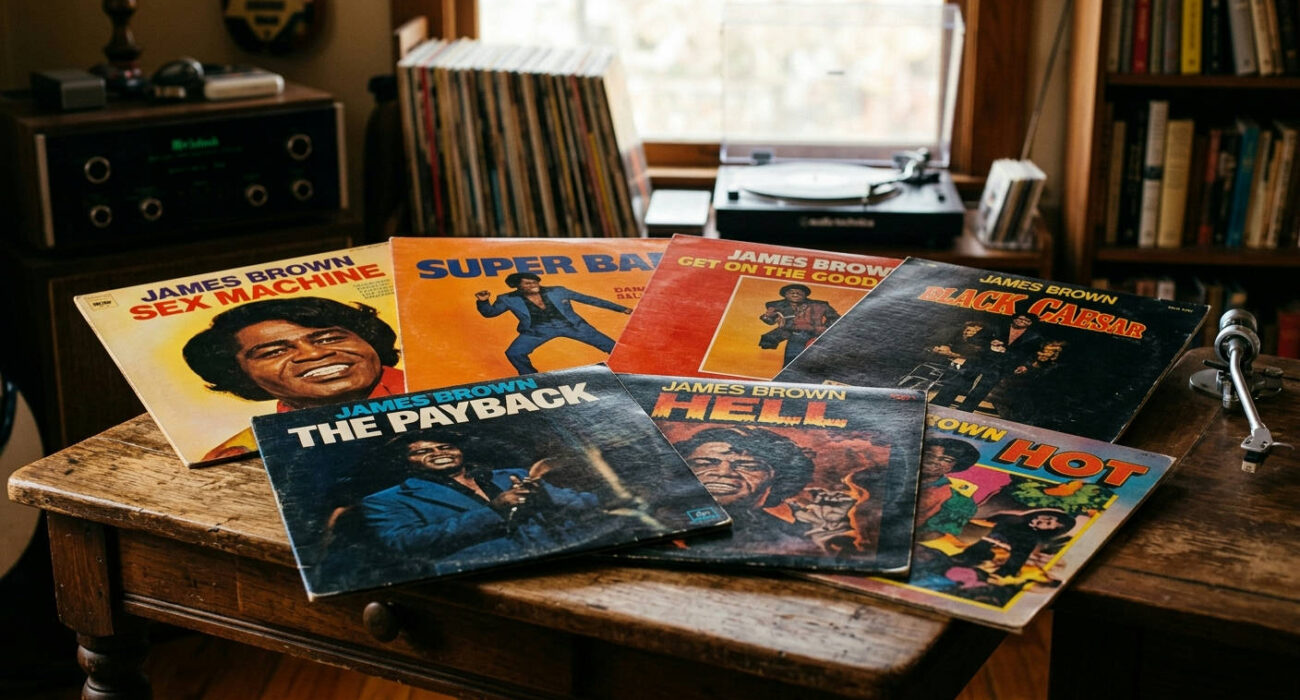
Forget everything you think you know about James Brown. If your mind immediately jumps to the polished showman of the 1960s, you’re missing the raw, untamed heart of his genius. The true revolution, the seismic shift that redefined rhythm for the next half-century, happened across the sprawling, messy, and magnificent catalogue of James Brown solo albums 1970s. This wasn’t just a continuation of his ’60s soul sound; it was a demolition and a complete rebuild, brick by funky brick, creating a body of work that remains a goldmine for collectors and a textbook for musicians in 2026.
This decade saw the Godfather of Soul break away from traditional song structures, fire legendary bands, hire new killers, and stretch grooves into hypnotic, multi-part epics. He was prolific, sometimes to a fault, but within that relentless output lies some of the most important and influential music ever pressed to wax. We’re about to dig deep into that groove.
The Decade Kick-Off: Forging a New Funk (1970-1972)
The 1970s didn’t just begin with a new calendar year for James Brown; it began with a new band and a new, harder sound. After a pay dispute in 1970, most of his veteran touring band walked out. In a move that would prove legendary, he recruited a young, hungry Cincinnati group featuring brothers Bootsy and Catfish Collins. This new unit, dubbed The J.B.’s, became the engine for his funk revolution.
The J.B.’s and the Power of “The One”
The arrival of Bootsy Collins on bass and his brother Phelps “Catfish” Collins on guitar was a catalyst. They brought a raw, psychedelic edge to Brown’s rhythmic concepts. The focus shifted dramatically. Instead of melody and chord changes taking the lead, the entire musical emphasis was placed on the first beat of every measure—”The One.”
Every instrument—the drums, the bass, the stabbing guitars, the punctuating horns—was locked into a percussive, interlocking groove. It was a minimalist approach that created a maximalist sound. This radical deconstruction of soul music is the absolute foundation of the James Brown solo albums of the 1970s.
Landmark Album: Sex Machine (1970)
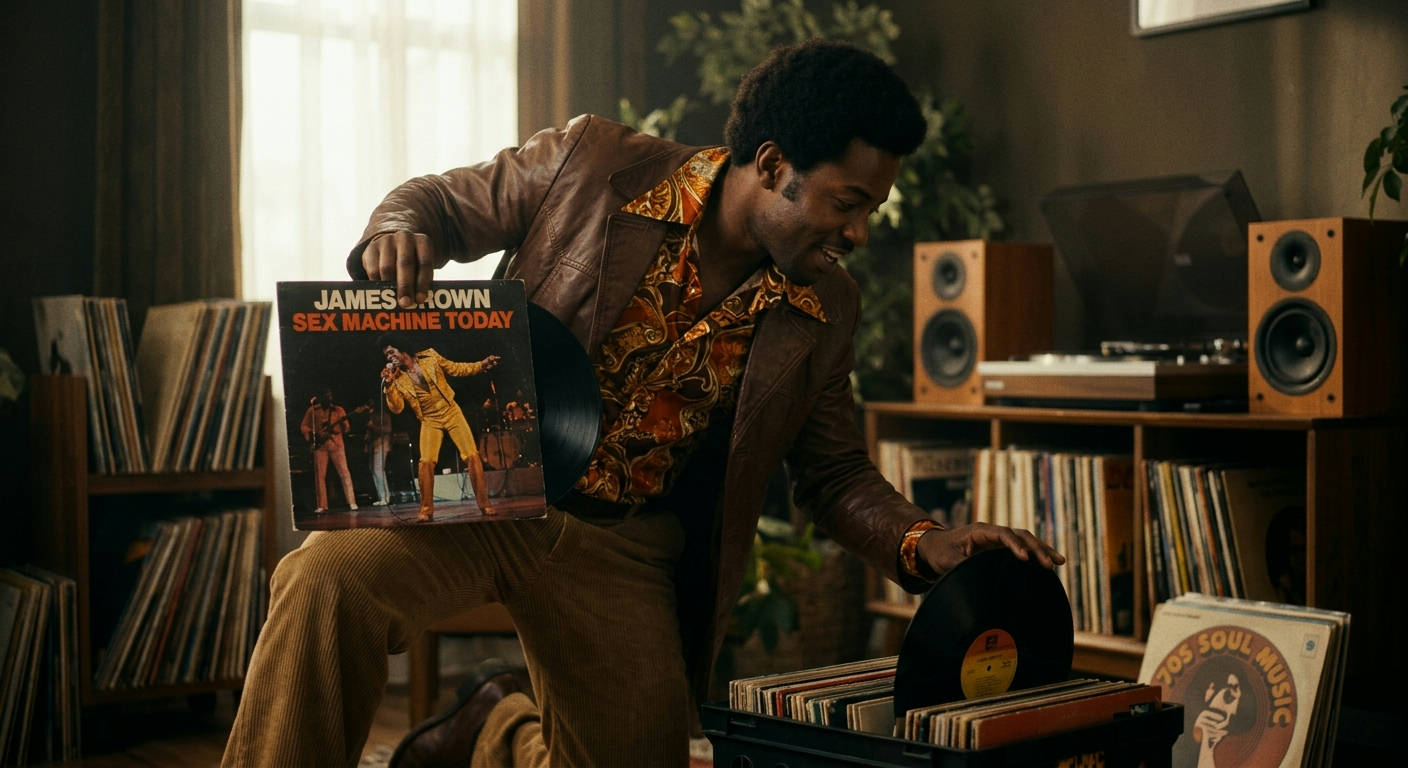
You can’t talk about early ’70s James Brown without starting here. Sex Machine is a sprawling live/studio hybrid that captures the raw energy of this new band in its infancy. The title track is a masterclass in tension and release, a 12-minute workout that feels like it could go on forever.
This album isn’t just a collection of songs; it’s a document of a transition. You can hear the band finding their footing, locking into grooves that are looser and more expansive than anything Brown had done before. It’s essential listening to understand the DNA of what was to come.
Find a copy of the legendary Sex Machine on vinyl and hear the revolution for yourself. Check for pressings on Amazon here.
Solidifying the Groove: Hot Pants (1971) and There It Is (1972)
Following Sex Machine, the funk formula was refined and weaponized. The album Hot Pants (1971) saw the title track become another monster hit, built around a simple, infectious bassline and Brown’s percussive vocal delivery. The album itself is a stripped-down, raw affair that showcases the telepathic tightness of The J.B.’s.
By 1972’s There It Is, the machine was perfectly oiled. The grooves are tighter, the horn arrangements are sharper, and Brown is at the peak of his powers as a bandleader. Tracks like “King Heroin” also showed a growing social consciousness in his lyrics, tackling serious issues with unflinching directness. These records were less about individual songs and more about creating an undeniable, all-encompassing rhythmic feeling.
A Deep Dive into the Essential James Brown Solo Albums 1970s
While Brown’s output was relentless, a few specific albums from his mid-70s period on the Polydor label stand as monumental achievements. These are the records that cemented his legacy, influenced generations of artists, and remain holy grails for vinyl collectors. They are complex, ambitious, and demand your full attention.
The Crown Jewel: The Payback (1973)
If you can only own one James Brown album from this decade, make it The Payback. Originally conceived as a soundtrack for the blaxploitation film Hell Up in Harlem, the score was shockingly rejected by the film’s producers for “not being funky enough.” Their loss was music history’s gain.
“This is a payback! The big payback! I can’t stand it! I’ve got to get back!”
This double album is the absolute zenith of Brown’s funk explorations. The title track is an eight-minute epic of revenge, with Fred Wesley’s trombone and Maceo Parker’s sax weaving in and out of a groove so deep you could lose yourself in it. Tracks like “Stone to the Bone” and “Mind Power” are hypnotic, built on repetition that drills its way into your subconscious. It’s a dark, gritty, and cinematic masterpiece.
The Payback is more than an album; it’s an experience. Owning it on vinyl is a must for any serious funk or soul collector. Search for a quality pressing on Amazon now.
The Sprawling Epic: Hell (1974)
How do you follow up a masterpiece like The Payback? If you’re James Brown, you release another audacious double album just a few months later. Hell is a wild, sprawling, and sometimes chaotic record that shows the full breadth of Brown’s musical ambition.
It’s less thematically cohesive than its predecessor but no less brilliant. The album swings from the hard funk of “Coldblooded” and a blistering remake of “Please, Please, Please” to the bizarre, string-laden ballad “I Can’t Stand It ’76’.” It even features a cover of Tony Joe White’s “A Man Has to Go Back to the Crossroads.” It’s an album that showcases Brown’s refusal to be pigeonholed, even by the funk genre he was creating.
Social Commentary and Reality: Reality (1974)
Released at the end of a whirlwind 1974, Reality is one of Brown’s most politically charged and socially aware albums. The title track is a searing critique of societal ills, with Brown acting as a street-corner preacher testifying over a frantic, up-tempo groove.
The album also contains the incredible “Funky President (People It’s Bad),” a track that would later become one of the most sampled breaks in hip-hop history. Reality shows Brown using his platform to speak directly to the struggles of his audience, cementing his status as a vital voice in the Black community. It’s a powerful and often overlooked entry in the vast catalogue of James Brown solo albums 1970s.
The Mid-Decade Grind: Polydor’s Prolific Machine (1975-1976)
The mid-1970s saw James Brown fully entrenched at Polydor Records. This period was marked by an almost unbelievable level of output. Brown was releasing two, sometimes three, albums a year. While this pace didn’t always result in cohesive, classic LPs like The Payback, it produced an incredible amount of killer funk singles and deep cuts that are treasured by crate diggers today.
The Pressure to Produce
The contract with Polydor demanded a steady stream of new material. This meant constant recording sessions, often with a rotating cast of musicians as The J.B.’s line-up continued to evolve. This relentless schedule could lead to albums that felt more like collections of singles than unified artistic statements.
However, this pressure also pushed Brown to experiment. He was constantly searching for the next hit, the next sound. This led to fascinating, if not always commercially successful, musical detours. You’ll find string arrangements, Latin percussion experiments, and different rhythmic approaches scattered throughout these mid-70s records.
Underrated and Overlooked LPs
This era is full of albums that contain one or two massive hit singles, while the rest of the LP gets ignored. For a vinyl collector, this is where the real treasures are found.
- Get Up Offa That Thing (1976): The title track was a huge, disco-tinged hit that put Brown back on top of the charts. The album itself is a solid, dance-floor-focused funk record. The deep cuts like “I Refuse to Lose” and “Can’t Take It With You” are pure, uncut J.B.’s funk that holds up with his best work.
- Bodyheat (1976): Another album driven by a hit single. “Bodyheat” is a simmering, slow-burn funk track. The LP is packed with tight grooves and shows Brown successfully adapting his sound to the changing tastes of the time without completely selling out.
- Hot (1975): This album is pure, uncut funk. It’s a prime example of a mid-70s Brown record that didn’t have a massive breakout hit but is incredibly consistent from start to finish. It’s a must-have for anyone who loves the core J.B.’s sound.
These records demonstrate that even during his most commercially-driven period, the quality control on the groove was incredibly high. The magic of exploring the James Brown solo albums 1970s is discovering these lesser-known gems.
Funk vs. Disco: The Godfather’s Late-70s Struggle (1977-1979)
As the 1970s wore on, a new four-on-the-floor beat began to dominate the airwaves and dance floors: disco. This presented a major challenge for the Godfather of Soul. His entire rhythmic philosophy was built on syncopation and “The One,” while disco’s pulse was straighter and more polished. How James Brown responded to this new musical force defined the final years of his most creative decade.
Resisting, Then Embracing, the New Sound
Initially, Brown seemed to resist disco’s polished sheen. His music had always been about raw, gritty funk. However, as disco’s commercial dominance became undeniable, he began to incorporate its elements into his sound. This led to a fascinating and often-debated series of albums.
Some critics at the time, and even now, view this period as a decline. They argue that Brown was chasing trends rather than setting them. But another perspective is that he was simply doing what he had always done: adapting and trying to communicate with his audience in the language of the day.
Key Albums from the Disco Era
- Mutha’s Nature (1977): This album is a fascinating listen. Tracks like “Give Me Some Skin” feel like classic James Brown, while others feature the prominent string sections and steady backbeat associated with disco. It’s an artist grappling with a new style in real-time.
- Jam 1980’s (1978): The title itself shows Brown looking to the future. The production is slicker, and the grooves are more aligned with the disco-funk hybrid sound that was popular at the time. It contains the track “The Spank,” a popular tune in dance clubs.
- The Original Disco Man (1979): With a title this direct, there’s no mistaking the intent. Brown fully embraces the disco sound here. While it may lack the raw power of his early ’70s work, it’s an expertly crafted dance record. The track “It’s Too Funky in Here” became a minor hit and a fan favourite, proving he could still deliver.
These late-70s albums are essential for completing the story of the James Brown solo albums 1970s. They show an icon navigating a changing world, and while they may not all be classics, they are far from the failures they are sometimes painted as.
A Collector’s Guide to 70s James Brown Vinyl
For vinyl enthusiasts, the 1970s discography of James Brown is a vast and rewarding territory to explore. From common LPs to rare gems, there’s a lifetime of digging to be done. Here at Vinyl Gold UK, we know the thrill of finding that perfect pressing.
Original Pressings vs. Modern Reissues
The debate rages on for every artist, and it’s no different for the Godfather.
- Original Pressings: An original 1970s Polydor pressing of an album like The Payback has a certain magic. The sound is often warmer, with a punchy, analogue low-end that can be breathtaking on a good system. They also hold their value and are a piece of history. The downside? Finding a clean, near-mint copy in 2026 can be difficult and expensive.
- Modern Reissues: In recent years, there have been some excellent reissues of the James Brown solo albums 1970s. These are often pressed on heavy 180-gram vinyl from high-quality sources. They offer a clean, noise-free listening experience and are much more affordable and accessible. A quality reissue is always better than a worn-out original.
Your choice depends on your budget and your priorities as a collector. For those just diving in, a modern reissue of a classic like Hell is a great starting point. You can find many excellent reissues on Amazon.
### Where to Find the Best James Brown solo albums 1970s on Vinyl
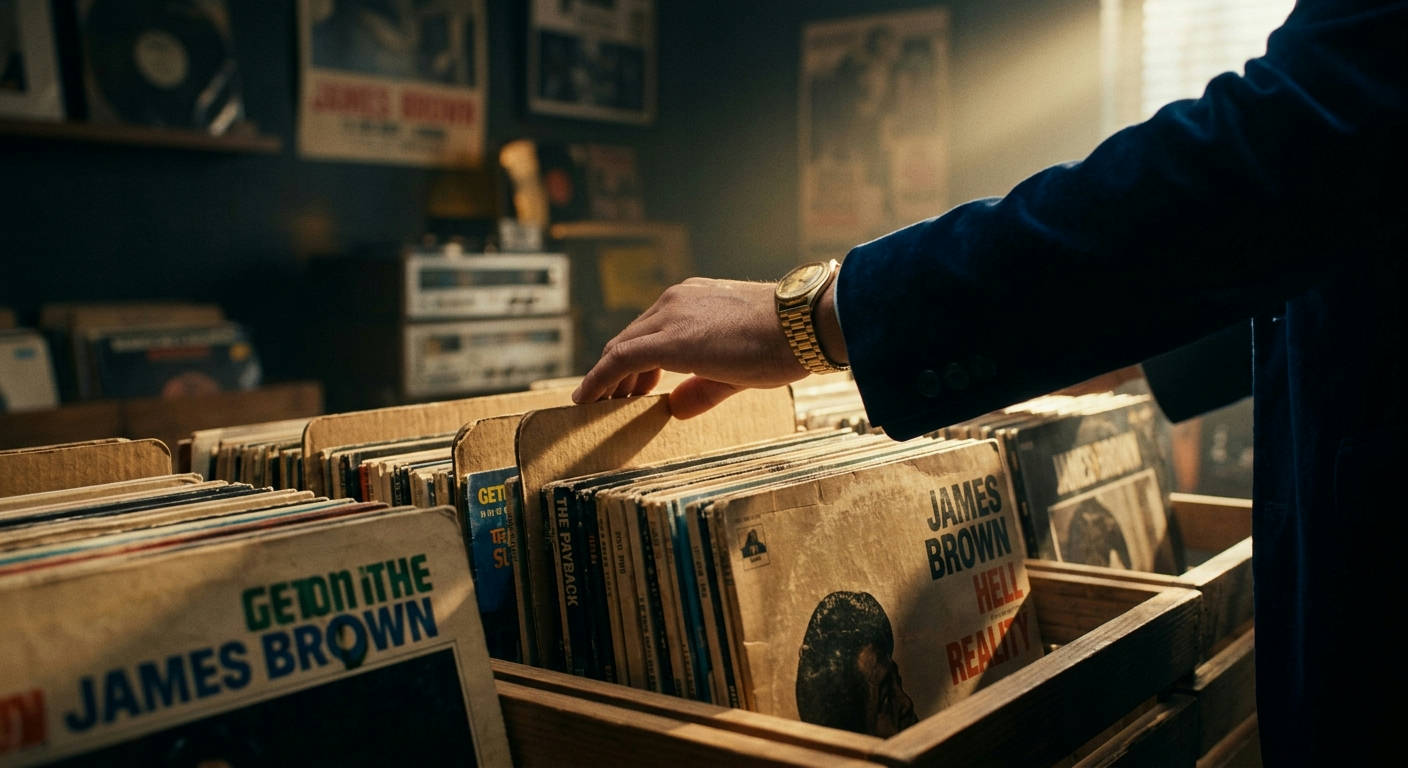
Finding these records is part of the fun. Independent record stores are your best friend. Spend an afternoon flipping through the funk and soul sections. Don’t be afraid to check the bargain bins, as sometimes mid-70s LPs get overlooked.
Online marketplaces are also a great resource, but be sure to check seller ratings and ask for detailed photos of the vinyl and cover. Record fairs and conventions are fantastic for finding a wide variety of pressings in one place and for talking with knowledgeable dealers.
What to Look For in a Pressing
When you find a potential purchase, here’s a quick checklist:
- Check the Vinyl: Hold it under a bright light. Look for deep scratches or scuffs. A few light, superficial marks are often acceptable on older records, but deep gouges that you can feel with a fingernail are a red flag.
- Inspect the Cover: Look for seam splits, ring wear, and writing. A cover in good condition (VG+ or better) significantly adds to the value.
- Verify the Label: Familiarize yourself with the Polydor label design from the 1970s. This will help you identify first pressings versus later ones. Websites like Discogs are an invaluable resource for this.
The Unbreakable Legacy of 70s Funk
The impact of the James Brown solo albums from the 1970s is immeasurable. It’s not just a collection of great records; it’s a fundamental rewriting of musical language that continues to echo today.
“He was a rhythm innovator, and his ‘on the one’ concept was a brand new way of thinking. Before that, everything was on the two and the four.” – Bootsy Collins
This new rhythmic framework laid the groundwork for countless genres. The funky grooves of this decade became the most sampled source material in music history, forming the backbone of hip-hop.
The Sample Goldmine
Think of the most iconic hip-hop tracks. Chances are, there’s a piece of 70s James Brown in there. The drum break from “Funky Drummer” (recorded in ’69 but a staple of his ’70s sound) is arguably the most sampled piece of music ever. The horns, basslines, and vocal grunts from tracks on The Payback, Hell, and Reality have been looped and chopped by everyone from Public Enemy and N.W.A. to Dr. Dre and Kanye West. He didn’t just provide the sound; he provided the attitude. This era also saw the rise of other funk powerhouses, a movement you can explore further in our guide to the best of Parliament and Funkadelic.
Redefining the Live Show
Beyond the studio, Brown’s 1970s live performances were legendary. His shows were spectacles of precision, energy, and showmanship. The tight choreography, the flawless musicianship of The J.B.’s, and Brown’s own superhuman stamina set a new standard for what a concert could be. This level of performance directly influenced artists like Michael Jackson and Prince, who studied Brown’s every move. The Rock & Roll Hall of Fame rightly celebrates him as one of its inaugural inductees, largely due to this revolutionary period.
The 1970s were James Brown’s imperial phase. He was a bandleader, a producer, a songwriter, a social commentator, and a sonic architect of the highest order. The sheer volume and quality of his work during this ten-year span are staggering. The grooves he created are timeless, the energy is infectious, and the influence is undeniable.
Diving into the James Brown solo albums 1970s is an essential journey for any serious music fan. It’s a trip through the birth of funk, a masterclass in rhythm, and a testament to the singular vision of a true musical genius. So get to digging, drop the needle, and get on up.