
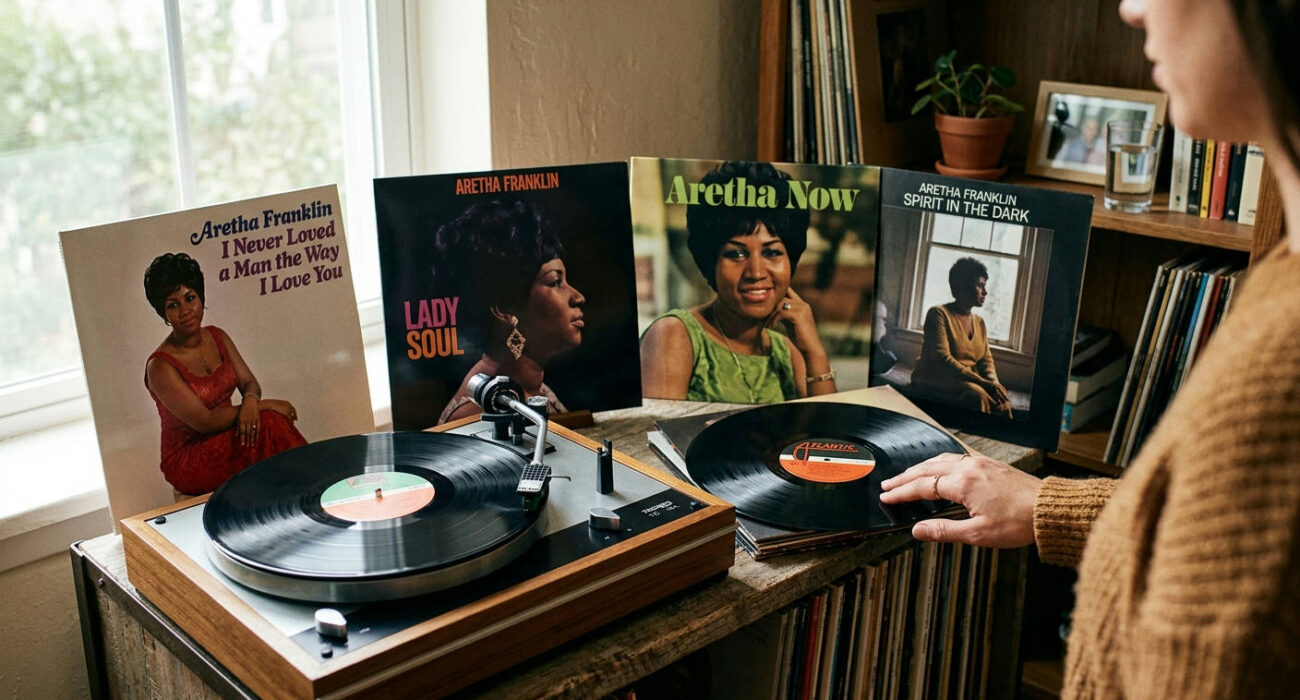
The voice of Aretha Franklin is not something you just hear; it’s something you feel in your bones. For too long, experiencing her genius meant wading through compressed digital files or hunting down scratchy, worn-out original LPs. But in 2026, the game has changed. The explosion of high-quality Aretha Franklin studio albums vinyl reissues means that both seasoned collectors and new fans can finally hear the Queen of Soul in all her analogue glory, exactly as she was meant to be heard. This isn’t just about nostalgia; it’s about sonic justice for one of the most important artists of all time.
The Resurgence: Why Aretha on Wax Is Essential in 2026
The vinyl revival isn’t just a trend; it’s a fundamental shift back to intentional, high-fidelity listening. For an artist of Aretha’s calibre, this format is not just a preference, it’s a necessity.
Beyond the Greatest Hits
Everyone knows “Respect” and “(You Make Me Feel Like) A Natural Woman.” These are cultural touchstones. But to truly understand Aretha’s artistry, you have to go deeper into the studio albums where these hits live.
Albums like Spirit in the Dark and Young, Gifted and Black are complete artistic statements, filled with raw emotion, impeccable arrangements, and deep cuts that reveal the full scope of her talent. The latest vinyl reissues encourage a front-to-back listening experience, pulling you into the narrative and emotional arc of the entire record, something a shuffled playlist can never replicate.
The Analog Warmth Her Voice Demands
Aretha Franklin’s voice is an instrument of immense power and subtle nuance. Digital compression, especially on low-quality streaming services, can flatten this dynamism, clipping the peaks and muddying the delicate vibrato.
Vinyl, by its very nature, preserves this dynamic range. A well-mastered reissue delivers the warmth of the Muscle Shoals rhythm section, the crispness of the horns, and the breath taking power of Aretha’s vocals without digital artifacts. You hear the air in the room, the resonance of the piano, and the soul-shaking force of her delivery in a way that feels present and alive.
A New Generation Discovers the Queen
The ongoing vinyl boom has introduced a new audience to classic artists. Younger listeners in 2026 are discovering the magic of physical media, craving the tangible connection of holding an album cover and dropping a needle. For them, Aretha isn’t just a name from the past; she’s a current discovery, and these reissues are their primary entry point into her incredible catalogue.
Navigating the Eras: A Guide to Key Aretha Franklin Studio Albums Vinyl Reissues
Aretha’s career spanned decades and multiple labels, each with a distinct sound. Understanding these eras is key to building a collection that represents her entire journey.
The Early Columbia Years: Finding Her Voice
Before she became the Queen of Soul at Atlantic, Aretha recorded a series of jazz and pop-oriented albums for Columbia Records. Albums like Aretha: With The Ray Bryant Combo (1961) and The Tender, the Moving, the Swinging Aretha Franklin (1962) showcase her incredible vocal talent but often in a context that reined it in.
Reissues of these early works are fascinating documents of her development. While not as essential as her later material, they are crucial for understanding her origins. Look for reissues from labels like Music on Vinyl, which often provide clean, quiet pressings that highlight her prodigious piano skills and vocal command, even at a young age.
The Atlantic Records Golden Age (1967–1979): The Reign Begins
This is the undisputed pinnacle. When Aretha signed with Atlantic Records in 1966 and went to Muscle Shoals, Alabama, music history was made. This era produced the records that defined her legacy.
Key reissues to hunt down include:
- I Never Loved a Man the Way I Love You (1967): The album that started it all. Modern reissues, particularly the mono versions, capture the raw, explosive energy of these sessions.
- Lady Soul (1968): A polished masterpiece. A 180-gram reissue of this album is a must-own, delivering classics like “Chain of Fools” and “A Natural Woman” with stunning clarity.
- Aretha Now (1968): Features her definitive version of “I Say a Little Prayer.” The vinyl reissues bring out the intricate backing vocals from The Sweet Inspirations.
- Spirit in the Dark (1970): A grittier, gospel-infused return to form. This is a fan-favourite, and a quality reissue is the best way to appreciate its deep, soulful grooves.
- Young, Gifted and Black (1972): A powerful statement of Black pride and artistic maturity. The vinyl format gives the expansive soundstage of tracks like “Rock Steady” the room it needs to breathe.
Many of these have been re-released through Rhino’s “Start Your Ear Off Right” campaigns or as part of the Atlantic 75 series, often with high-quality mastering.
The Arista Renaissance (1980s–2000s): A New Sound
In 1980, Aretha moved to Arista Records and embraced a more contemporary, slick R&B and pop sound. Albums like Who’s Zoomin’ Who? (1985) and Aretha (1986) produced massive hits and introduced her to the MTV generation.
Vinyl reissues of these albums present a different sonic character. Many were recorded using early digital technology, so the pressings won’t have the same analogue warmth as the Atlantic material. However, a good reissue can tame some of the harshness of 80s production, offering a fuller, more balanced sound than the original CDs.
The Collector’s Guide to Aretha Franklin Studio Albums Vinyl Reissues

Not all reissues are created equal. Knowing what to look for separates a prized piece in your collection from a disappointing platter of plastic.
First Pressings vs. Modern Reissues: The Great Debate
The choice between an original 1960s pressing and a 2026 180-gram reissue is a classic collector’s dilemma.
- Original Pressings: They are historical artifacts. There’s a certain magic to owning the same object someone bought back in 1968. Sonically, a clean “OG” copy can sound incredibly vibrant and immediate. The downside? Finding one that isn’t riddled with scratches, groove wear, and surface noise is both difficult and expensive.
- Modern Reissues: They offer a clean slate. You get a pristine, dead-quiet playing surface free from the wear and tear of the past 60 years. When done right, they are sourced from the original master tapes and can sound absolutely phenomenal, sometimes revealing details lost on worn originals.
For most listeners, a high-quality modern reissue offers the best balance of sound quality, condition, and price.
“A great reissue is like a perfect restoration of a masterpiece. It doesn’t change the art; it removes the dust and grime of ages so you can see it clearly again.”
Identifying High-Quality Aretha Franklin Studio Albums Vinyl Reissues
Here’s your checklist for spotting a superior pressing before you buy:
- Source Material: The gold standard is “sourced from the original master tapes” or “cut from the original analogue tapes.” This information is usually found on a hype sticker on the shrink wrap. Avoid reissues where the source isn’t mentioned, as it may be a CD pressed to vinyl.
- Vinyl Weight: While not a guarantee of quality, 180-gram vinyl is the standard for audiophile releases. It’s more resistant to warping and can feel more substantial, but the mastering is what truly matters.
- Mastering Engineer: Look for names like Kevin Gray (KG in the deadwax), Bernie Grundman (BG), or Ryan K. Smith (RKS). These engineers are masters of their craft, and their involvement is a strong indicator of a top-tier release.
- Record Label: Certain labels have a reputation for excellence. Rhino, Mobile Fidelity Sound Lab (MoFi), Analogue Productions, and Music on Vinyl consistently produce high-quality reissues.
Spotting Bootlegs and Low-Quality Pressings
The market is also flooded with subpar pressings. Be wary of records from unfamiliar European labels that often use questionable digital sources due to differing copyright laws. These are often called “grey market” releases.
Check the jacket quality. Is the artwork blurry or pixelated? Is the cardboard flimsy? These are red flags. The ultimate test is the dead wax—the blank space between the last song and the label. A lack of matrix numbers or mastering engineer initials often points to a bootleg.
The Sound of Soul: A Mastering and Pressing Deep Dive
Understanding the technical details behind a reissue can elevate your appreciation and help you make smarter purchasing decisions.
Sourced from the Original Tapes: The Holy Grail
When a reissue is advertised as being sourced from the Original Master Tapes (O.M.T.), it means the lacquer for the vinyl was cut directly from the final two-track tape approved by Aretha and her producers, like the legendary Jerry Wexler. This is the purest possible source.
This direct analogue-to-analogue transfer preserves the integrity, warmth, and dynamic range of the original recording session. The difference between an O.M.T. pressing and one sourced from a digital file can be night and day, especially on a revealing audio system. The Rhino High Fidelity series, for example, has built its reputation on using these sacred tapes.
Mono vs. Stereo Mixes: Which Should You Buy?
For many of Aretha’s classic 60s albums, you’ll find both mono and stereo reissues. They are not the same.
- Mono: In the 60s, mono was the primary format. The mix was crafted with care, intended for playback on the radio and home systems of the era. Mono mixes of Aretha’s Atlantic albums often sound more powerful, cohesive, and punchy. The rhythm section is locked into the centre, and her voice soars directly out of the speakers with incredible force. The mono mix of I Never Loved a Man the Way I Love You is considered by many purists to be the definitive version.
- Stereo: The stereo mixes were often an afterthought, sometimes created quickly with primitive panning techniques (e.g., all the vocals on one side, all the instruments on the other). While later stereo mixes became more sophisticated, the early ones can sound disjointed. However, they can also reveal more separation between instruments, offering a different perspective on the arrangements.
Our advice? If you have to choose one for the 1967-1968 material, start with the mono reissue. It’s likely closer to the artists’ original intent.
The Role of the Mastering Engineer
The mastering engineer is the final creative link in the chain. They take the master tape and translate it to the vinyl format, making crucial decisions about EQ, compression, and levels. A great mastering engineer can make a tape sound brilliant; a poor one can ruin it.
When you see Kevin Gray’s “KG” etched in the deadwax of an Aretha reissue, you know it was handled by someone who understands how to bring out the best in an analogue recording. They respect the original sound while ensuring it translates perfectly to the modern vinyl medium.
Building Your Aretha Vinyl Collection: What to Prioritise
With dozens of reissues available, knowing where to start can be daunting. Here’s a roadmap for building a stellar collection.

The “Must-Have” Trinity for Beginners
If you’re just starting, these three albums are non-negotiable. They represent the absolute peak of her powers and are essential to any record collection.
- I Never Loved a Man the Way I Love You (1967): The raw, soul-baring breakthrough. It’s the sound of an artist finally unleashed. You can begin your search for a quality reissue on Amazon: find I Never Loved a Man vinyl on Amazon.
- Lady Soul (1968): Pure, sophisticated, and impossibly cool. It’s a perfect record from start to finish. A 180-gram reissue is widely available: find Lady Soul vinyl on Amazon.
- Young, Gifted and Black (1972): A sprawling, confident, and deeply personal masterpiece. The funk of “Rock Steady” alone is worth the price of admission. Start your hunt here: find Young, Gifted and Black vinyl on Amazon.
For the Intermediate Collector: The Deeper Cuts
Once you have the essentials, it’s time to explore the richer corners of her discography.
- Spirit in the Dark (1970): A phenomenal, gospel-tinged album that features her playing a mean Fender Rhodes. It’s a darker, funkier record that rewards repeat listens.
- Amazing Grace (1972): While technically a live album, it functions as her definitive gospel statement and is the best-selling live gospel album of all time. The vinyl reissue of the complete recordings is a spiritual experience.
- Sparkle (1976): Her stunning soundtrack collaboration with Curtis Mayfield. It’s a silky-smooth and criminally underrated record in her catalogue.
A great resource for tracking down specific pressings, both new and second hand, is the online marketplace Discogs. You can compare different reissue campaigns and see what other collectors are saying about the sound quality.
Beyond the Grooves: Artwork, Notes, and the Complete Package
The experience of an Aretha Franklin studio albums vinyl reissues is about more than just the sound. It’s about engaging with the album as a complete work of art.
The Joy of a Full-Size Album Cover
In a world of tiny thumbnail images, the 12×12 inch canvas of a vinyl record jacket is a revelation. The iconic photography on Aretha’s albums tells a story. The confident gaze on the cover of Lady Soul or the regal, Afrocentric portrait on Young, Gifted and Black are powerful statements that are lost on a phone screen. High-quality reissues meticulously reproduce this original artwork, often with better printing technology than was available in the 60s.
“Holding an album cover is like holding a piece of history. You’re connecting with the music in a physical way that’s impossible with a stream.”
Reissue Bonuses: New Liner Notes and Photos
Modern deluxe reissues often go a step further, including new components that enhance the original album. You might find a booklet with new essays from music historians, offering fresh context on the recording sessions. Sometimes they unearth previously unseen photographs from the archives. These bonuses add immense value, turning the record into a comprehensive historical document.
Special Editions and Coloured Vinyl
The reissue market loves a limited edition. You’ll find many of Aretha’s albums pressed on coloured vinyl, as “Record Store Day” exclusives, or in deluxe box sets. While a novelty for some, these can be fun for collectors. Be aware that the sound quality of picture discs and some brightly coloured vinyl can occasionally be inferior to standard black vinyl, though manufacturing quality has improved significantly by 2026.
Caring for Your Crown Jewels: Protecting Your Investment
Once you’ve invested in these beautiful reissues, you need to treat them with the respect they—and the Queen—deserve.
Cleaning and Storage Essentials
Proper care is simple and non-negotiable.
- Clean Before Playing: Use a carbon fibre anti-static brush before every single play to remove surface dust.
- Store Vertically: Never stack your records flat. Store them upright on a sturdy shelf, not packed too tightly.
- Use Quality Sleeves: Immediately replace the paper inner sleeves that come with most records with archival-quality anti-static ones. They prevent scuffing and static buildup. Use a plastic outer sleeve to protect the jacket.
The Right Gear to Do Her Voice Justice
Playing a pristine 180-gram audiophile reissue on a cheap, all-in-one suitcase turntable is a cardinal sin. Those players often have poor-quality styli and no counterweight adjustment, which can permanently damage your records.
You need a decent turntable to properly hear the sonic benefits of these reissues. A good setup doesn’t have to cost a fortune, but it’s a critical investment. To ensure you’re getting the most out of your collection without causing harm, a solid entry-level component turntable is key. Check out our guide to the best turntables under £300 in the UK for some excellent options that will treat your records right.
The Ultimate Listening Experience
The final step is the most important: just listen. Turn off your phone, dim the lights, and give the album your full attention. Listen to the interplay between the musicians of the Muscle Shoals Section. Pay attention to the arrangements and the subtle choices Aretha makes with her phrasing. Let the power of her voice wash over you. This is what it’s all about.
The ongoing wave of Aretha Franklin studio albums vinyl reissues is a gift to music lovers. It’s a chance to connect with her unparalleled body of work in the highest fidelity possible. Building this collection is a journey through American music history, guided by its most powerful and soulful voice. So drop the needle, and pay your respects to the Queen.