
Few acts in modern music have reshaped the sonic landscape quite like Nine Inch Nails. Since the project emerged from Cleveland in 1988, it has operated as one of the most restless and ambitious forces in rock and electronic music. Trent Reznor built something without precedent — a one-man operation that sounded like a band, a band that thought like an auteur, and a catalogue that refuses to repeat itself. From distorted industrial fury to delicate ambience, Nine Inch Nails has covered enormous creative ground across nearly four decades. This guide reviews every major release in chronological order, from the debut to the bold 2026 collaboration with Boys Noize. Whether you are brand new to the music or a long-time devotee, read on.
What You Need to Know Right Now
Is Nine Inch Nails touring in 2026?
Yes — and significantly so. Nine Inch Nails launched the Peel It Back Tour in 2026, a major production that draws from across three decades of the catalogue. Reznor has always treated the live show as a fundamental extension of the recorded work, and the Peel It Back dates honour that tradition. Elaborate lighting design, immersive sound, and an evolving set list make each night distinct. Demand has been exceptionally high, so checking official channels early is strongly recommended.
What is the best Nine Inch Nails album for beginners?
Most fans and critics point to one of two records. The Downward Spiral (1994) remains the most celebrated album in the catalogue — furious, visceral, and deeply personal. Alternatively, With Teeth (2005) offers a more traditional rock structure that can feel slightly more accessible to first-time listeners. Both capture the core identity of Nine Inch Nails with exceptional clarity, and either makes an ideal starting point for anyone new to the music.
Are Trent Reznor and Atticus Ross still in the band?
Yes. Trent Reznor and Atticus Ross are the only two official permanent members of Nine Inch Nails. Reznor founded the project as a solo vehicle in 1988, and Ross became a full credited member in 2016. Their partnership extends far beyond the band — together they have produced award-winning film scores for The Social Network, Gone Girl, The Girl with the Dragon Tattoo, and Soul. It is one of the most productive and distinctive creative partnerships in contemporary music.
What is the “Nine Inch Noize” project?
Nine Inch Noize is the 2026 collaborative album between Nine Inch Nails and German electronic artist Boys Noize (Alexander Ridha). The project merges the industrial abrasion and atmospheric depth that defines Nine Inch Nails with the propulsive, club-informed electronic productions that Boys Noize is known for. The result is a reimagined sound that feels simultaneously familiar and genuinely new. Early critical reception has been enthusiastic, and the record represents one of the most ambitious creative risks the band has taken in years.
The Complete Nine Inch Nails Discography: Every Album Reviewed
1. Pretty Hate Machine — 1989
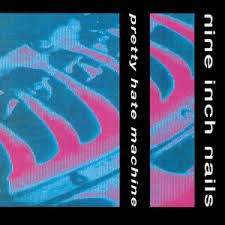
The debut that started everything arrived in 1989, and it announced a singular voice immediately. Reznor recorded most of Pretty Hate Machine alone, drawing heavily on synthesizers, sequencers, and drum machines. The sound occupied an unusual space — melodic enough to connect with mainstream ears, yet abrasive enough to unsettle them. Furthermore, the emotional content carried a raw fury that felt deeply personal rather than calculated. Nine Inch Nails was not performing angst; it was processing it in real time.
Tracks like “Head Like a Hole” and “Terrible Lie” became defining moments in the alternative rock landscape of the early 1990s. Notably, “Head Like a Hole” introduced Nine Inch Nails to MTV audiences and launched the project into unexpected commercial territory. The album grew steadily in reach after its release, eventually going platinum. In addition, its influence on the industrial and alternative scenes of the decade that followed is almost impossible to overstate. Moreover, the synth-pop scaffold beneath the anger gave the record a strange accessibility that continues to attract new listeners today.
Pretty Hate Machine still sounds remarkably vital. Consequently, many younger fans discover it and mistake it for something far more contemporary. Above all, this debut set the template — obsessive, romantic, and furious — that everything in the Nine Inch Nails catalogue would evolve from.
2. Broken — 1992
Officially classified as an extended play, Broken functions in practice as a short album — a brutal, concentrated blast of industrial metal that felt like a deliberate act of violence against the synth-pop of Pretty Hate Machine. Released in 1992, it channelled real fury at Reznor’s protracted legal battle with TVT Records. Consequently, every track crackles with a specific, targeted rage. Nine Inch Nails had discovered the electric guitar in a far more aggressive context, and the results were remarkable.
The Grammy-winning “Wish” remains one of the most ferocious tracks in the entire catalogue — a wall of distortion and percussion that leaves little room to breathe. Additionally, “Happiness in Slavery” introduced a nightmarish theatricality that expanded the sonic vocabulary considerably. Beyond the individual tracks, Broken also marked the beginning of a more collaborative relationship with producer Flood, who would play a central role in future records.
At just under half an hour, Broken demands repeated listening precisely because of its density. Furthermore, it bridges two distinct eras in the Nine Inch Nails story with startling confidence. In short, it is indispensable — a pivotal document in understanding how the project evolved from synth-driven debut into the industrial powerhouse that would define the mid-1990s.
3. The Downward Spiral — 1994
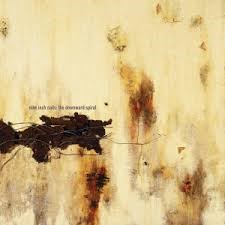
There are certain records that permanently alter what music can do, and The Downward Spiral is one of them. Released in 1994, it traces the complete psychological collapse of a nameless protagonist across fifteen tracks — a conceptual arc executed with extraordinary precision. Reznor recorded the album inside 10050 Cielo Drive in Los Angeles, the house where Sharon Tate was murdered in 1969. That context shaped everything: the claustrophobia, the dread, and the strange beauty that surfaces between the savagery.
Sonically, The Downward Spiral encompasses an enormous range. Opener “Mr. Self Destruct” arrives like a battering ram. Meanwhile, “A Warm Place” offers eerie, heartbreaking calm. The centrepiece, “Closer”, became one of the defining singles of the decade — provocative, hypnotic, and genuinely unsettling. Moreover, “Hurt” closes the record with devastating simplicity, a song that resonates in an entirely different register than everything surrounding it. Indeed, Johnny Cash’s later cover introduced it to a completely new generation.
Nine Inch Nails achieved something rare here — a concept album that works as a listening experience regardless of whether you follow the narrative. Additionally, the production work from Reznor and Flood remains a benchmark for the entire industrial genre. For any newcomer to Nine Inch Nails, this is the essential starting point: the creative peak from which everything else radiates.
4. The Fragile — 1999
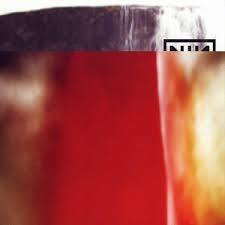
Five years of silence, followed by a double album — that was Reznor’s answer to the impossible task of following The Downward Spiral. Released in 1999, The Fragile sprawls across two discs and 23 tracks, covering textural, ambient, and orchestral territory that nobody expected from Nine Inch Nails. The anger had not disappeared, but it now shared space with something more complex — grief, exhaustion, and fragile beauty.
At its peaks, The Fragile reaches extraordinary heights. “The Way Out Is Through” builds into one of the most powerful climaxes in the catalogue. Similarly, “La Mer” drifts through an almost cinematic tranquillity. Furthermore, the instrumental passages throughout the record foreshadowed the film scoring work that Reznor and Ross would later pursue. However, the album’s ambition occasionally outruns its focus — some passages feel overlong, and the double-disc format tests patience in places.
Nevertheless, The Fragile rewards patient listening in ways that few records of its era do. In retrospect, it reads as a transitional work — a Nine Inch Nails record that was beginning to move toward something larger and more cinematic. Moreover, its commercial underperformance at the time contributed to a significant period of personal crisis for Reznor, making it a deeply human document in addition to a musical one.
5. With Teeth — 2005
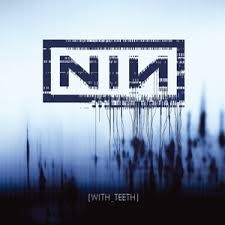
After a period of personal turmoil and public silence, Nine Inch Nails returned in 2005 with With Teeth — a deliberately stripped-back record that many described as a comeback. Reznor had entered recovery, and the clarity of that experience filtered directly into the music. The arrangements are leaner, the song structures more traditional, and the production noticeably more direct than anything in the preceding catalogue. Drummer Dave Grohl appeared on several tracks, lending a raw physicality to the rhythmic foundation.
Singles like “The Hand That Feeds” and “Only” brought Nine Inch Nails back to radio playlists with considerable force. Additionally, “Every Day Is Exactly the Same” — a slow-building meditation on numbness — proved one of the album’s most enduring tracks. Furthermore, the emotional content, while less apocalyptic than earlier work, felt no less honest. Sobriety had not blunted Reznor’s edge; it had simply redirected it.
With Teeth is frequently recommended to newcomers precisely because its song structures are more immediately legible. Nevertheless, it loses nothing in terms of artistic integrity by being accessible. For long-time listeners, it represents a fascinating recalibration — Nine Inch Nails proving that evolution and identity are not mutually exclusive. In short, it stands as a confident and often overlooked highlight in the discography.
6. Year Zero — 2007
Year Zero arrived in 2007 as something genuinely unprecedented in mainstream rock: a fully realised dystopian concept album accompanied by an elaborate Alternate Reality Game that extended the story into the real world. Set in a near-future America governed by an authoritarian regime, the narrative unfolded across hidden websites, USB drives left at concert venues, and phone numbers embedded in artwork. Nine Inch Nails had turned an album release into a participatory fiction.
Sonically, Year Zero pushed further into abrasive electronic territory. “Survivalism” opened the album with jagged, mechanical urgency. Meanwhile, “Capital G” deployed a funky, almost danceable groove beneath its scathing political commentary. Furthermore, the production — deliberately harsh and digitally degraded in places — matched the thematic content with precision. Moreover, the ARG created a genuinely communal experience for fans, with thousands collaborating online to decode its mysteries in real time.
In retrospect, Year Zero looks prophetic. The themes of surveillance, propaganda, and institutional collapse feel far more current today than they did in 2007. Additionally, the record demonstrated that Nine Inch Nails could operate as a conceptual artist at the highest level, using every available medium to tell a story. It remains one of the most ambitious and intellectually rich releases in the entire catalogue.
7. Ghosts I–IV — 2008
Released with almost no warning in 2008, Ghosts I–IV stands as one of the most radical creative gestures in the Nine Inch Nails catalogue. Thirty-six instrumental tracks, assembled across ten weeks, released under a Creative Commons licence. The first nine tracks were available for free; the full collection could be purchased in various formats, including a deluxe edition. Consequently, the release model itself made as much of a statement as the music inside.
Sonically, Ghosts I–IV moves through ambient, electronic, industrial, and experimental terrain with fluid ease. There are no vocal hooks to anchor the listener. Instead, textures and atmospheres carry the experience. Additionally, the record functions differently depending on the listening context — it rewards focused attention and serves equally well as background music. Furthermore, it laid important groundwork for the film scoring work that Reznor and Ross would formalise in the years following.
For some listeners, the 36-track length tests patience. However, approaching it as a textural journey rather than a conventional album changes the experience entirely. Ghosts I–IV represents Nine Inch Nails at its most exploratory — a project unbound by commercial expectation, existing entirely on its own terms. Moreover, it proved that an artist with genuine audience trust could distribute music in radical ways and succeed entirely.
8. The Slip — 2008
Just months after Ghosts I–IV, Nine Inch Nails released The Slip in 2008 — entirely for free, as what Reznor explicitly described as a gift to fans. The gesture was meaningful and the music more than matched it. Where Ghosts had sprawled instrumentally across 36 tracks, The Slip returned to structured songwriting with genuine energy and focus. After the ambient immersion of its predecessor, the album crackled with live-band electricity.
Opener “999,999” functions almost as a reset switch — a brief, jarring blast that clears the palate. Subsequently, “1,000,000” arrives with propulsive, muscular urgency. Furthermore, “Lights in the Sky” offers one of the most emotionally exposed moments in the discography: a sparse piano ballad that sits in striking contrast to the surrounding aggression. Additionally, the album was accompanied by a creative commons licence, allowing fans to remix and redistribute it freely.
The Slip does not attempt to be The Downward Spiral. Instead, it succeeds as a direct, energised rock record that demonstrates Nine Inch Nails could release music quickly without sacrificing quality. Moreover, as a freely distributed record, it remains one of the most generous acts in Reznor’s career — and one of the most quietly underrated albums in the entire Nine Inch Nails catalogue.
9. Hesitation Marks — 2013
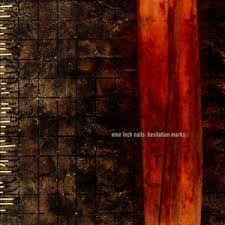
After a four-year hiatus and the continued success of their film scoring careers, Reznor and Ross returned with Hesitation Marks in 2013. The album marked a notable shift in production aesthetics — cleaner, more polished, and more directly influenced by 1980s electronic pop than anything Nine Inch Nails had previously released. Additionally, Atticus Ross received a full production credit alongside Reznor for the first time, signalling a more formalised creative partnership.
Tracks like “Copy of A” and “Came Back Haunted” bristle with kinetic, compulsive energy. Meanwhile, “Find My Way” reaches for something more vulnerable and melodic. Furthermore, the album maintains a consistent emotional temperature that differs from the extreme swings of earlier records — more controlled, perhaps, but no less purposeful. Moreover, the influence of their collaborative film work is audible throughout: the arrangements carry a cinematic precision that feels newly developed.
Hesitation Marks drew mixed responses initially, with some fans uncomfortable with its cleaner surface. Nevertheless, it holds up as a confident and cohesive record that found Nine Inch Nails genuinely refreshed rather than merely returned. In short, it proved the hiatus had been productive rather than damaging, and that the project still had meaningful things to say.
10. The Trilogy: Not the Actual Events / Add Violence / Bad Witch — 2016–2018
Between 2016 and 2018, Nine Inch Nails released three EPs in sequence — Not the Actual Events, Add Violence, and Bad Witch — designed to function individually and collectively as a single extended statement. Together, they form one of the most compelling triptychs in the discography. Each instalment escalates in intensity, and each pushes further into noise, jazz-influenced improvisation, and industrial abstraction.
Not the Actual Events opened proceedings with caustic, confrontational energy. Subsequently, Add Violence deepened the palette with more textural complexity. Finally, Bad Witch arrived as the most adventurous of the three — incorporating saxophone, free-jazz structures, and a claustrophobic urgency that felt genuinely new. Furthermore, all three received Grammy nominations for Best Rock Album, with Bad Witch ultimately winning. Additionally, the serialised release format created a sustained creative event that kept Nine Inch Nails in conversation throughout a turbulent cultural period.
Taken individually, each EP rewards close attention. However, experienced as a complete trilogy, they deliver something richer — a sustained mood piece that builds and evolves across nearly two years. Above all, The Trilogy demonstrated that Nine Inch Nails remained one of the most restless and uncompromising voices in rock music.
11. Ghosts V–VI: Together & Locusts — 2020
Released on 26 March 2020 — days into the global COVID-19 lockdown — Ghosts V–VI arrived with eerie, almost uncanny timing. Nine Inch Nails split the release into two distinct emotional registers: Ghosts V: Together drifts through warm, contemplative ambient textures, while Ghosts VI: Locusts maps darker, more unsettling sonic territory. Together, they function as a kind of emotional dual portrait of the pandemic moment — isolation rendered in sound.
Both records extend the instrumental language established in Ghosts I–IV, but with notably more focused intentionality. Furthermore, the decision to release both volumes simultaneously created an immersive, day-long listening experience for those in lockdown. Additionally, both were made available for free download, continuing a generous approach to distribution that Reznor and Ross had practised since 2008. Moreover, the records proved that Nine Inch Nails could respond to cultural rupture with genuine artistic immediacy rather than silence.
Ghosts V–VI will inevitably carry the weight of their context whenever listeners return to them. Nevertheless, both records stand on their own musical terms. Together captures a tender, still quality that is rare in the Nine Inch Nails body of work. Locusts, meanwhile, maps the dread beneath it. In combination, they represent one of the most emotionally precise responses to collective crisis that any major artist produced in 2020.
12. Nine Inch Noize — 2026
The newest chapter in the Nine Inch Nails story arrived in 2026 in the form of Nine Inch Noize, a full collaborative album with German electronic producer Boys Noize (Alexander Ridha). The pairing initially surprised some fans, but the logic becomes clear immediately on listening. Boys Noize brings a relentless, propulsive energy to club-informed electronic production. Nine Inch Nails brings decades of industrial craft, atmospheric depth, and emotional intensity. The collision produces something genuinely distinctive.
Across its tracks, Nine Inch Noize moves between driving, floor-ready rhythms and the more introspective textures that long time Nine Inch Nails fans will recognise immediately. Furthermore, the production occupies a hybrid space that neither artist would have reached alone — abrasive where Boys Noize would be smooth, melodic where Nine Inch Nails alone might have stayed harsh. Additionally, early critical responses have praised the record’s restless energy and its refusal to simply blend two catalogues together into something safe.
Nine Inch Noize is, above all, a statement of continued artistic ambition. Moreover, it arrives alongside the Peel It Back Tour, giving the collaboration an immediate live dimension. Consequently, 2026 represents one of the most creatively active periods in the Nine Inch Nails story in years — and a compelling reminder that the project continues to evolve on its own terms, decade after decade.
Nine Inch Nails has never made the same record twice. From the synth-driven fury of Pretty Hate Machine to the dystopian concept of Year Zero, the ambient expanses of Ghosts, and the bold collaborative energy of Nine Inch Noize, the catalogue maps an extraordinary creative journey across nearly four decades. Trent Reznor and Atticus Ross continue to push the project forward without nostalgia or compromise. Moreover, the Peel It Back Tour confirms that Nine Inch Nails remains as vital and uncompromising a live force as it has ever been. Consequently, the story is far from over — and if the past is any guide, whatever comes next will surprise us entirely. This is a body of work that demands to be heard in full, revisited often, and taken seriously as one of the defining artistic statements of the modern era.