
You’re in a market in London or scrolling an online listing late at night. There it is. The title you’ve been chasing for ages, maybe a funk 12″, a soul LP, or a disco reissue that usually disappears fast. The sleeve looks right at first glance, the seller says it’s clean, and the price is just low enough to feel like luck.
That’s usually the moment to slow down.
Fake vinyl records have become part of the modern buying market, especially in the London and South East UK market where demand for collectible and danceable records stays strong. For collectors, a fake means wasted money and a shelf item that never had the value you thought it did. For DJs, it’s worse. A bad pressing can wobble, distort, track poorly, or sound flat right when the room needs energy and confidence.
Experienced collectors do not require a laboratory test to spot a fake. They need a practical process. Look at the sleeve. Inspect the label. Read the runout. Feel the edge. Judge the weight. Listen for the tell-tale signs of a poor source. That’s the difference between buying with hope and buying with judgement.
The Thrill of the Hunt and the Risk of the Fake
You spot a record at a car boot sale outside Croydon or in a late-night listing from a seller in Essex. The sleeve looks tidy, the label photos are cropped just enough to hide the details, and the price sits in that dangerous range where it feels cheap for the title but expensive enough to seem believable.

That is how plenty of fake records move. They are sold on emotion first. Scarcity, timing, and the fear that someone else will grab it if you hesitate.
In London and the South East, that pressure is stronger because the market is active. Collectors want original pressings. DJs want copies they can trust in a live set. Sellers know that a rare funk 12-inch, a dub plate-style cut, or a sought-after soul LP can get snapped up fast if the buyer does not stop to check the basics.
A fake record causes two different problems. For a collector, it wrecks provenance and resale value. For a working DJ, it can ruin a set in a more immediate way. I have seen suspect pressings with off-centre holes, weak low end, splashy top-end, and grooves cut from poor digital files. On a home system that might sound disappointing. On a club rig or a wedding setup, it sounds cheap and unstable.
That matters if you are being paid to keep a room moving. A record that drifts in pitch or carries harsh surface noise can throw off a transition, sap energy from the dancefloor, and make the whole setup feel less polished than the client expected.
The practical answer is simple. Slow the buying process down and treat the record like a tool, not just a trophy. Check the weight in your hand. Flex it gently and note whether it feels unusually thin or brittle. Look closely at the print quality on the label and sleeve. Ask for clear photos of the runout groove, because that is often where the story changes from seller talk to manufacturing fact.
The same attention to detail that shapes a memorable event also shows up in presentation, right down to visuals such as this VinylGold event image.

Practical rule: If the price, story, and condition line up a little too neatly, pause and inspect the physical details before you pay.
The Vinyl Underworld A Guide to Fake Record Types
People often use “fake vinyl records” as a catch-all term, but that lumps together different problems. If you know which type you’re dealing with, you’ll know what to inspect and what risk you’re taking on.
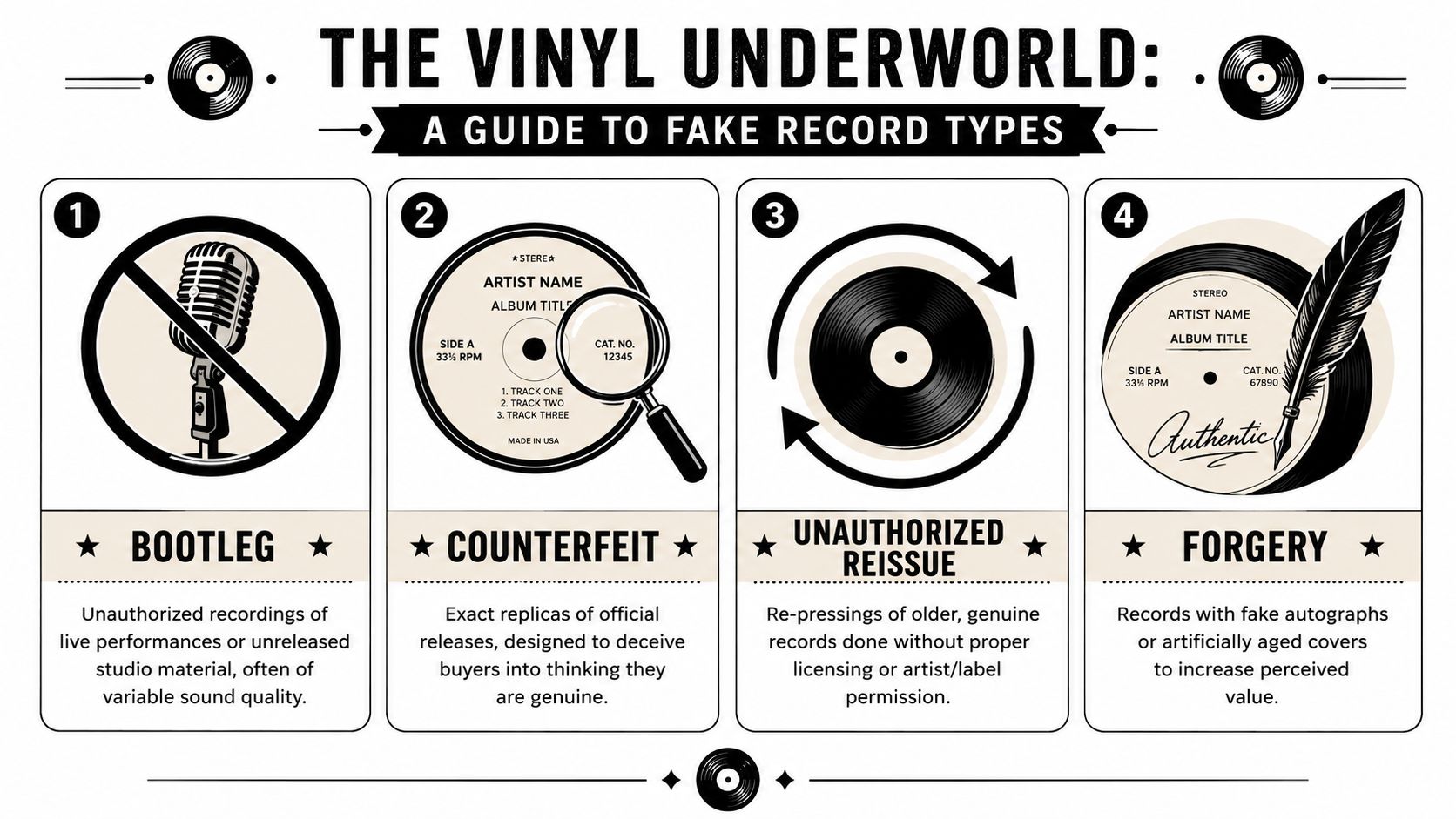
Counterfeit
A counterfeit is the closest thing to a fake designer bag in record form. It tries to pass itself off as an official pressing. Same artist, same title, similar sleeve, similar label design. The whole point is deception.
This is the version that catches collectors out most often because the seller may not describe it truthfully, or may not know themselves. If you think you’re buying an original UK pressing and the item is a modern imitation, the collectible value drops away immediately.
Bootleg
A bootleg usually contains material that was never officially released in that exact form. Think live recordings, radio sessions, demos, or studio outtakes pressed without permission.
Bootlegs can still interest some buyers, but they aren’t the same as official issues. You’re buying curiosity, not authenticity. Sound quality also varies wildly. Some are listenable. Some sound like they were pulled from poor digital sources and pressed in a hurry.
Unauthorised reissue
An unauthorised reissue sits in the murkier part of the market. It reproduces an older release without proper licensing or label approval. These often appear as “import” pressings or odd reissues of hard-to-find titles.
For a casual listener, that may sound harmless. For a collector or DJ, it matters. You may get inferior mastering, suspect vinyl compound, and packaging that only loosely matches the original.
Forgery and altered collectables
In this scenario, sellers add fake signatures, fake hype stickers, or artificial wear to increase the perceived value. The record itself may be real, but the presentation has been manipulated to create a story and justify a higher price.
That’s common with “rare signed copies” and allegedly old stock that looks theatrical rather than naturally aged.
Where novelty records fit
Not every strange record is fake. Some novelty records are intentionally decorative, oddly coloured, shaped, or packaged for display. They may be official and still play poorly, or they may be sold mainly as objects. The key question is simple. Was it marketed truthfully?
A useful way to keep the categories straight:
- Counterfeit means it pretends to be the genuine release.
- Bootleg means the material was never authorised in that form.
- Unauthorised reissue means an existing release was pressed again without permission.
- Forgery means the seller altered details to inflate value.
Collectors who stay organised often keep visual references handy, just as brands keep consistent design assets such as the VinylGold logo file. Consistency exposes fakes. The more familiar you are with how genuine releases present themselves, the harder you are to fool.

Visual Clues Spotting a Fake with Your Eyes
Most fake records reveal themselves before the stylus ever touches the groove. You can catch a lot by slowing down and looking properly.
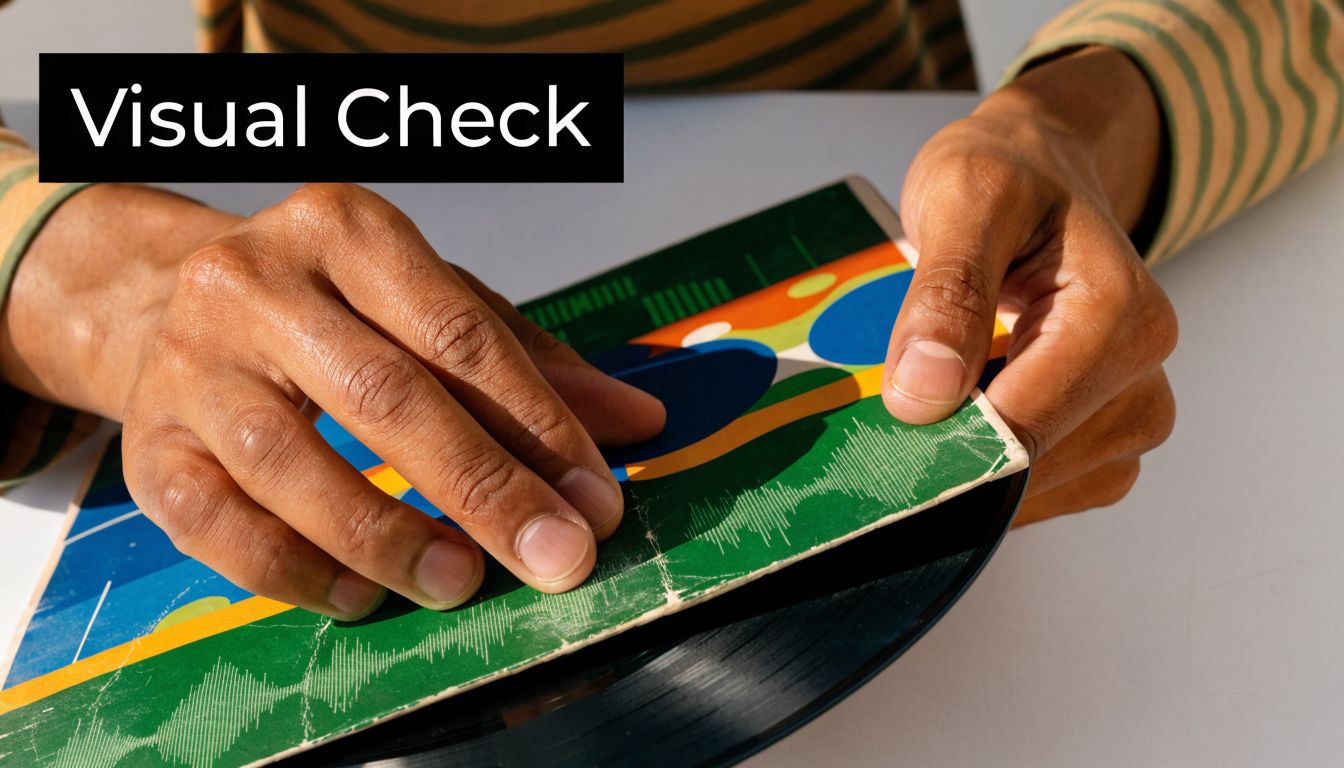
Start with the sleeve
A genuine sleeve usually has intention behind it. The print sits cleanly, the spine text is readable, and the cardboard feels like it belongs to the era or the type of reissue being sold.
A fake often gets the broad look right but misses the finish. Colours can look muddy or over-saturated. Fine text may blur. The image can appear slightly soft, as if copied from a scan rather than printed from production artwork.
Check these points in person or from seller photos:
- Spine print: If the title or catalogue text looks fuzzy, too thick, or badly aligned, be cautious.
- Card stock: Flimsy sleeve material is a warning sign, especially if the seller claims it’s a premium reissue or a vintage pressing.
- Cropping and borders: Official artwork tends to look deliberate. Counterfeits often have slightly awkward margins or image placement.
- Barcode quality: Pixelated lines or rough printing can point to low-grade reproduction.
Then inspect the centre label
The label tells you whether the pressing plant and printer were paying attention. Counterfeiters often fail here because buyers glance rather than inspect.
Look for off-centre printing, wrong fonts, poor colour matching, and strange spacing around the track list. If you know what the original label should look like, these errors stand out fast. On dance records, I also check whether side markings and speed info look professionally typeset. Cheap copies often have a “close enough” feel.
The label shouldn’t just resemble the original. It should look like it came from the same production logic.
Look at the disc before you play it
The vinyl surface and edge can say a lot. Poorly made records often show rough finishing, inconsistent sheen, or a slightly messy centre hole.
A quick visual checklist helps:
- Centre hole: If it looks uneven, badly punched, or too tight, quality control was probably weak.
- Edge finish: A rough edge or visible mould residue suggests poor manufacture.
- Surface texture: Strange cloudiness, pitting, or uneven appearance can indicate low-quality material.
- General symmetry: A record that looks slightly off before it spins often behaves badly once it does.
Common red flags in markets and fairs
In London and Kent record-buying circles, the warning signs often come as a cluster rather than a single giveaway. A rare title priced unusually low. A sleeve that looks almost right. A seller who won’t provide better photos. A batch of “mint originals” that all happen to be easy to fake.
That’s usually enough reason to pause and move to the deeper checks.
The Runout Groove Your Records Real Fingerprint
If the sleeve and label leave any doubt, go straight to the dead wax. The runout groove is where a lot of arguments end.

What you’re actually looking for
The matrix number is etched or stamped into the runout area between the final track and the centre label. Think of it as the record’s manufacturing fingerprint. It helps identify the cut, pressing, and sometimes the exact variation.
For UK buyers, this matters a lot. Some authentic pressings use familiar matrix patterns such as A-1U, and certain cuts carry engineer signatures that experienced collectors recognise immediately. Marks like PORKY can be especially useful because they’re tied to known cutting work and are much harder to fake convincingly.
According to this guide on identifying original vinyl through matrix numbers, matrix numbers in the runout groove are a key authenticator. The same source notes that counterfeits often have mismatched or absent matrices due to being cut from CD sources, resulting in up to 20 to 30% higher surface noise, and that authentic UK originals from plants like Decca or EMI typically weigh 130 to 150g, while fakes common in Kent flea markets can be as light as 100 to 120g.
How to inspect the runout properly
Don’t glance at it under flat room light. Tilt the record and catch the etching at an angle. A phone torch helps. Natural daylight is even better.
Use a simple method:
- Hold the disc under angled light so the etched characters reflect.
- Read every character slowly, including hyphens, letters, and side identifiers.
- Compare both sides, because one side may look convincing while the other gives the game away.
- Cross-reference with Discogs release notes for the exact label, country, and pressing variant.
If the seller is online, ask for close-up runout photos. If they avoid that request, take it seriously.
What genuine marks feel like
Original runout inscriptions tend to look purposeful. They’re part of the record, not an afterthought. The spacing, depth, and style usually make sense once you’ve seen enough genuine copies.
Counterfeits often fail in one of three ways:
- Missing information: The expected matrix isn’t there.
- Mismatched codes: The sleeve, labels, and runout point to different releases.
- Weak, odd, or generic etching: It looks shallow, clumsy, or copied without understanding.
If the sleeve says “first UK pressing” but the runout says something vague or contradictory, trust the runout.
For London and South East buyers, this is the test that saves the most money. Market tables and online listings can make a record look convincing from a distance. The dead wax usually doesn’t lie.
Audio and Physical Tests What a Fake Sounds and Feels Like
Some records pass the visual test and still fail in your hands. That’s why the final check is physical and audible.
Weight, flex, and edge quality
Pick the record up. A genuine pressing usually feels settled and properly formed. It doesn’t feel brittle, toy-like, or strangely flimsy for what it claims to be.
This matters even more when a seller claims a premium reissue or heavyweight pressing. If the disc feels unusually light, overly flexible, or poorly finished around the edge, the warning signs are stacking up.
A practical in-hand check looks like this:
- Weight: Compare it with another known genuine record of a similar era or format.
- Flex: A quality record should feel resilient, not weak or brittle.
- Edge finish: Run a finger carefully around the rim. Rough “flash” or burr-like excess suggests poor moulding.
- Flatness: Place it on the platter and check whether it sits cleanly without obvious warp.
What fake vinyl records often sound like
Counterfeit records often give themselves away in the first few seconds. The lead-in may be noisy. The top end can sound dulled off. Bass may feel thick but not controlled. Vocals can lose focus.
A lot of that comes down to source quality and manufacturing. According to this analysis of counterfeit vinyl performance, UK counterfeit vinyl often uses inferior compounds that cause playback wow and flutter to exceed 0.15%, which is above the below 0.08% standard cited for genuine pressings. The same source says a 2023 What Hi-Fi? UK test found 70% of suspect LPs had compressed dynamic range, at 10dB versus 14dB+ on originals, because they were sourced from lossy MP3 files.
What wow and flutter means in real listening terms
For non-engineers, wow and flutter is pitch instability. Notes don’t hold steady. Sustained chords wander. Pianos and pads feel seasick. On a DJ set, that instability can make a blend sound careless even when your technique is fine.
On soul, funk, disco, and house records, that matters. You need drums to sit confidently and musical phrases to stay locked. A fake pressing can make a transition feel like the decks are fighting you.
A bad counterfeit doesn’t just sound worse. It makes good DJing harder.
The playback test that matters most
Use a set-up you trust. Don’t test a suspicious record on a weak speaker and assume all is well.
Listen for:
- Lead-in noise: Excessive noise before the music starts is a warning.
- Inner groove distortion: Fakes often struggle more toward the end of a side.
- Flat dynamics: If everything feels pressed together, the source may have been poor.
- Tracking behaviour: If the stylus seems unhappy, the groove quality may be poor.
For working DJs, that’s the bottom line. If a record sounds unstable in the studio, it won’t improve under pressure in a crowded room.
Protecting Your Collection and Events Safe Buying Strategy
Saturday afternoon in a record shop in Soho or at a fair in Croydon feels great until a “rare original” turns into an expensive lesson. For collectors in London and the South East, the safest buy usually comes down to one thing. Slow the deal down and inspect the record like you expect to play it out, not just file it on a shelf.
Counterfeits keep showing up because sought-after titles keep selling. That point was covered earlier. What matters here is how to avoid getting caught by one before it reaches your home system or your DJ bag.
Buy from sellers who can deal in specifics
A good seller answers direct questions without getting defensive, and they answer them in record language. If someone cannot tell you what is in the deadwax, what version they are selling, or whether they have played it, treat that as a warning.
Ask for these before you pay:
- A clear photo of the runout groove on both sides
- The exact matrix or etching text, copied as written
- Confirmation of whether it is an original, licensed reissue, bootleg, or unknown
- Sharp photos of the spine, back cover, labels, and any inserts
- A plain description of playback. Surface noise, warp, off-centre press, skips
That last point matters more than many buyers think. A seller who says “untested” is not always dishonest, but for event use it is often not good enough.
Where risk drops, and where it rises
Independent record shops across London, Brighton, Guildford, and the wider South East still give buyers the best advantage because you can handle the record. You can check sleeve print, feel vinyl thickness, look at the edge profile, and tilt the disc under light to inspect the runout area before money changes hands.
Established fair dealers can also be reliable. The better ones expect questions and answer them fast.
Online buying needs a tighter filter. Discogs can work well if the listing includes exact matrix details, close photos, and seller notes that sound like they came from someone who has compared copies before. Marketplace listings with one dark sleeve photo and “vinyl looks good” are where trouble starts.
For home checking, use playback you trust. Good monitoring helps you catch low-level noise, smeared top end, and other signs of a poor source. Even outside DJ work, there is some overlap with choosing headphones for better dialogue isolation, because both tasks depend on hearing small details without the room covering them up.
A simple buying routine that works
Use a repeatable process.
Check the seller first. Then check the photos. Then compare the matrix details with known copies. If anything stays vague, walk away or pay only what an unofficial copy is worth to you.
In person, hold the record flat at eye level. Look for dish warp. Press lightly near the edge and feel how stiff the vinyl is. Some fakes feel oddly thin or springy. Then inspect the labels and deadwax before you even think about condition grading.
For DJs, one extra rule saves headaches. Never put a suspect record straight into an event crate without a full home play-test.
Why event buyers need to be stricter
A collector can afford one disappointing purchase. A working DJ cannot afford an unstable record halfway through a wedding set, a corporate event, or a packed dance floor in Hackney, Kent, or Surrey.
Reliability is part of the service. If a record has uncertain origin, poor groove cutting, or inconsistent pressing quality, it can throw off timing, level, and confidence at exactly the wrong moment. That is why experienced DJs build around proven copies and tested reissues, not wishful bargains. The standard should match the level of care clients expect from a polished set-up, like this DJ booth event performance set-up.

Support sellers who describe stock accurately, even when the truth lowers the price. That habit protects your collection, your reputation, and the quality of the records you trust in public.
Frequently Asked Questions About Fake Vinyl
A common London scenario goes like this. A seller turns up at a record fair in Greenwich or a car boot in Essex with a stack of “clean originals” priced just low enough to feel like a win. One record looks right from arm’s length, but under proper light the sleeve print is soft, the labels sit slightly off-centre, and the deadwax tells a different story. That is how many fakes move. They rely on speed, poor inspection, and buyer optimism.
The trade is large enough to matter. In the IPO’s report on fake vinyl enforcement, the BPI is credited with delisting £26 million worth of fake vinyl from online sites between 2020 and 2024. The same report also describes a February 2024 City of London Police raid on an illegal factory, where officers seized 18 tonnes of evidence and estimated the fake records found there could have cost the UK music industry more than £1 million if sold.
For collectors, that means more caution. For working DJs across London and the South East, it means protecting the set.
Quick Answers on Fake Records
| Question | Answer |
|---|---|
| Are all unofficial records fake? | No. Bootlegs, pirate pressings, unauthorised reissues, and outright counterfeits are different things. The practical question is whether the seller is describing the record honestly and pricing it accordingly. |
| Can a fake still play well? | Sometimes, yes. It may sound passable at home on a forgiving system. That does not make it reliable for club use, collector value, or repeated cueing. |
| Is a sealed record safer? | Sealed only means unopened. It does not confirm pressing origin, mastering quality, or authenticity. |
| What should I ask an online seller first? | Ask for sharp photos of both labels, the sleeve spine, and the runout on each side. Then ask them to type the full matrix exactly as etched or stamped. |
| Are fakes only a problem with rare originals? | No. In the London market I see suspect copies of dance 12-inches, reggae classics, indie staples, and common reissues as well as expensive first pressings. |
| What is the fastest in-person check? | Hold the record and sleeve separately. Check print sharpness, vinyl weight and stiffness, label alignment, then the deadwax. If two or three details feel off, leave it. |
A few short answers collectors and DJs often need
Weight and flexibility matter more than many buyers realise. A fake can feel oddly light, bend more than expected, or have a slightly waxy surface. None of that proves anything on its own, because genuine pressings vary. Put together with weak print, messy labels, and suspicious runout markings, it becomes a strong warning.
Runout groove details are still the best quick test available to ordinary buyers. A genuine copy usually has matrix information that matches known pressings in format, placement, and style. Fakes often get close but miss the exact sequence, use crude etching, or leave out marks that should be there.
For DJs, the standard is stricter. A record that “plays fine” in a bedroom test can still mistrack, sound flat, or drift in level on a big system in Soho, Croydon, Brighton, or Maidstone. That is a collection problem for one person. It is a service problem when a client has paid for a polished night.
Buy the copy you can verify, and price any uncertainty as risk.
If you’re planning a wedding, private party, or corporate event and want music handled with the same care collectors bring to a prized record, VinylGold delivers polished DJ sets built around authentic taste, dependable gear, and dance floors that feel effortless from the first track to the last.