
Few groups in music history carry as much complexity, controversy, and sheer brilliance as The Drifters. Born in the early 1950s, they gave the world some of the most iconic recordings in soul, R&B, and doo-wop history. Yet behind the smooth harmonies and timeless hits lies a story of constant reinvention. The group changed members so frequently that the name “The Drifters” became less a band and more a revolving institution. From the raw gospel energy of Clyde McPhatter to the velvet tenor of Ben E. King, and later to the polished pop-soul of the UK era, The Drifters never stood still. This guide covers every essential album, answers the questions fans ask most, and explains why this group still matters in 2026.
What You Need to Know First
Who were the original members of The Drifters?
The group formed in 1953 under the direction of talent manager George Treadwell. Clyde McPhatter led the original line-up, which also included Gerhart Thrasher, Andrew Thrasher, Bill Pinkney, and Willie Ferbee. Their sound drew heavily from gospel tradition. McPhatter’s soaring, emotionally charged voice defined the group’s early identity. However, McPhatter departed for a solo career in 1954, setting a precedent for the constant change that would follow. The original line-up is now largely a historical footnote, though their recordings remain foundational to understanding the group’s roots.
How many versions of The Drifters are there?
This is where the story gets complicated. George Treadwell owned the name “The Drifters” outright, which meant he could — and did — replace entire line-ups at will. The most dramatic example came in 1958, when Treadwell fired the entire group and replaced them with another act, The Five Crowns, overnight. Since then, multiple splinter groups have toured and recorded under variations of the name. In the UK particularly, several competing acts have claimed the Drifters identity simultaneously. Estimates suggest anywhere from four to six distinct line-ups have performed as The Drifters at various points, with legal disputes over the name continuing for decades.
Was Ben E. King the lead singer of The Drifters?
Ben E. King joined The Drifters in 1959 as part of the reconstituted line-up drawn from The Five Crowns. He quickly became their most recognisable voice, leading some of their greatest recordings including Save the Last Dance for Me and There Goes My Baby. However, his tenure lasted only until 1960, when a salary dispute prompted his departure. He then launched a legendary solo career, recording Stand by Me shortly after leaving. So while King was not the original lead singer, his voice became the most iconic associated with the group’s Atlantic peak.
What is The Drifters’ most famous song?
Under the Boardwalk (1964) consistently ranks as The Drifters’ most recognised song globally. Ironically, it was recorded under tragic circumstances — lead singer Rudy Lewis died the day before the session, and Johnny Moore stepped in to deliver the now-legendary vocal. Save the Last Dance for Me and Up on the Roof follow closely in terms of cultural reach. However, if you expand the question to include the UK era, Kissin’ in the Back Row of the Movies (1974) would rival all of them in British popular consciousness.
Are any of the original Drifters still alive?
As of 2026, none of the founding members from the 1953 original line-up remain alive. Bill Pinkney, the last surviving original member, passed away in 2007. However, individuals who joined during the group’s various classic eras have lived on in different capacities. The Drifters name itself, of course, continues — performers still tour under the brand today, keeping the music alive even as the human connection to the founding era fades with time.


The Atlantic Era (1953–1969): The Gold Standard
Clyde McPhatter & The Drifters (1956)
This debut album stands as one of the most important documents in early R&B history. The Drifters, led here by the incomparable Clyde McPhatter, delivered a sound that sat at the precise crossroads of gospel fervour and secular rhythm and blues. McPhatter’s vocal style was unlike anything mainstream audiences had heard before. Furthermore, his ability to bend notes and shift between registers with effortless grace set a template that would influence soul music for generations. Tracks like Money Honey and Such a Night crackle with raw, unpolished energy. Consequently, this record captures a group operating at a moment of genuine discovery — they were inventing something new with every track. Atlantic Records gave them the space to do it. The production is sparse by today’s standards, but that sparseness works in the album’s favour. Every vocal run hits harder precisely because nothing gets in the way. Additionally, this album provides the essential context without which the later, more polished eras of The Drifters make less sense. If you want to understand where the magic began, start here. This is not nostalgia — it is archaeology of the highest order.
Rockin’ & Driftin’ (1958)
By 1958, The Drifters had already undergone significant personnel shifts, and Rockin’ & Driftin’ reflects that transitional tension beautifully. Bobby Hendricks takes on lead vocal duties for portions of the record, alongside other members navigating the post-McPhatter landscape. Nevertheless, the album holds together with a consistency that speaks to the strength of the Atlantic Records production team. Leiber and Stoller, who produced much of this material, brought a cinematic sensibility to the arrangements. As a result, even the album’s lighter tracks carry emotional weight. The title itself telegraphs a certain restlessness — both musically and institutionally. The Drifters were, at this point, literally drifting. The shuffling membership created an identity crisis that this album simultaneously reflects and transcends. Moreover, the string arrangements that begin appearing here signal the more sophisticated sonic direction the group would pursue in the years ahead. Rockin’ & Driftin’ does not always get the recognition it deserves precisely because it sits between two iconic eras. However, that in-between quality is exactly what makes it fascinating. Consider it the bridge record — imperfect, transitional, and utterly essential.
The Drifters’ Greatest Hits (1960)
No single release did more to cement The Drifters’ legacy than this compilation. Released at the peak of their Atlantic golden era, it gathered the Ben E. King-led recordings that had reshaped what R&B could sound like. There Goes My Baby alone — with its unprecedented use of a full string section and tympani — represented a turning point in pop production history. Indeed, producer Jerry Wexler and the Leiber-Stoller team took a genuine artistic risk with that record, and it paid off spectacularly. Furthermore, Dance with Me and This Magic Moment appear here in all their lush, orchestrated glory. For SEO purposes and for music lovers alike, this collection functions as the definitive entry point into The Drifters’ catalogue. Consequently, if someone asks which record to buy first, this is the answer — full stop. The compilation also illustrates just how quickly the group evolved between 1958 and 1960. The jump in sonic sophistication is remarkable. Additionally, King’s vocals carry an aching sincerity that no amount of later imitation has ever quite matched. This is the record that explains why The Drifters still matter.
Save the Last Dance for Me (1962)
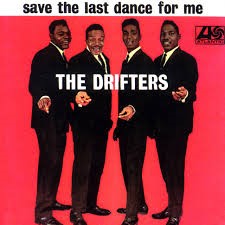
The title track of this album is one of the great pop songs of the twentieth century. The Drifters, still operating in their Atlantic prime, delivered a recording that balanced romantic longing with rhythmic propulsion in a way that felt both sophisticated and deeply human. Doc Pomus and Mort Shuman wrote the song, reportedly inspired by Pomus watching his wife dance at their wedding while he sat in a wheelchair. That backstory adds layers of meaning to an already emotionally rich performance. Moreover, the album surrounding the hit maintains a remarkably high standard. I Count the Tears and Sweets for My Sweet both demonstrate the group’s ability to move between tempos and moods without losing coherence. The Drifters by this point had fully embraced the orchestrated pop-soul template, and it suited them brilliantly. Additionally, the album captures the group at a moment of commercial and creative alignment — a rare and precious thing. Ben E. King had already departed by the time of this release, yet the group continued to produce work of the highest calibre. That continuity of quality, despite constant personnel change, remains one of the most remarkable achievements in pop history.
Under the Boardwalk (1964)
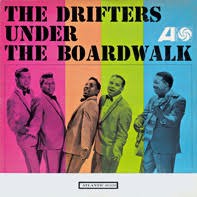
This album carries a bittersweet weight that most listeners never fully appreciate. The Drifters recorded the title track on the very day following lead singer Rudy Lewis’s sudden death. Johnny Moore, stepping into an almost impossibly difficult situation, delivered a vocal performance so warm and assured that it became the group’s signature moment. Therefore, every time someone hums those opening bars, they are unknowingly honouring both a great singer and the memory of his predecessor. The album itself captures the group at a creative high point — loose, sun-soaked, and emotionally generous. I’ve Got Sand in My Shoes and He’s Just a Playboy round out a collection that feels tailor-made for summer. Furthermore, the production here, helmed once again by Leiber and Stoller, strikes the ideal balance between pop accessibility and R&B authenticity. The Drifters had by now mastered the art of making sophisticated music sound effortless. Consequently, this album stands as one of the most purely enjoyable in their catalogue. It rewards repeated listening precisely because the craft behind it never announces itself — it simply works.
The Good Life with The Drifters (1965)
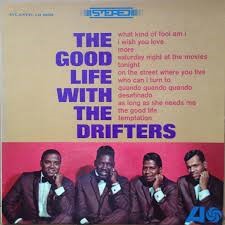
The Good Life with The Drifters represents the group pushing into slightly more ambitious territory. The arrangements here feel fuller and more ambitious than on earlier releases. Johnny Moore leads throughout with a warmth and authority that makes you wonder why his contribution to the group’s legacy remains undervalued. Indeed, Moore deserves far greater recognition than history has typically afforded him. Tracks like Follow Me and Far from the Maddening Crowd show a group reaching for something more cinematic and adult. Additionally, the album benefits from a consistency of mood that some of the earlier records — brilliant as they were — occasionally lacked. The Drifters sound genuinely comfortable here, which paradoxically makes the music more exciting rather than less. However, the album is not without its faults — a couple of tracks drift toward a pleasant but unremarkable middle ground. Nevertheless, those moments are minor complaints against a largely satisfying whole. This record functions best as a portrait of a group that had survived enormous upheaval and arrived at something resembling stability. Furthermore, it hints at the even smoother sonic direction they would pursue a decade later in the UK.
I’ll Take You Where the Music’s Playing (1965)

Released the same year as The Good Life, this album demonstrates just how productive The Drifters remained during the mid-1960s. The title track became a solid hit, and the album’s overall energy reflects a group still hungry despite their years of success. Moreover, the writing credits on this record read like a who’s who of Brill Building talent — Goffin, King, Mann, and Weil all contribute material. Consequently, the melodic quality across the album remains consistently high. Johnny Moore again anchors the performances with his reliable baritone warmth. The Drifters’ ability to interpret outside material — rather than relying on a single songwriter — gave them a flexibility that many of their contemporaries lacked. Additionally, this album captures the group at a commercial crossroads. The British Invasion had begun reshaping the pop landscape, and American vocal groups were feeling the pressure. Nevertheless, The Drifters responded not by chasing trends but by deepening their commitment to what they already did brilliantly. That confidence, in retrospect, reads as both admirable and strategically sound.
The Bell/UK Era (1970s): A Transatlantic Resurgence
The Drifters Now (1973)
Few commercial resurrections in pop history match the scale of The Drifters’ 1970s UK revival. The Drifters Now introduced a new, smoother sound tailored to British tastes — and British audiences responded with remarkable enthusiasm. The production, handled by Roger Greenaway and Roger Cook, replaced the raw Atlantic aesthetic with a polished, Radio 2-friendly sheen. Additionally, the song writing leaned into a distinctly British brand of nostalgic romanticism. Tracks like Like Sister and Brother and Come on Over to My Place became genuine UK hits. The Drifters, now operating with a completely different line-up from their 1960s peak, nevertheless retained enough of their harmonic identity to feel authentic rather than opportunistic. Moreover, the album’s commercial success proved that the brand still carried enormous emotional resonance with audiences. However, purists sometimes dismiss this era as a dilution of the original sound. That critique, while understandable, misses the point. The Drifters had always been an evolving entity — reinvention was not a betrayal of their identity but the very definition of it. Consequently, The Drifters Now deserves reappraisal as a genuinely accomplished pop record.
Love Games (1975)
Love Games finds The Drifters fully settled into their UK pop identity. The arrangements here are lush, the production immaculate, and the performances confident. Bill Fredericks takes on much of the lead vocal work, and his smooth delivery suits the material perfectly. Furthermore, the album benefits from a consistency of quality that reflects how well the group had adapted to their new musical environment. There Goes My First Love — which also appeared on its own release that year — is the clear standout, a melancholic pop gem that reached the UK Top 3. Nevertheless, the deeper cuts reward attention. The Drifters fill the album with hooks and harmonies that justify repeated listening rather than simply serving as filler between singles. Additionally, the production values here are among the highest of the group’s entire career. This may feel counterintuitive to purists who prefer the rawer Atlantic recordings, but the craftsmanship is undeniable. Consequently, Love Games functions as the definitive document of what the UK Drifters era actually sounded like at its most refined and most successful.
There Goes My First Love (1975)
In a prolific year, The Drifters released this album to capitalise on the enormous success of its title track. The song itself is a masterpiece of melancholic pop — perfectly constructed, beautifully sung, and almost unbearably wistful. Furthermore, the album surrounding it maintains a higher standard than you might expect from a quick commercial follow-up. The production team understood that the group’s UK audience had developed genuine affection for this line-up and this sound. Consequently, they delivered an album designed to sustain rather than simply exploit that goodwill. Bill Fredericks again leads with distinction, and the harmonies throughout reflect a group that had developed genuine cohesion. The Drifters also show unexpected range here — moving between uptempo numbers and slow, aching ballads with equal authority. Additionally, this album captures a moment when British pop and American soul genuinely complemented each other rather than competing. That synthesis sounds entirely natural rather than forced. In retrospect, There Goes My First Love represents the emotional peak of the UK era — commercially successful and artistically honest in equal measure.
Every Nite’s a Saturday Night (1976)
The Drifters close their most commercially successful UK period with this infectiously enjoyable record. The title track became another solid hit, and the album around it leans into a more dance-friendly, up-tempo direction. Additionally, the production responds to the emerging disco influence without fully surrendering to it — a neat balancing act. The group sounds genuinely energised here, and that energy is contagious. Moreover, the harmonies feel tighter and more assured than on some of the earlier UK releases. The Drifters had, by 1976, become a genuine British pop institution — a remarkable achievement for an American act that had reinvented itself so thoroughly. However, there is a slight sense of formula setting in by this point. The song writing occasionally feels like it is chasing the template established by earlier hits rather than expanding it. Nevertheless, this remains a highly listenable record, and the title track alone justifies its existence. Furthermore, as a snapshot of mid-70s British pop-soul at its most polished and populist, the album functions as a genuinely useful historical document.
Notable Later Works & Compilations
Live at Harvard University (1986, recorded 1972)
This live recording — captured in 1972 but not released until 1986 — offers something the studio albums cannot: The Drifters in the room, unfiltered. The energy is palpable from the first track. Moreover, the Harvard audience response gives the performance a warmth and spontaneity that studio recordings inevitably lack. Johnny Moore leads with characteristic grace, and the band behind him plays with a looseness that suits the material perfectly. Additionally, the set list draws intelligently from across the group’s career, giving newcomers an accessible overview while rewarding long time fans with deeper cuts. The Drifters demonstrate here that their live show matched — and sometimes surpassed — their recorded output. Furthermore, the 14-year gap between recording and release gives the album an intriguing quality. By 1986, the group had changed considerably, making this document feel almost like a transmission from a parallel timeline. Consequently, it functions both as a historical record and as a genuinely enjoyable concert experience. For fans who have exhausted the studio catalogue, this is the essential next listen.
The Drifters feat. Rick Sheppard (Various 1990s Releases)
The 1990s releases featuring Rick Sheppard represent The Drifters in their most commercially pragmatic phase. Sheppard, a capable and experienced performer, helmed a series of recordings aimed primarily at the nostalgia market. Additionally, these records targeted both American and European audiences who had grown up with the group’s classic material. The results are mixed but rarely embarrassing. The Drifters sound on these recordings is clean and professional, if occasionally lacking the spark of the great Atlantic years. Moreover, Sheppard himself brings genuine commitment to the material — this is clearly not a cynical exercise for him. However, the productions sometimes feel too polished, too eager to please, stripping away the rough edges that made the early records feel alive. Nevertheless, for fans who simply want more Drifters music delivered with care and competence, these releases deliver exactly what they promise. Furthermore, they underscore the remarkable longevity of the brand — still capable of finding audiences four decades after its commercial peak.
Up on the Roof / Under the Boardwalk Anthology

For anyone approaching The Drifters catalogue for the first time, this anthology represents the single most important purchase available. The collection spans the group’s entire Atlantic era with a curatorial intelligence that straightforward greatest-hits packages rarely achieve. Furthermore, it presents the recordings in context, allowing listeners to trace the evolution from McPhatter’s gospel-drenched early sides through to the lush orchestrations of the Moore era. The Drifters sound, across this collection, like multiple different groups — because they were. Yet a consistent emotional thread runs through everything: a commitment to melody, to harmony, and to the human voice as the primary instrument of feeling. Additionally, the anthology format allows you to appreciate just how many genuinely great songs the group recorded. The hits are obviously here, but so are the deeper cuts that reward patient listening. Consequently, this collection earns its reputation as the definitive digital introduction to one of American music’s most extraordinary and complicated stories. Start here, then work backwards.
The Drifters defy easy categorisation. They were not one group but many — a revolving cast of exceptional singers operating under a name that became synonymous with a certain kind of emotional honesty in popular music. Moreover, their story is a cautionary tale about the music industry’s capacity to exploit talent while simultaneously a testament to the resilience of that talent. The fact that multiple eras of The Drifters produced genuinely great music — despite constant upheaval, legal disputes, and commercial pressure — speaks to something deeper than luck or formula. Furthermore, in 2026, their catalogue sounds remarkably fresh. The Atlantic recordings carry a directness that modern production rarely achieves. The UK era records, meanwhile, demonstrate that great pop craftsmanship transcends geography and era. Whether you begin with Clyde McPhatter’s raw gospel fire or Bill Fredericks’ polished British-soul warmth, you will find music that rewards your time and attention. Ultimately, The Drifters remind us that reinvention, handled with integrity, is not a compromise — it is a form of artistic survival. And on the evidence of this catalogue, they survived magnificently.