
Few bands have reshaped heavy music as completely as Black Sabbath. Born in Birmingham in 1968, they didn’t just pioneer heavy metal — they invented its DNA. Down-tuned guitars, occult imagery, crushing riffs, and an atmosphere of dread became their signature. Over five decades, Black Sabbath cycled through vocalists, reinventions, and reunions. Yet the band never lost its identity. This guide breaks down every studio album across three defining eras, helping you understand exactly what makes each record essential, underrated, or historically significant.
The Questions Everyone Asks About Black Sabbath
Who was the original lead singer of Black Sabbath? Ozzy Osbourne fronted the original line up from the band’s formation in Birmingham in 1968 through to his dismissal in 1979. His distinctive wail and unsettling vocal delivery defined the early sound. Ozzy wasn’t a technically complex singer, but his voice carried an eerie, hypnotic quality that perfectly suited Tony Iommi’s dark, droning riffs. That combination produced some of the most iconic music in rock history.
What is the best Black Sabbath album? Most critics and fans point to either Paranoid (1970) or Master of Reality (1971). Paranoid delivered the band’s most recognisable songs and remains the commercial touchstone. Master of Reality pushed further into down-tuned, slow-burning heaviness and is widely considered the foundational blueprint for doom and sludge metal. Both records make a strong case, and the debate genuinely depends on whether you prioritise accessibility or raw sonic weight.
Why did Ozzy Osbourne leave Black Sabbath? Ozzy didn’t simply quit — the band fired him in 1979. Years of escalating substance abuse had made him increasingly unreliable. Rehearsals were chaotic, performances were inconsistent, and internal tensions had reached a breaking point. The split was messy and painful, but it ultimately freed both parties. Ozzy launched a hugely successful solo career, while Black Sabbath recruited Ronnie James Dio and experienced a genuine creative rebirth.
Is Black Sabbath still together? Black Sabbath officially disbanded following their “The End” farewell tour in 2017, which concluded with a final hometown show in Birmingham. Since then, individual members have occasionally reunited for one-off appearances, but no new music or touring has followed. Ozzy Osbourne has faced serious health challenges in recent years, making a full reunion increasingly unlikely. For now, “The End” appears to mean exactly that.
What tuning did Tony Iommi use? Tony Iommi tuned down to C# standard — significantly lower than conventional guitar tuning. This wasn’t purely an artistic choice. An industrial accident in his youth severed the tips of two fingers on his fretting hand. To ease tension on his custom prosthetic fingertips, Iommi used lighter strings and lower tuning. The result was a heavier, darker sound than anyone had produced before. That physical necessity accidentally became the sonic foundation of an entire genre.
-
 Buy Now£36.95
We earn a commission if you make a purchase, at no additional cost to you.
06/29/2026 12:29 am GMT -
 Buy Now£34.38
We earn a commission if you make a purchase, at no additional cost to you.
06/29/2026 12:31 am GMT -
 Buy Now£36.09
We earn a commission if you make a purchase, at no additional cost to you.
06/29/2026 01:01 am GMT

The Ozzy Osbourne Era (1970–1978): The Foundation
Black Sabbath (1970)
Black Sabbath‘s self-titled debut arrived in February 1970 and changed rock music permanently. Recorded in just two days on a shoestring budget, the album somehow captured a darkness no band had previously committed to tape. The opening title track builds from a single tolling bell and descending tritone riff into something genuinely menacing. Tony Iommi’s guitar work here isn’t flashy — it’s slow, deliberate, and suffocating. Furthermore, Geezer Butler’s bass lines don’t merely follow the guitar; they anchor the entire sonic architecture. Bill Ward’s drumming meanwhile brings a jazz-influenced looseness that stops the heaviness from becoming rigid. Ozzy’s vocals carry a frightened, wide-eyed quality that suits the occult subject matter perfectly. Tracks like The Wizard and N.I.B. demonstrate that Black Sabbath could also move and groove, not just bludgeon. Additionally, the album’s lo-fi production — far from polished — actually reinforces its unsettling atmosphere. Critics dismissed the record upon release, yet audiences immediately responded. It charted in the UK Top 10 without any singles. In hindsight, this album didn’t just launch Black Sabbath‘s career; it launched an entire genre. Every doom metal, stoner rock, and sludge metal band owes a direct debt to these eight tracks.
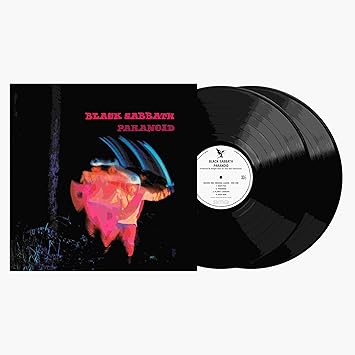
Paranoid (1970)

Released just eight months after the debut, Paranoid became Black Sabbath‘s commercial breakthrough and remains their most recognised album. The title track was famously written in minutes to fill a gap on the record, yet it became one of rock’s defining anthems. Iron Man delivers one of the greatest guitar riffs ever committed to tape. War Pigs opens with air-raid sirens and builds into a slow, crushing anti-war statement. Consequently, the album works both as a collection of standout singles and as a cohesive listen from front to back. Tony Iommi’s riff-writing here reaches a peak of memorable economy — every hook is simple, heavy, and completely unforgettable. Moreover, Geezer Butler’s bass performance throughout is masterful, particularly on Fairies Wear Boots. Ozzy sounds more confident and assured than on the debut, his voice sitting perfectly within the mix. Despite its speed in creation, Black Sabbath produced a tightly constructed, thematically rich record. Themes of war, mental illness, and paranoia run throughout, giving the album a conceptual weight that elevates it beyond a simple hard rock release. Therefore, Paranoid regularly tops polls of the greatest metal albums ever made, and it thoroughly deserves that status. For any newcomer to Black Sabbath, this remains the ideal starting point.
Master of Reality (1971)
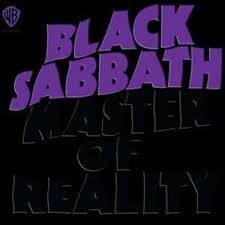
Master of Reality represents Black Sabbath pushing their sonic identity to its absolute extreme. Iommi tuned down even further and played through a treble booster, creating a guitar tone so thick and heavy it almost had physical weight. The album opens with Sweet Leaf — an unambiguous ode to cannabis — built on a feedback cough and one of the most imitated riffs in metal history. Additionally, Children of the Grave delivers urgent, galloping heaviness that would later influence thrash and death metal directly. Into the Void meanwhile closes the album with a slow, tectonic doom that points directly toward the genre that would emerge decades later. Furthermore, the production here strips everything back to essentials — no excess, no decoration, just crushing low-end and Ozzy’s haunting voice floating above the murk. Two acoustic interludes, Orchid and Embryo, provide brief breathing space without softening the overall impact. Consequently, Black Sabbath produced an album that functions simultaneously as a drug record, a doom metal blueprint, and a masterclass in sonic restraint. Many guitarists and producers cite this as the heaviest album ever made. Its influence on stoner rock, sludge metal, and doom metal is immeasurable. For sheer sonic innovation, Master of Reality arguably surpasses even Paranoid and stands as Black Sabbath‘s most important artistic statement.
Vol. 4 (1972)
Vol. 4 finds Black Sabbath in an experimental and turbulent mood, with the sessions famously fuelled by significant cocaine use in Los Angeles. The album opens with the thunderous Wheels of Confusion, a multi-section epic that demonstrates the band’s growing compositional ambition. Supernaut delivers a groove-heavy riff that funk musicians later sampled, most famously on a track by a certain Chicago rapper. Additionally, Changes introduces a surprisingly tender piano ballad that showcases a gentler melodic sensibility. The record therefore represents Black Sabbath expanding their palette without abandoning their core heaviness. Iommi’s guitar work becomes noticeably more varied — cleaner tones appear alongside the expected heavy riffs. Moreover, the production, handled by the band themselves, captures a raw energy that studio polish might have diluted. Tomorrow’s Dream and Cornucopia demonstrate that Black Sabbath could still deliver concise, punishing heavy tracks when required. The lyrics reflect the chaos of the LA sessions — themes of excess, escapism, and confusion run throughout. Consequently, Vol. 4 feels like both a creative peak and an early warning sign of the instability that would eventually fracture the original lineup. Nevertheless, it remains an underappreciated gem in the Black Sabbath catalogue.
Sabbath Bloody Sabbath (1973)
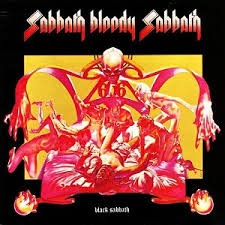
Sabbath Bloody Sabbath marked a significant evolution in Black Sabbath‘s approach, introducing synthesizers and far more complex arrangements than anything the band had previously attempted. Rick Wakeman of Yes contributed keyboards on several tracks, adding a progressive rock dimension that surprised many fans. The title track opens with a riff Iommi has described as one of the hardest he ever wrote, breaking through a creative block that had threatened the sessions entirely. Furthermore, A National Acrobat features shifting time signatures and layered harmonies that demonstrate genuine musical sophistication. Killing Yourself to Live meanwhile delivers a straightforward, powerful rocker that contrasts effectively with the album’s more ambitious moments. Additionally, the closing track Spiral Architect features full orchestral arrangement — an extraordinary step for a band built on heavy guitar riffs. Consequently, Black Sabbath proved here that heaviness and musical complexity were not mutually exclusive. The album received strong critical praise upon release and has only grown in stature since. However, it also signalled the beginning of a period where internal pressures and substance abuse would start visibly affecting the band’s output. Nevertheless, Sabbath Bloody Sabbath stands as one of Black Sabbath‘s most ambitious and fully realised studio achievements.
Sabotage (1975)
Sabotage arrived as Black Sabbath battled their former management in a lengthy and draining legal dispute. That conflict saturated the album’s lyrics with themes of betrayal, persecution, and aggression — and gave it an urgency their previous records hadn’t fully possessed. Hole in the Sky opens the album with ferocious energy, one of the fastest and most aggressive tracks in the entire Black Sabbath catalogue. Additionally, Symptom of the Universe anticipates thrash metal by almost a decade — its opening riff is relentless and precise. Megalomania on the other hand runs to nearly ten minutes, shifting between progressive intricacy and devastating heaviness. Furthermore, The Writ closes the album with barely concealed fury directed at their legal adversaries. Iommi’s guitar playing throughout is technically demanding and varied — clean passages sit alongside crushing riffs in ways the earlier albums rarely attempted. Moreover, Ozzy delivers some of his most committed and emotionally raw vocals here, matching the album’s confrontational tone perfectly. Consequently, Sabotage stands as one of the most underrated albums in the entire Black Sabbath discography. Many fans and critics who revisit the catalogue place it just behind Paranoid and Master of Reality. Therefore, if you consider yourself a serious Black Sabbath listener, Sabotage demands your full attention.
Technical Ecstasy (1976)
Technical Ecstasy represents the point where Black Sabbath began consciously moving away from their established sound. Influenced by contemporary hard rock and the emerging AOR market, the album features cleaner production, more conventional song structures, and noticeably less of the crushing low-end that defined the band’s earlier work. Gypsy opens the record with a surprisingly accessible hard rock feel. Additionally, Bill Ward steps up to provide lead vocals on It’s Alright — a genuinely charming pop-rock track that feels strikingly out of place on a Black Sabbath album. Rock ‘n’ Roll Doctor meanwhile delivers energetic, straightforward rock without a trace of doom. Consequently, fans at the time reacted with confusion and some disappointment. However, tracks like Dirty Women demonstrate that Black Sabbath hadn’t entirely abandoned their heavier instincts — its slow, grinding riff is deeply satisfying. Furthermore, the album’s willingness to experiment deserves recognition, even if the results feel inconsistent. Ozzy’s voice sounds somewhat detached throughout, reflecting his growing personal struggles and disengagement from the band. Nevertheless, Technical Ecstasy serves as an important transitional document showing Black Sabbath searching for a new direction in the mid-to-late 1970s. Revisiting it today, several tracks reward patient listeners more generously than the album’s reputation suggests.
Never Say Die! (1978)
Never Say Die! completed the original Black Sabbath lineup’s run of 1970s albums, though the sessions were far from harmonious. Ozzy had briefly quit and been temporarily replaced before returning for the record, and the resulting tension is audible throughout. The title track opens with a horn section — a bold and surprising choice that signals the album’s willingness to experiment in unconventional directions. Additionally, Junior’s Eyes stands as one of Ozzy’s most emotionally vulnerable vocal performances, hinting at the personal difficulties consuming him at the time. A Hard Road meanwhile delivers straightforward heavy rock without overcomplicating things. However, the album suffers from inconsistency — some tracks feel genuinely inspired while others sound like a band running out of collective energy. Furthermore, jazz and progressive influences appear throughout in ways that feel occasionally unfocused rather than deliberately ambitious. Consequently, Never Say Die! occupies a complicated position in the Black Sabbath discography — simultaneously a creative reach and an ending. Nevertheless, it contains enough strong moments to reward dedicated listeners. Within a year of its release, Ozzy departed the band entirely, closing this foundational chapter of Black Sabbath‘s history.
The Ronnie James Dio Era (1980–1992): The Rebirth
Heaven and Hell (1980)

Heaven and Hell announced an extraordinary second chapter for Black Sabbath, introducing Ronnie James Dio as Ozzy’s replacement and immediately silencing those who doubted the band could survive the transition. Dio brought a dramatically different vocal style — powerful, operatic, and technically refined in ways Ozzy had never attempted. Neon Knights opens the album at pace, signalling immediately that Black Sabbath had not become a slower or more cautious band. Additionally, the title track is an epic, shifting composition that showcases Dio’s theatrical range and the band’s renewed melodic ambition. Children of the Sea meanwhile balances delicate verses against a crushing chorus — a structural sophistication new to the Black Sabbath sound. Furthermore, Iommi’s guitar work sounds reinvigorated, incorporating more melodic leads alongside his signature heavy rhythm work. Bill Ward’s drumming — his final album with the band before leaving — contributes a loose, dynamic energy throughout. Consequently, Heaven and Hell regularly ranks among the greatest metal albums of the 1980s, not merely the greatest Black Sabbath records. Vinny Appice replaced Ward partway through the touring cycle. Moreover, the album proved definitively that Black Sabbath could evolve without losing their identity. Therefore, Heaven and Hell stands as one of the most successful reinventions in rock history.
Mob Rules (1981)
Mob Rules delivered a heavier and darker follow-up to Heaven and Hell, consolidating the Dio-era Black Sabbath sound rather than pushing it in new directions. The title track and Turn Up the Night open the album with urgent, aggressive energy that demonstrates the band firing on all cylinders. Additionally, The Sign of the Southern Cross provides the album’s emotional centrepiece — a slow-building, atmospheric epic that highlights Dio’s ability to project genuine gravitas. Vinny Appice handled drumming duties throughout, bringing a harder-hitting style that suits the album’s heavier overall tone. Furthermore, Iommi’s riff writing remains consistently strong, though arguably less melodically adventurous than on Heaven and Hell. Voodoo meanwhile offers a slower, groovier track that demonstrates Black Sabbath‘s continued rhythmic range. Consequently, while Mob Rules rarely surpasses its predecessor in critical assessments, it represents a thoroughly satisfying and cohesive heavy metal record. However, tensions between Dio and the band were already emerging during recording — he would depart shortly after the album’s release. Nevertheless, Black Sabbath left this chapter with two strong records that remain beloved by generations of heavy metal fans.
Dehumanizer (1992)
Dehumanizer brought Ronnie James Dio back to Black Sabbath after over a decade away, and the reunion produced one of the heaviest records either party had made in years. The album arrived during a period of intense activity in extreme metal, and Iommi’s production choices reflect that context — the guitar sound is enormous, modern, and industrial-tinged in ways the earlier Black Sabbath catalogue never attempted. TV Crimes leads the album with a ferocious, radio-friendly aggression. Additionally, I delivers one of Dio’s most powerful vocal performances — a monumental, mid-tempo crusher built around a devastating central riff. Time Machine meanwhile contributes a looser, more commercial track that provided the album’s most accessible entry point. Furthermore, Master of Insanity and Too Late demonstrate that Black Sabbath could still craft genuinely dark, unsettling atmospheres when required. However, the reunion proved short-lived — Dio departed again before the supporting tour concluded, citing conflicts over Ozzy Osbourne’s involvement in a Sabbath tribute concert. Consequently, Dehumanizer stands as a powerful but ultimately unfinished chapter in the Black Sabbath story. Nevertheless, it rewards serious listeners with some of the most ambitious and aggressive music the Dio-era lineup ever produced.
The Ian Gillan and Glenn Hughes Anomalies
Born Again (1983)
Born Again occupies one of the most bizarre positions in the Black Sabbath discography, featuring Deep Purple vocalist Ian Gillan in a collaboration that felt unconventional from the outset. Gillan’s powerful, bluesy delivery clashes productively — if unexpectedly — against Iommi’s heavy riffing. The title track and Disturbing the Priest demonstrate that Black Sabbath retained their capacity for genuine heaviness even with a non-traditional frontman. Additionally, Zero the Hero delivers a slow, grinding epic that stands among the heaviest tracks in the entire Black Sabbath catalogue. Consequently, the album has grown substantially in cult status since its release, with many fans now recognising it as genuinely undervalued. However, the production — notoriously bass-heavy and murky — remains a significant barrier for new listeners. Furthermore, the cover artwork featuring a demonic red baby provoked considerable controversy. Gillan and the band were never a long-term prospect, and he returned to Deep Purple the following year. Nevertheless, Black Sabbath created a fascinatingly strange record here — not a classic, but an essential curiosity for any serious student of the band’s full catalogue.
Seventh Star (1986)
Seventh Star occupies an unusual position — it began life as a Tony Iommi solo album before label pressure transformed it into a Black Sabbath release. Glenn Hughes of Deep Purple fame provided the vocals, delivering an unexpectedly soulful and bluesy performance across the record. No Stranger to Love and Heart Like a Wheel lean far closer to melodic hard rock than anything previously released under the Black Sabbath name. Additionally, Danger Zone provides a more conventionally heavy track that hints at what a proper Black Sabbath record with Hughes might have sounded like. Consequently, the album satisfies neither as a pure Black Sabbath record nor as a standalone Iommi solo project. Furthermore, Hughes struggled with substance problems during the touring cycle and departed before completing it. Nevertheless, his vocal performances on the record itself are frequently stunning, and Iommi’s guitar work sounds clean, melodic, and confident throughout. Therefore, Seventh Star works best when heard as exactly what it originally was — an Iommi solo album rather than a Black Sabbath statement. Approached on those terms, it offers considerable melodic charm and some genuinely strong individual tracks.
The Tony Martin Era (1987–1995): The Underrated Years
The Eternal Idol (1987)
The Eternal Idol introduced Tony Martin as Black Sabbath‘s new permanent vocalist, beginning an era that fans consistently underrate. Martin brought a powerful, melodic voice with strong range — technically capable and versatile in ways that suited Iommi’s increasingly structured songwriting. The title track and The Shining stand as immediate highlights — heavy, atmospheric, and melodically sophisticated. Additionally, Ancient Warrior delivers driving metal with a satisfying directness. Consequently, despite receiving limited commercial attention on release, the album demonstrates Black Sabbath in capable and focused hands. Furthermore, production duties went through significant upheaval — Ray Foulk replaced Jeffery Glixman partway through recording, creating some inconsistency in the final mix. However, Martin’s voice carries enough authority and warmth to maintain the album’s momentum across its running time. Moreover, Iommi’s riffing throughout balances accessibility with genuine heaviness — a skill he had refined across nearly two decades. Nevertheless, Black Sabbath never quite received the credit this era deserved, and The Eternal Idol remains one of the catalogue’s most overlooked starting points.
Headless Cross (1989)
Headless Cross stands as the Tony Martin era’s undisputed peak and one of the most unjustly overlooked albums in the entire Black Sabbath catalogue. Cozy Powell — one of rock’s greatest drummers — joined for this record, bringing a new authority and dynamism to the rhythm section. The title track builds slowly from atmospheric keyboards into a crushing riff-driven climax — a genuinely excellent piece of heavy metal songwriting. Additionally, Devil and Daughter and When Death Calls deliver powerful melodic metal with conviction and skill. Furthermore, Tony Martin’s vocals reach new heights here — his performance on Nightwing in particular showcases genuine emotional depth. Consequently, melodic metal fans who explore this record consistently rate it among their favourite Black Sabbath albums. Moreover, Iommi’s guitar tone is rich, warm, and perfectly suited to the album’s occult gothic atmosphere. The production is clean and well-balanced — a significant improvement over some of the decade’s earlier releases. Therefore, Headless Cross deserves recognition well beyond its cult following. If you’ve dismissed the Tony Martin era of Black Sabbath without investigating this record, you’re missing something genuinely exceptional.
Tyr (1990)
Tyr took Black Sabbath in a conceptually bold new direction, building the album thematically around Norse mythology and pagan imagery. Tony Martin’s lyrical interests and vocal style suited this thematic territory perfectly — his powerful tenor carries the epic, mythological subject matter convincingly. Anno Mundi opens proceedings with a panoramic, anthemic feel that sets the album’s ambitious tone immediately. Additionally, The Sabbath Stones delivers grinding, purposeful heaviness as a counterbalance to the more melodic tracks. Cozy Powell returned on drums, providing the same powerful, authoritative rhythm work that had elevated Headless Cross. Furthermore, Iommi’s guitar work balances heavy riffing with melodic lead playing throughout — his solo work here is among his most expressive of this period. Consequently, Black Sabbath produced a record with genuine thematic coherence and consistent musical quality. However, the album’s niche conceptual focus limited its commercial reach at the time. Moreover, Tyr received little promotional support from the label. Nevertheless, revisiting the record today reveals a thoughtful, well-crafted album that deserves a far larger audience than Black Sabbath received during this underappreciated chapter.
Cross Purposes (1994)
Cross Purposes arrived during a brief window when Black Sabbath appeared to be regaining mainstream attention, following the reasonable commercial performance of Dehumanizer. Tony Martin returned after the short-lived Dio reunion, and the album finds the band attempting to balance commercial accessibility with genuine heaviness. The Hand That Rocks the Cradle and Cross of Thorns deliver solid, hook-driven metal with strong melodic sensibility. Additionally, Evil Eye contributes a more aggressive, driving track that demonstrates Black Sabbath could still produce convincingly heavy material within the Martin framework. Furthermore, Bobby Rondinelli handled drums following Cozy Powell’s departure, maintaining a solid rhythmic foundation throughout. Consequently, Cross Purposes represents a professional, well-executed album that lacks only the spark of genuine inspiration. However, it performed better than many expected commercially, suggesting that Tony Martin’s Black Sabbath had a committed and appreciative audience. Moreover, the album’s production is clean and contemporary for its period. Nevertheless, Cross Purposes occupies a mid-tier position in the Black Sabbath catalogue — consistently decent but rarely transcendent.
Forbidden (1995)
Forbidden stands as the most critically maligned album in the Black Sabbath catalogue, arriving at the worst possible moment — the mainstream had shifted decisively toward grunge and alternative rock. Ice-T contributed a rap vocal to The Illusion of Power — a decision that confused and alienated the band’s core audience. Ernie C of Body Count handled production, bringing a hard rock approach that felt mismatched to Black Sabbath‘s strengths. Additionally, several tracks feel underdeveloped and rushed, as though the band was fulfilling a contractual obligation rather than delivering their best work. Consequently, Forbidden frequently appears at the bottom of fan rankings. However, Tony Martin deserves sympathy here — his vocals remain technically strong throughout a set of songs that largely fail to serve them. Furthermore, Get a Grip and Shaking Off the Chains offer glimpses of what a better-produced album might have achieved. Nevertheless, Black Sabbath clearly struggled to find their footing in the mid-1990s commercial landscape. Therefore, while Forbidden is far from essential, understanding it fully rounds out the complete picture of the Black Sabbath story — every band’s catalogue includes its most troubled chapter.
The Final Chapter
13 (2013)

13 brought Black Sabbath back to mainstream attention in extraordinary fashion, with legendary producer Rick Rubin stripping the sound back to its original essence. Ozzy returned to the microphone, Iommi contributed his most focused and purposeful riff-writing in decades, and Geezer Butler’s bass anchored everything with characteristic authority. Bill Ward, however, did not participate due to a contractual dispute — Brad Wilk of Rage Against the Machine stepped in on drums. End of the Beginning opens with deliberate, portentous slowness before unleashing a riff that sounds like a direct descendant of Black Sabbath and Into the Void. Additionally, God Is Dead? won a Grammy Award for Best Metal Performance — a significant mainstream validation. Furthermore, Rubin’s production philosophy — eliminate the unnecessary and emphasise what made the original records so powerful — proved exactly correct. Consequently, Black Sabbath produced a record that satisfied long-term fans without alienating newer listeners. Moreover, the album debuted at number one in multiple countries, demonstrating the band’s enduring global appeal. Therefore, 13 functions simultaneously as a celebration, a summation, and a dignified farewell. Combined with the 2017 “The End” tour, it gave Black Sabbath the conclusion their legacy deserved.
Black Sabbath‘s catalogue spans over four decades, multiple vocalists, and a remarkable range of sonic territory. Yet a consistent identity runs through every era — Tony Iommi’s unmistakable guitar tone, a commitment to heaviness as an emotional language, and an instinct for dark, powerful atmospheres that no other band has quite replicated. The Ozzy years built the foundation and defined the template. The Dio era proved that identity could survive reinvention. The Tony Martin years, consistently undervalued, demonstrated that Black Sabbath could produce strong, serious music without any of their famous frontmen in the spotlight. Approaching the full catalogue with open ears rather than received opinion rewards the listener enormously. Start with Paranoid if you’re new. Return to Headless Cross and Sabotage once you’re ready to go deeper. Then let the complete story — every triumph, experiment, and stumble — reveal itself on its own terms.