


Sure, a quick “wedding singer near me” search on Google is where most couples start, but the real magic happens when you dig a little deeper. The best local talent isn’t always at the top of the search results; they’re often found through trusted industry connections. Think venue-preferred supplier lists, niche wedding directories, and even a bit of savvy Instagram scrolling.
Where to Find Your Local Wedding Singer
Finding the right musician is about more than just filling a slot in your timeline; it’s about choosing an artist who will shape the entire mood of your day. It’s less about algorithms and more about finding a genuine connection. Hiring a singer from your area isn’t just for convenience—it saves you a bundle on travel fees and cuts down on logistical headaches, which is a massive win for your budget and your sanity.

Go Beyond The Basic Search
While your browser is a decent first stop, the most sought-after singers often pop up in more curated spaces. These are the places that have already done some of the legwork for you, connecting you with pros known for their talent and reliability. Many wedding singers operate as local service providers, and understanding a bit about Local SEO for service area businesses can give you a peek behind the curtain of how they show up online.
Here’s where the real gems are hiding:
- Venue-Preferred Supplier Lists: Your wedding venue is your secret weapon. They’ve seen it all and their lists are packed with artists who are punctual, professional, and already know the venue’s acoustics and house rules inside and out.
- Specialised Wedding Directories: Websites that live and breathe weddings are goldmines. They sort artists by region and genre, making it ridiculously easy to find a singer who matches your style and is based nearby.
- Social Media Hashtags: Never underestimate the power of Instagram. A quick search for hashtags like
#LondonWeddingSingeror#KentLiveMusicwill pull up candid videos of singers doing their thing at real weddings. It’s the most unfiltered view you’ll get of their performance style and how they connect with a crowd.
Your goal is to build a solid shortlist of potential singers who aren’t just talented, but are also conveniently local. A nearby singer is far more likely to be up for an in-person meeting or even a quick visit to the venue beforehand.
The Rise of Live Music in The UK
The move toward bespoke, live performances is more than just a passing trend. In fact, live music and wedding singers are a huge part of the UK’s 2025 wedding trends, and it’s easy to see why. The broader music sector contributed a record £8 billion to the economy in 2024, and weddings are a massive part of that.
Couples are ditching generic Spotify playlists for powerful, live performances that make the whole day feel elevated and deeply personal. It’s a shift that proves music that feels personal makes events legendary.

The bottom line is clear: live music is no longer just background noise; it’s become the heartbeat of modern UK weddings. This is an industry that’s powering £4.8 billion in UK exports, and you can get more insights into the booming UK wedding industry on weddingmusicletter.com.
Alright, you’ve whittled down your list. Now for the fun part—putting on your critic’s hat and really listening. You’ve sifted through the local talent, and the next step is separating a good singer from a performer who will make your wedding day unforgettable.
This is where you dive into their demos and, more importantly, see them live.
How to Judge Demos and Live Showcases
A demo is a singer’s musical calling card. It’s supposed to be flawless, so your job is to listen beyond the studio shine. Is their voice clean and controlled, or does it sound like it’s been heavily processed? A pro’s demo should feel authentic, not like a collection of studio tricks.

What to Listen For
Listen for range. Can they belt out a soulful Etta James classic and then bring it down for a delicate, modern acoustic ballad? A great wedding singer needs to navigate different vibes—from the gentle ceremony music to the drinks reception chatter and the all-important first dance. Their demo reel should prove they have this versatility.
The technical side matters, too. Pay attention to the sound quality itself. A professional invests in their craft, and that includes their gear and their technical know-how. Understanding the basics, like how to prevent microphone feedback, is a clear sign of an experienced performer who won’t let technical glitches disrupt your day.
Why Seeing Them Live Is Everything
Demos are a great start, but they only tell half the story. Nothing, and I mean nothing, beats seeing a singer perform live. This is where you find the magic—or the lack of it. Look for public gigs, wedding fairs, or dedicated showcases.
Watch how they own the space. Do they connect with the audience, or are they just singing at them? Stage presence is huge. You’re not just hiring a voice; you’re hiring someone to create an atmosphere with confidence and warmth.
A singer’s ability to connect with an audience in real-time is what separates the hobbyists from the seasoned professionals. Pay attention to how they handle the quiet moments between songs—their professionalism and personality will shine through.
This is also your chance to spot red flags you’d never hear on a recording. Are they relying on a cheesy, overpowering backing track? Does their equipment look like it’s seen better days? A true professional takes pride in their entire presentation.
Here’s a quick way to think about what you’re evaluating in both formats.
Demo vs Live Performance: What to Look For
| Evaluation Criteria | In a Demo Recording | In a Live Performance |
|---|---|---|
| Vocal Quality | Pitch accuracy, clarity, and tone. Is it clean or overly edited? | Consistency, stamina, and ability to project without straining. |
| Versatility | Range of genres and styles showcased in their song selections. | Ability to adapt to the room’s energy and switch styles seamlessly. |
| Stage Presence | N/A (This is the demo’s biggest limitation). | Confidence, charisma, and how they interact with the audience. |
| Professionalism | High-quality audio production and a polished final product. | Quality of gear, seamless transitions, and handling of any issues. |
| “The Vibe” | Does the sound match the feeling you want for your wedding? | Does the performance create the atmosphere you’re looking for? |
Ultimately, your decision needs to balance what you hear in a polished demo with what you feel during a live show. This two-part approach ensures you’re booking a complete performer who will elevate every moment of your wedding.
Essential Questions to Ask Before You Book
So, you’ve found a singer whose voice gives you goosebumps. The demos are amazing, the vibe feels right, and you’re ready to get them in the diary. Hold on for just a moment.
Before you sign on the dotted line, it’s time for a proper chat. This isn’t about grilling them under a spotlight; it’s about making sure the professional you’re hiring can deliver the seamless, brilliant performance you’re dreaming of. Getting the practical details ironed out now is the secret to a stress-free wedding day.
You’re moving past the “feel” and into the nuts and bolts. Think of it this way: you’re not just hiring a voice, you’re bringing a key supplier into your wedding team. Getting clear on logistics, music, and the business side of things isn’t just smart—it’s essential.
The Logistical Must-Haves
Every performer has a specific set of needs to make their magic happen. Your venue might be the most beautiful place on earth, but if it can’t support your singer’s gear, you’re setting yourself up for a day of headaches. Don’t just assume the singer and the venue will sort it out themselves. You are the bridge.
Start with these absolute basics:
- What are your exact space and power requirements? You need specifics here. Does your singer need one standard plug socket or two? How much physical space does their setup actually take up? This is crucial information for your venue coordinator.
- Do you provide your own sound system (PA)? Is it powerful enough for your venue and the number of guests? A singer performing for 50 people at a ceremony has totally different audio needs than one entertaining 150 guests at a reception.
- How long do you need for setup and soundcheck? This time has to be blocked out in your day’s timeline. Ideally, you want them fully set up and sound-checked long before the first guest walks in.
Nailing these questions means the only surprise on the day will be how incredible the music is, not a frantic last-minute hunt for an extension lead.
“A professional wedding singer has answered these questions a hundred times. They should be able to provide clear, immediate answers. Vague responses about equipment or setup time are a red flag.”
The Musical Details
Now for the fun part—the music itself. This is where you confirm that the performer you fell for on a demo can create the personalised, unforgettable atmosphere you want for your wedding.
It’s time to get into the nitty-gritty of their craft:
- What is your process for learning a special request song? This is a big one, especially for your first dance or aisle walk. Do they charge extra for it? And how much notice do they realistically need to perfect it?
- How do you handle guest requests during the performance? Some singers love the spontaneity and are happy to take requests. Others prefer to stick to a carefully curated setlist designed to maintain a certain flow and energy. It’s good to know their style.
- Can we see your full repertoire or song list? This is the best way to get a feel for their stylistic range. It also gives you a fantastic starting point for building your wedding day soundtrack together.
The Business Essentials
Finally, it’s time to talk business. This isn’t awkward; it’s about protecting yourself and the performer. Any true professional will have clear policies and will appreciate you asking. This is what separates the pros from the hobbyists.
Make sure you cover these critical points:
- Are you covered by Public Liability Insurance (PLI)? This is non-negotiable. Many UK venues won’t even allow a supplier on-site without proof of it. A lack of PLI is a major warning sign.
- What is your backup plan in case of illness or emergency? Life happens. A solo performer, in particular, must have a network of trusted, high-calibre colleagues they can call on if they’re unable to perform. This question reveals their level of professionalism and preparedness.
- What are your payment terms and cancellation policy? Get everything in writing. A proper contract should clearly outline the deposit amount, the final balance due date, and exactly what happens if either you or the performer has to cancel.
Asking these direct questions is the final check. It confirms you’ve found the perfect wedding singer near me who isn’t just a talented artist, but a reliable and professional partner for your big day.
Alright, let’s talk about the part of wedding planning that feels a bit less romantic but is absolutely essential: the money and the paperwork. Getting the contract and pricing sorted is a sign you’re dealing with a true professional, and it’s the best way to protect both you and your performer.
Navigating quotes can be tricky because there’s no one-size-fits-all price. A great singer’s fee will reflect their experience, how in-demand they are, how far they need to travel, and exactly what you’re asking them to do. It’s a dynamic market, particularly when you consider the average UK wedding hit £21,990 in 2025.
This is all part of a thriving £3.9 billion industry, with around 265,000 marriages taking place each year. With 78% of couples planning their wedding over one to two years, the best entertainers get booked up incredibly quickly. That’s why you need to understand their packages and lock in your date. You can dig into more fascinating stats about the thriving UK wedding industry on sonas.events.
Common Pricing Packages
When you start looking for a wedding singer, you’ll find that most offer a few different packages. This gives you the flexibility to find something that works perfectly for your timeline and budget.
Here’s what you’ll typically see:
- Ceremony Only: This is all about making the main event unforgettable. It usually includes music as your guests arrive, for the walk down the aisle, during the signing of the register, and for your exit as a married couple. It adds a powerful, personal touch.
- Ceremony & Drinks Reception: This option extends the live music into your first celebration as newlyweds. While you’re off taking photos, the singer will keep your guests entertained with a relaxed, upbeat atmosphere as they start to mingle.
- Full Day Experience: For those who want music woven throughout their day, this is the ultimate package. It covers the ceremony and drinks reception, and often adds an early evening set to get the party started before the DJ takes over. Some singers will even perform your first dance live.
The Non-Negotiable Contract
A handshake or a verbal agreement just won’t cut it. A professional contract is your safety net, spelling out every single detail so there are no grey areas or last-minute panics. It should be clear, fair, and easy for you to understand.
Your singer’s contract must clearly lay out:
- Full Names and Contact Details: For both you and the performer.
- Date, Times, and Venue Address: List the exact date, the venue’s specific address, and the precise start and finish times for the performance.
- The Total Fee and Payment Schedule: This should break down the total cost, the non-refundable booking fee (deposit), and when the final balance is due.
- Cancellation Terms: It needs a clear policy on what happens if you have to cancel. Just as importantly, it must cover what happens if the singer has to cancel, including their backup plan.
Always ask for the singer’s ‘rider’ or technical spec sheet before you sign anything. This document lists their requirements for power, space, and access. You need to share this with your venue coordinator straight away to make sure they can accommodate everything. Getting this confirmed early avoids so much stress on the day.
Coordinating Your Singer With Your Wedding Timeline
A truly fantastic performance feels effortless, but behind the magic lies seamless coordination. This is where we get into the nitty-gritty logistics—the behind-the-scenes work that makes your live music flow without a single awkward pause. A shared schedule between you, your singer, the venue, and your DJ is the blueprint for a perfect day.
Thinking through these details is what separates a good wedding from a truly great one. It ensures your singer’s talent is showcased perfectly and your celebration moves along beautifully. This is the practical advice that makes everything come together.
Planning for Perfect Sound and Flow
First things first: the soundcheck. Your singer needs dedicated time to set up their equipment and test the acoustics of the room, ideally long before any guests arrive. You should coordinate with your venue to give them access about 90 minutes to two hours before the ceremony or reception is set to begin.
This simple step prevents the jarring sound of “check, one, two” while your guests are mingling. It also gives the artist a chance to fine-tune their sound to the space, ensuring you get crystal-clear vocals that fill the room without overpowering conversation.
Next, you need to think about where your performer will be. A classic mistake is placing the singer in a spot that inadvertently creates chaos. For instance, putting them too close to the top table during dinner can make speeches feel cluttered or get in the way of catering staff. Work with your venue to find a spot with great visibility and sound, but one that doesn’t disrupt the natural flow of the event.
Mapping Out the Music Sets
Strategic scheduling of the performance is crucial for building and maintaining the right energy. While a typical structure might involve two 45-minute or 60-minute sets, this is completely adaptable to your day. The goal is to time the music to complement other activities, not clash with them.
- The Drinks Reception: An acoustic set here is perfect. It creates a relaxed, sophisticated atmosphere while guests mingle and enjoy a glass of fizz.
- The Wedding Breakfast: Softer, more instrumental music can provide a beautiful backdrop to dinner, but always schedule a break for the speeches.
- The Evening Party: An upbeat set right after the meal is a brilliant way to get everyone in the mood for dancing before the DJ takes over.
This visual shows how the timeline you agree upon becomes formalised through the booking process, starting with your package choice.
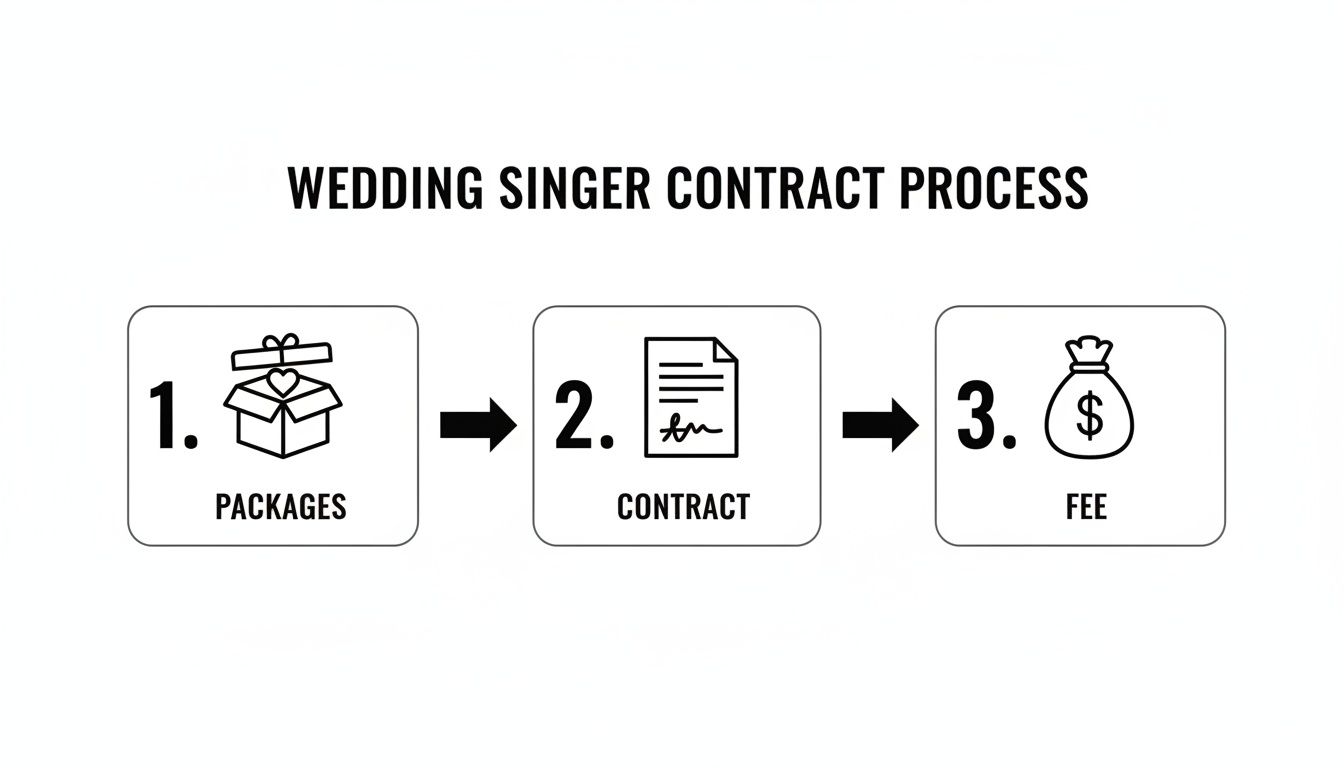
The steps shown here—from package selection to contract and payment—lock in the timeline and set details you’ve discussed, making them an official part of your agreement.
The most overlooked detail? The handover between the live music and the DJ. A sudden, dead silence can kill the party vibe in an instant. Plan for the singer’s final song to transition directly into the DJ’s first track. This creates a continuous flow of music that keeps the dance floor packed.
Ultimately, clear communication is everything. A week before the wedding, share a copy of the final, detailed timeline with your singer, DJ, and venue coordinator. This makes sure everyone is working from the same script. When your musical acts work together, you create some seriously golden vibes in the DJ booth and on the dance floor. This shared understanding allows your talented wedding singer near me to focus on what they do best: creating an unforgettable experience for you and your guests.

Your Final Pre-Wedding Music Checklist
As the wedding day gets closer, that last bit of organisation can mean the difference between feeling stressed and feeling serene. This is your final run-down for tying up the loose ends with your wedding singer, making sure the music flows as beautifully as the champagne.
Think of it as your final confirmation call. Get these details sorted, and you can stop worrying about the “what-ifs” and just lose yourself in the day.
One Month Out
This is the time to lock in your musical vision. Your singer needs this window to polish any special requests and get their setlists just right.
- Finalise Your Song Choices: Nail down the big ones—your aisle walk, register signing, first dance, and any other tracks you absolutely must hear. Pop them over in a clear, final email.
- Confirm Performance Times: Double-check the exact start and end times for each performance. For example, “Ceremony music from 1:30 PM to 2:00 PM” and “Drinks reception set from 2:30 PM to 3:30 PM.”
One Week To Go
With only days left, it’s all about the on-the-day logistics. The idea is to give your singer everything they need to do their thing without having to tap you on the shoulder.
Designate a day-of contact who is not you or your partner. This could be someone in the wedding party, your planner, or the venue coordinator. Give the singer their name and mobile number for any urgent questions on the day.
This simple step is an absolute game-changer. It empowers someone else to handle small queries—like where to park or the best spot to set up—freeing you up completely.
The Day Before
The final checks are simple but they are crucial.
- Verify Arrival & Soundcheck Times: A quick, friendly text to reconfirm the agreed-upon arrival time for setup and soundcheck is all it takes.
- Prepare Final Payment: If you’ve got a balance to pay on the day, get it ready in a clearly labelled envelope. Hand this job off to your designated contact, who can give it to the singer after their final song.
By ticking off these last few things, you ensure your singer has everything they need. Now you can relax, knowing the incredible atmosphere you planned for is in safe hands.
At VinylGold, we believe the right music makes the moment unforgettable. From timeless classics to modern hits, we deliver bespoke DJ experiences for weddings and events across London and Kent. Discover how we can set the perfect tone for your celebration at https://www.vinylgold.co.uk.