
Few bands have shaped American rock music as profoundly as The Eagles. Rising from the sun-baked streets of early-1970s Los Angeles, they blended country warmth with rock urgency. That fusion produced some of the most enduring songs in popular music history. From their self-titled debut in 1972 to their final studio album in 2007, The Eagles crafted a catalogue that continues to captivate millions of listeners worldwide. This guide covers every studio album, answers the questions fans ask most, and explains why their legacy remains as vital as ever.
Essential Facts Every Eagles Fan Should Know
Who were the original members of The Eagles? The Eagles formed in 1971 with four founding members: Glenn Frey, Don Henley, Bernie Leadon, and Randy Meisner. Each brought a distinct musical identity to the band. Frey contributed sharp song writing instincts and a rock edge. Henley delivered powerful drumming and one of rock’s most distinctive voices. Leadon provided deep country and bluegrass roots, while Meisner anchored the sound with melodic bass lines and soaring high harmonies. Together, they created a chemistry that few bands have matched. Their individual strengths allowed The Eagles to move fluidly between country, folk, and rock — a versatility that defined their early years and set the foundation for everything that followed.
What was The Eagles’ last studio album? Long Road Out of Eden, released in 2007, stands as the final studio album from The Eagles. It arrived after a remarkable 28-year gap since their previous studio effort, The Long Run (1979). The double album debuted at number one in fourteen countries and demonstrated that the band still commanded enormous commercial appeal. It was the first Eagles studio album to feature guitarist Joe Walsh as a full collaborative force alongside Frey and Henley. Rather than coasting on nostalgia, the record tackled themes of war, materialism, and modern America with genuine conviction. For long-time fans, it served as a satisfying and surprisingly ambitious final chapter.
Why did Bernie Leadon leave the band? Bernie Leadon departed The Eagles in 1975, and creative tension sat at the heart of his decision. As the band evolved, Glenn Frey and Don Henley pushed the sound firmly toward harder rock territory. Leadon, however, remained committed to the country and bluegrass influences that had shaped the band’s earliest work. He grew increasingly frustrated as those roots faded from the music. By the time the band completed On the Border and One of These Nights, the shift in direction felt irreversible. Leadon famously poured a beer over Frey’s head at a party shortly before his exit — a vivid illustration of how strained things had become. His departure marked the end of The Eagles’ purest country-rock phase.
Which Eagles album is the best-selling of all time? Their Greatest Hits 1971–1975, released in 1976, regularly challenges Michael Jackson’s Thriller for the title of the best-selling album in US history, with certified sales exceeding 38 million copies domestically. The compilation arrived at the peak of the band’s popularity and captured all the radio staples that had made The Eagles household names. Its extraordinary commercial footprint speaks to the timeless quality of those early recordings. Songs like Take It Easy, Desperado, and Lyin’ Eyes resonated just as powerfully on the compilation as they had on their original albums. For many listeners, it remains the definitive entry point into the world of The Eagles.
Is Joe Walsh an original member? No. Joe Walsh joined The Eagles in 1975 as a direct replacement for Bernie Leadon. Walsh arrived with a reputation as a hard-rocking guitar virtuoso, having already made his name with the James Gang and as a solo artist. His addition fundamentally changed the band’s sound. He brought a heavier, more electric guitar presence that pushed The Eagles further from their country origins. Crucially, Walsh co-wrote and played the iconic twin-guitar intro on Hotel California, one of the most recognisable riffs in rock history. His irreverent personality also lightened the mood within a band that could take itself very seriously. Walsh proved to be not just a replacement, but a genuine upgrade in firepower.
The Eagles’ Studio Album Discography at a Glance
| Year | Album Title | Key Hit Singles | Genre / Vibe |
|---|---|---|---|
| 1972 | Eagles | “Take It Easy,” “Witchy Woman” | Pure Country-Rock |
| 1973 | Desperado | “Tequila Sunrise,” “Desperado” | Concept album (Old West theme) |
| 1974 | On the Border | “Best of My Love,” “Already Gone” | Shift toward a harder Rock sound |
| 1975 | One of These Nights | “Lyin’ Eyes,” “Take It to the Limit” | Polished, radio-ready Rock/Pop |
| 1976 | Hotel California | “Hotel California,” “Life in the Fast Lane” | Their magnum opus; darker themes |
| 1979 | The Long Run | “Heartache Tonight,” “I Can’t Tell You Why” | Final album before their 14-year breakup |
| 2007 | Long Road Out of Eden | “How Long,” “Busy Being Fabulous” | Double album; a modern comeback |





Album by Album: The Complete Story
Eagles (1972)
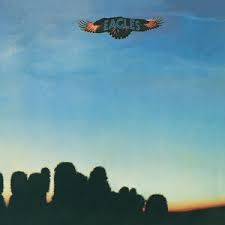
The Eagles launched their career with a debut that arrived fully formed and brimming with confidence. Recorded in London with producer Glyn Johns, the album established the country-rock template that would define the band’s early identity. “Take It Easy,” co-written by Glenn Frey and Jackson Browne, opens the record with an irresistible ease that immediately signalled something special. Meanwhile, “Witchy Woman” offered a darker, more mysterious counterpoint, showcasing Don Henley’s commanding vocals. Critically, The Eagles demonstrated from the outset that they could write songs that felt both timeless and distinctly Californian. Furthermore, the album produced three Top 40 singles, an impressive achievement for a debut. The harmonies throughout are immaculate, sitting at the intersection of the Everly Brothers and the Flying Burrito Brothers. In addition, Leadon’s banjo and pedal steel work gave the record an authentic country texture that separated The Eagles from their LA rock contemporaries. Consequently, Eagles remains one of the strongest debut albums in American rock history.
Desperado (1973)
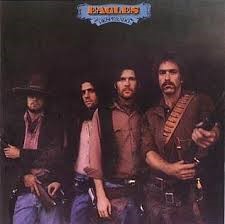
Desperado represents one of the boldest artistic swings in The Eagles’ entire catalogue. Conceived as a concept album built around the metaphor of Old West outlaws, it drew a deliberate parallel between gunfighters and the rock star life. Consequently, the record has a cinematic quality that sets it apart from anything the band attempted before or after. The title track, Desperado, became one of Don Henley’s signature vocal performances — a melancholic plea that resonated far beyond the album’s concept. Additionally, Tequila Sunrise demonstrated that The Eagles could craft radio-friendly melodies without sacrificing emotional depth. However, despite its artistic ambition, the album underperformed commercially relative to the debut. Nevertheless, time has been very kind to Desperado, and fans now regard it as one of the band’s most cohesive and rewarding works. Bernie Leadon’s country and folk influences shine most purely here, and the result is an album of genuine warmth and longing. Above all, Desperado confirmed that The Eagles harboured serious artistic ambitions well beyond pop radio success.
On the Border (1974)

On the Border marked a decisive turning point in The Eagles’ sound and direction. Producer Glyn Johns departed during the sessions, and Bill Szymczyk stepped in — a change that proved enormously consequential. Szymczyk encouraged a harder, more electric approach, and The Eagles responded with their most rock-forward record to date. Moreover, guitarist Don Felder joined the band during these sessions, adding a powerful new dimension to the live and studio sound. “Already Gone” opens the album with a riff-driven swagger that felt genuinely new, while “Best of My Love” provided the band’s first number-one single. Consequently, On the Border demonstrated that The Eagles could successfully broaden their appeal without alienating their existing fanbase. However, the shift in direction also sowed the seeds of Bernie Leadon’s growing dissatisfaction. The album occupies a fascinating transitional space — one foot still in the country-rock world, the other stepping firmly into mainstream rock territory. Furthermore, the song writing showed a new commercial sharpness that would fully bloom on the next record.
One of These Nights (1975)
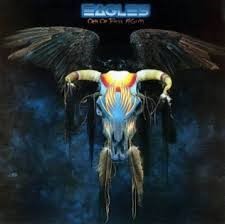
One of These Nights delivered The Eagles to the very top of the commercial mountain. Polished, radio-ready, and supremely self-assured, it became the band’s first album to reach number one on the Billboard chart. The title track opened with a deep funk groove that nobody expected from a country-rock band — yet it worked brilliantly. Additionally, “Lyin’ Eyes” showcased the band’s storytelling at its most vivid, earning a Grammy for Best Pop Vocal Performance. “Take It to the Limit,” sung by Randy Meisner in a performance that reportedly strained his voice to breaking point, became an instant fan favourite. Furthermore, The Eagles refined their harmony singing to a near-perfect level on this record. Don Felder’s guitar work added a harder edge that sat comfortably alongside the band’s trademark melodicism. However, the pressure of success was beginning to tell, and internal tensions were quietly growing. Bernie Leadon left the band before they could follow this album up, and The Eagles subsequently recruited Joe Walsh to replace him. In short, One of These Nights stands as the moment The Eagles became undeniable.
Hotel California (1976)
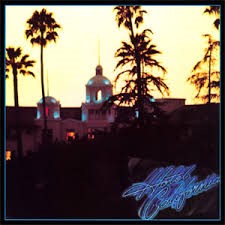
Hotel California is, without question, the defining masterpiece of The Eagles’ career. Released in 1976 with Joe Walsh now firmly embedded in the line-up, the album marked a dramatic artistic leap forward. The title track opens with one of the most iconic guitar introductions in rock history — a hypnotic, descending figure played by Walsh and Don Felder that seems to draw the listener into something they cannot escape. Thematically, the album confronts the dark side of the American Dream with a clarity that few rock records have matched before or since. “Life in the Fast Lane” crackles with menace, while “New Kid in Town” reflects on the fleeting nature of fame with a weariness that feels entirely earned. Furthermore, The Eagles pushed their studio craft to new heights here, layering guitars and harmonies with a precision that rewards close listening. Don Henley’s drumming on the title track is particularly remarkable — restrained, propulsive, and perfectly suited to the song’s unsettling mood. Consequently, Hotel California spent eight weeks at number one and eventually sold over 32 million copies worldwide. More than simply an album, it became a cultural artefact that continues to fascinate and divide listeners nearly five decades after its release.
The Long Run (1979)
The Long Run arrived after a three-year recording process that tested every relationship within The Eagles to its limits. The band had become one of the biggest acts on the planet, but the pressure of following Hotel California proved almost paralysing. Nevertheless, when the album finally appeared in 1979, it debuted at number one and spawned three top-ten singles. “Heartache Tonight,” a stomping blues-rock collaboration with Bob Seger, won the Grammy for Best Rock Vocal Performance. Additionally, “I Can’t Tell You Why,” written and sung by new bassist Timothy Schmit, offered a silky counterpoint to the album’s harder edges. However, the creative exhaustion behind the record was impossible to hide entirely. The song writing, while still accomplished, lacked the fearless invention of Hotel California. Furthermore, the relationships within the band had deteriorated badly, with Henley and Frey shouldering most of the creative burden. Consequently, The Eagles disbanded shortly after the supporting tour concluded in 1980. Don Henley famously quipped that they would reunite “when hell freezes over” — a line that would take on an ironic significance fourteen years later when the Hell Freezes Over reunion tour of 1994 proved that rock’s most acrimonious breakups are rarely permanent.
Long Road Out of Eden (2007)
Long Road Out of Eden stands as remarkable proof that The Eagles still had something meaningful to say. Released independently through the band’s own label and sold exclusively through Walmart — a controversial but commercially shrewd decision — the double album debuted at number one in fourteen countries simultaneously. Moreover, it became the best-selling album of 2007 in the United States. “How Long,” a polished country-rock gem originally written by J.D. Souther, gave The Eagles their first top-40 hit in decades. Furthermore, the title track offered Don Henley’s most pointed political commentary since the 1970s, confronting the wars in the Middle East with unusual directness for a mainstream rock record. The album’s breadth is genuinely impressive — it moves from acoustic ballads to hard rock without ever feeling unfocused. Additionally, the production, handled by Henley, Frey, and Walsh, sounds rich and contemporary without chasing trends. Critics noted that The Eagles seemed genuinely energised rather than nostalgic. Consequently, Long Road Out of Eden earned the band a new generation of admirers while satisfying long-time devotees. It stands as a worthy, if unexpected, final chapter.
A Legacy That Refuses to Fade
The Eagles achieved something extraordinarily rare: they built a body of work that transcended the era in which it was created. Their studio albums trace a compelling artistic journey — from the sun-drenched country-rock of their debut, through the darkly ambitious heights of Hotel California, to the defiant late-career statement of Long Road Out of Eden. Along the way, they accumulated record-breaking sales, multiple Grammys, and a place in the Rock and Roll Hall of Fame (inducted in 1998, their first year of eligibility). The Hell Freezes Over reunion of 1994 reminded the world that their songs had lost none of their power, and subsequent tours consistently sold out stadiums across the globe. Tragically, Glenn Frey passed away in January 2016, bringing the classic Eagles story to a close. Don Henley, Joe Walsh, and Timothy Schmit have since continued to perform under The Eagles name with Frey’s son Deacon and country star Vince Gill filling the void. The music, however — those immaculate harmonies, those perfectly constructed songs — belongs permanently to the culture. Whether you discovered them through Hotel California or through a greatest hits compilation, The Eagles reward deeper exploration at every turn. Few catalogues in rock history offer more.