
Tupac Shakur remains one of the most compelling figures in music history. Three decades after his death, his albums still dominate streaming platforms, his lyrics still fuel debates, and his legacy still shapes hip-hop culture. This definitive guide reviews every studio album Tupac Shakur released — both during his lifetime and posthumously — ranking their cultural weight, lyrical depth, and lasting impact. Whether you are a lifelong fan or a curious newcomer, this is the complete resource you need.
Everything You Need to Know About Tupac Shakur
Who killed Tupac Shakur?
On September 7, 1996, Tupac Shakur was shot four times in a drive-by shooting in Las Vegas following the Mike Tyson vs. Bruce Seldon boxing match. He died six days later, on September 13, 1996. For nearly three decades, the case remained officially unsolved. In 2023, however, Las Vegas police arrested Duane Keith Davis, also known as “Keffe D,” charging him with murder. Davis, a former Compton gang figure, had publicly claimed knowledge of the shooting in interviews and a memoir. Prosecutors allege he orchestrated the attack from inside the vehicle. The arrest marked a seismic shift in one of music’s most enduring cold cases, though the full trial proceedings continued into 2024 and beyond.
How many studio albums did Tupac release while alive?
Tupac Shakur released four studio albums during his lifetime: 2Pacalypse Now (1991), Strictly 4 My N.I.G.G.A.Z… (1993), Me Against the World (1995), and All Eyez on Me (1996). His output was extraordinary given that he achieved this across just five years, while simultaneously pursuing an acting career and navigating serious legal troubles. The volume and quality of material he recorded also meant that labels had an enormous vault of unreleased music to draw from after his death.
What was Tupac’s family background?
Tupac Shakur was born on June 16, 1971, in East Harlem, New York. His mother, Afeni Shakur, was an active member of the Black Panther Party and faced serious federal charges while pregnant with Tupac. She successfully defended herself in court and was acquitted just one month before his birth. His godfather, Elmer “Geronimo” Pratt, was a prominent Black Panther leader. His stepfather, Mutulu Shakur, was also a Black liberation activist. This deeply political upbringing profoundly shaped Tupac’s worldview, his social consciousness, and the themes of systemic injustice that run throughout his music.
Is Tupac Shakur actually dead?
Officially, yes. The Clark County coroner confirmed Tupac Shakur’s death on September 13, 1996, attributing it to respiratory failure and cardiopulmonary arrest following gunshot wounds. Despite this, conspiracy theories have persisted for decades. Some theorists point to perceived inconsistencies in witness accounts, the speed of his cremation, and alleged sightings worldwide. Others cite the Makaveli album’s imagery and cryptic references as coded evidence of a faked death. However, no credible evidence supports these theories. The 2023 arrest of Duane Keith Davis further reinforces the official account, providing a concrete suspect and a prosecutable case tied directly to the night of the shooting.
What is the meaning of “Makaveli”?
The alias “Makaveli” references Niccolò Machiavelli, the 15th-century Italian philosopher and author of The Prince. Tupac Shakur reportedly read Machiavelli’s works extensively while serving time at Clinton Correctional Facility. He was particularly drawn to Machiavelli’s concept of faking one’s death to outwit enemies — which later fuelled conspiracy theories about his own passing. The name also reflects Tupac’s admiration for strategic thinking, political cunning, and the idea that power requires both intelligence and ruthlessness. The Makaveli alias represented a darker, more confrontational artistic persona that differed meaningfully from his earlier work.


The Albums: A Complete Review
1. 2Pacalypse Now (1991) — Lifetime Release
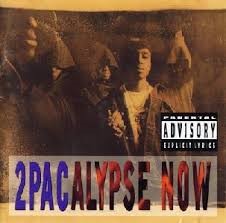
Key Fact: Focused on social issues like police brutality.
2Pacalypse Now announced Tupac Shakur to the world with startling urgency. Released in November 1991 through Interscope Records, the album tackled police brutality, poverty, teen pregnancy, and systemic racism head-on. Tupac Shakur was just 20 years old, yet he delivered commentary with the weight of someone who had lived every verse. Tracks like Brenda’s Got a Baby and Trapped demonstrated his unique ability to blend raw storytelling with social activism. Consequently, the album drew controversy almost immediately. Then-Vice President Dan Quayle publicly called for the album’s withdrawal, citing its anti-police themes. Furthermore, the record became linked to real-world events when a Texas trooper’s killer reportedly listened to it beforehand. Despite this controversy — or perhaps because of it — the album established Tupac as a politically charged voice in hip-hop. Musically, the production reflects the early-1990s West Coast sound, though Tupac had not yet fully committed to a California identity. Additionally, the album’s unflinching honesty about Black American life set a template he would refine across his career. It is not his most polished work, but it remains one of his most morally serious.
2. Strictly 4 My N.I.G.G.A.Z… (1993) — Lifetime Release
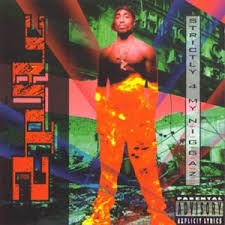
Key Fact: His breakout into the mainstream.
Strictly 4 My N.I.G.G.A.Z… marked Tupac Shakur’s commercial breakthrough, broadening his audience while deepening his artistic range. Released in February 1993, the album balanced political fire with accessible energy, resulting in his first genuine mainstream crossover. Tracks like I Get Around and Keep Ya Head Up showcased two distinct sides of Tupac Shakur — the party-driven bravado and the tender social conscience. Notably, Keep Ya Head Up remains one of hip-hop’s most celebrated odes to Black women, demonstrating empathy rarely seen in the genre at that time. Moreover, the album featured collaborations with Dr. Dre and Ice Cube, signalling Tupac’s growing status within West Coast hip-hop’s inner circle. Production-wise, the record felt more confident and cohesive than his debut. Consequently, it peaked at number 24 on the Billboard 200 and reached number 4 on the Top R&B/Hip-Hop Albums chart. Furthermore, the album helped cement Tupac’s image as a multidimensional artist — equally comfortable delivering street poetry and uplifting anthems. It represents a crucial turning point in his discography, bridging the rawness of his debut with the superstardom that followed.
3. Me Against the World (1995) — Lifetime Release
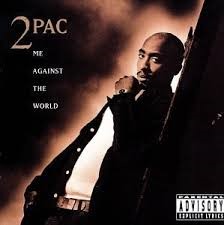
Key Fact: Released while he was in prison; deeply introspective.
Me Against the World is widely regarded as Tupac Shakur’s most introspective and emotionally devastating work. Released in March 1995, it arrived while Tupac Shakur sat incarcerated at Rikers Island following a sexual assault conviction — a conviction he maintained was unjust. Remarkably, the album debuted at number one on the Billboard 200, making Tupac the first artist to achieve a number-one album while serving a prison sentence. The record strips away bravado and replaces it with vulnerability. Tracks like Dear Mama — a deeply personal tribute to Afeni Shakur — and So Many Tears reveal an artist grappling honestly with mortality, regret, and pain. Additionally, If I Die 2nite feels chillingly prophetic in hindsight. Thematically, the album draws heavily on Tupac’s turbulent life experiences, exploring themes of survival, fatalism, and love with unusual emotional honesty. Furthermore, the production is subdued and melancholic, complementing the lyrical weight perfectly. Critics responded strongly, and the album has since grown in reputation to become a defining text of 1990s hip-hop. It stands as essential listening for anyone seeking to understand Tupac beyond the mythology.
4. All Eyez on Me (1996) — Lifetime Release

Key Fact: The first double-disc solo rap album; Diamond-certified.
All Eyez on Me is Tupac Shakur’s grandest, most ambitious statement. Released in February 1996 following his release from prison — funded by Death Row Records’ Suge Knight — the album arrived as a declaration of dominance. Historically, it became the first double-disc solo rap album ever released, and it has since achieved Diamond certification from the RIAA, representing sales and streams exceeding 10 million units. Tupac Shakur recorded the entire project in a remarkably short period, reportedly completing it in just under two weeks. Tracks like California Love, How Do U Want It, and 2 of Amerikaz Most Wanted with Snoop Dogg became cultural landmarks. Moreover, the album captures Tupac at his most commercially formidable — energetic, confident, and operating at the peak of his powers. However, the record also contains quieter, more reflective moments that prevent it from becoming purely hedonistic. Additionally, the production, handled largely by Dr. Dre and others in the Death Row stable, is lush and cinematic. Consequently, All Eyez on Me endures as one of hip-hop’s most celebrated double albums and a high-water mark in Tupac’s catalogue.
5. The Don Killuminati: The 7 Day Theory (1996) — Posthumous Release
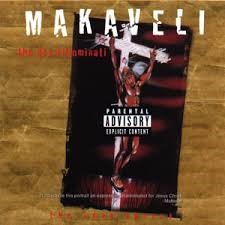
Key Fact: Released under the alias “Makaveli” just after his death.
The Don Killuminati: The 7 Day Theory is the most mythologised album in Tupac Shakur’s catalogue. Released just two months after his death in November 1996 under the alias Makaveli, the record allegedly took only three days to record and four days to mix. This compressed creation period only deepened the mystique surrounding the project. Tupac Shakur’s lyrics here feel more aggressive and confrontational than on All Eyez on Me, with tracks like Hail Mary and Me and My Girlfriend carrying an eerie, almost prophetic quality. Additionally, the album’s dark imagery — including its controversial cover art depicting Tupac crucified — sparked immediate debate and further fuelled conspiracy theories about his death. Furthermore, the Killuminati concept — a rejection of what Tupac perceived as industry manipulation and manufactured mythology — gave the album a conceptual coherence unusual for posthumous releases. Critically, it received a stronger response than many anticipated, debuting at number one on the Billboard 200. Consequently, it stands as one of rap’s most haunting and culturally significant records. For fans, it serves as Tupac’s final artistic statement on his own terms.
6. R U Still Down? (Remember Me) (1997) — Posthumous Release
Key Fact: Established the “Amaru Entertainment” era of releases.
R U Still Down? (Remember Me) marked the beginning of a long series of posthumous releases managed through Amaru Entertainment, the label Afeni Shakur established to oversee her son’s musical legacy. Released in November 1997, this double album drew from recordings Tupac Shakur made between 1992 and 1996 — predating his time at Death Row Records. Therefore, the production style feels noticeably rawer and less polished than his later work. Nonetheless, the album contains genuine highlights. Tracks like Do For Love and Wonder If Heaven Got a Ghetto showcase Tupac Shakur’s melodic sensibility and emotional range at an earlier, less celebrated stage of his career. Moreover, the project reveals a transitional Tupac — navigating the space between his socially conscious roots and the harder-edged persona he later adopted. Critics noted the uneven quality inherent in vault recordings, though the album still debuted at number one on the Billboard 200. Additionally, it demonstrated that the demand for new Tupac material remained enormous, setting the commercial template for the decade of posthumous releases that followed. As a historical document, it rewards patient listeners.
7. Until the End of Time (2001) — Posthumous Release
Key Fact: 3x Platinum; features unreleased material from his peak.
Until the End of Time arrived in March 2001 and drew primarily from recordings made during Tupac Shakur’s most prolific period at Death Row Records. Certified 3x Platinum by the RIAA, the album demonstrated that quality posthumous material remained in the vault five years after his death. Amaru Entertainment curated the project carefully, pairing unreleased vocals with updated production to create a more cohesive listening experience than some earlier posthumous efforts. Tracks like the title track and Fuckin’ With the Wrong Nigga reflect the confident, combative energy of the All Eyez on Me era. Furthermore, the album benefits from the emotional distance of time — listeners approaching it in 2001 carried an awareness of Tupac Shakur’s legacy that added weight to every verse. Additionally, collaborations with artists including Elton John on Ghetto Gospel (released separately as a single later) illustrated the remarkable range of Tupac’s appeal. Consequently, the project crossed demographics in a way few posthumous rap releases achieve. Though critics acknowledged its patchwork nature, many praised the consistent lyrical quality. It remains one of the stronger entries in the posthumous catalogue and a rewarding listen for dedicated fans of Tupac Shakur.
8. Better Dayz (2002) — Posthumous Release
Key Fact: Another double album exploring his duality.
Better Dayz arrived in November 2002 as another double album, this time explicitly designed to capture both sides of Tupac Shakur’s artistic personality. Disc one leaned into his hopeful, introspective mode, while disc two embraced his harder, street-oriented material. This structural choice gave the project a thematic clarity that many posthumous releases lacked. Tupac Shakur’s versatility genuinely shines here — the softer disc features moments of warmth and reflection that recall Me Against the World, while the harder disc crackles with the aggression of his Death Row output. Tracks like Better Dayz and Thug N U Thug N Me highlight this duality effectively. Furthermore, the production across both discs is notably consistent, suggesting careful curation from the Amaru team. However, some critics argued that splitting the record thematically exposed how much the posthumous release programme depended on recontextualising existing material rather than presenting genuinely new creative statements. Nevertheless, the album sold strongly, reaching number three on the Billboard 200. Additionally, it reinforced Tupac Shakur’s enduring commercial appeal six years after his death. For fans who prefer his gentler material, the first disc in particular remains a highlight of the posthumous catalogue.
9. Loyal to the Game (2004) — Posthumous Release
Key Fact: Produced by Eminem.
Loyal to the Game is the most sonically distinctive entry in Tupac Shakur’s posthumous discography, largely because Eminem handled the entire production. Released in December 2004, the album marked the first time a major outside producer had completely reimagined Tupac Shakur’s vocal recordings rather than simply adding updated beats. Eminem’s production style — characterised by dense, layered sounds and aggressive sonic textures — contrasted sharply with the West Coast aesthetic listeners associated with Tupac. Consequently, the album divided opinion sharply. Supporters argued that Eminem’s involvement brought fresh energy and wider commercial reach to the project. Critics, however, contended that the production overwhelmed Tupac Shakur’s vocals and stripped the recordings of their original character. Tracks like Thugs Get Lonely Too and Hennessy sparked debate about artistic ownership in posthumous projects more broadly. Furthermore, the album raised important questions about how much a producer should reshape an artist’s posthumous work. Despite the controversy, Loyal to the Game debuted at number one on the Billboard 200 and sold over one million copies in the United States alone. It remains a genuinely fascinating — if polarising — chapter in the Tupac Shakur catalogue.
10. Pac’s Life (2006) — Posthumous Release
Key Fact: Commemorated the 10th anniversary of his passing.
Pac’s Life arrived in November 2006 to mark the 10th anniversary of Tupac Shakur’s death, and it brought a noticeably more celebratory, forward-looking tone than many of its predecessors. Afeni Shakur and Amaru Entertainment intentionally shaped the project as a tribute rather than simply a vault release, commissioning new contributions from contemporary artists including T.I., Ludacris, and Ashanti to complement Tupac Shakur’s archived vocals. This approach reflected the broader landscape of mid-2000s hip-hop, grounding the album in a sound that felt current rather than archival. Tracks like Pac’s Life and Soldier aimed to connect Tupac’s legacy with a younger audience encountering his work for the first time. Furthermore, the collaborative framework helped the album feel more intentional than some earlier posthumous releases. Critics noted, however, that the guest features occasionally overshadowed Tupac Shakur’s own presence on his tribute record — an inherent challenge of the format. Additionally, some longtime fans felt the polished production diluted the rawness that defined his best work. Nevertheless, the album debuted at number three on the Billboard 200 and served its commemorative purpose with dignity. It closes the official studio discography on a note of remembrance, honouring Tupac Shakur’s impact on an entire generation of artists and fans.
Tupac Shakur’s discography — spanning four lifetime albums and six major posthumous releases — tells the story of one of the most gifted, complicated, and culturally significant artists America has ever produced. From the urgent social commentary of 2Pacalypse Now to the anniversary tribute of Pac’s Life, his catalogue maps both his remarkable creative evolution and the ongoing efforts to preserve and extend his legacy. Not every posthumous release reaches the heights of Me Against the World or All Eyez on Me, but each contributes a meaningful piece to the broader portrait of who Tupac Shakur was — and who he might have become. His music continues to resonate because it was never simply entertainment. It was testimony. Thirty years on, the world is still listening.