
Few bands in rock history have left a mark as raw, volatile, and enduring as The Stooges. Emerging from Ann Arbor, Michigan in the late 1960s, they were a band out of time — too loud, too wild, and too confrontational for their era. Yet, decades later, their influence is impossible to ignore. From the sneering nihilism of their debut to the ferocious noise of Raw Power, The Stooges essentially wrote the blueprint for punk rock, alternative music, and everything in between. This guide covers everything you need to know: who they were, why they mattered, and why their albums still sound dangerous today.
What You Need to Know About The Stooges
Are The Stooges considered the first punk band?
The Stooges are widely regarded as proto-punk pioneers, though the “first punk band” label is contested. Punk, as a genre, crystallised in the mid-1970s with bands like the Sex Pistols and The Ramones. However, The Stooges were doing something remarkably similar years earlier — stripping rock down to its most aggressive, anti-commercial core. Their three-chord assault, confrontational lyrics, and Iggy Pop’s anarchic stage presence anticipated punk’s entire ethos. Most music historians place them at the very root of the punk family tree, even if the label itself came later.
Why did The Stooges break up?
The Stooges broke up — twice — for reasons that were equal parts tragic and predictable. Their first dissolution in 1971 stemmed from commercial failure, label pressure, and escalating drug use. Their reunion as Iggy and The Stooges in 1972 ended even more dramatically in 1974. Heroin addiction, particularly Iggy Pop’s well-documented struggles, ravaged the band’s cohesion. Internal friction, financial difficulties, and an increasingly chaotic live reputation made it impossible to continue. The band imploded mid-tour, leaving Raw Power as their final statement for over three decades.
Who were the original members of The Stooges?
The Stooges formed in 1967 with four core members. Iggy Pop (born James Newell Osterberg Jr.) served as the vocalist and the band’s magnetic, unpredictable frontman. Ron Asheton played guitar, crafting the band’s primitive, hypnotic riffs. Scott Asheton, Ron’s brother, anchored everything on drums. Dave Alexander completed the lineup on bass. This original four-piece recorded the band’s first two albums — The Stooges (1969) and Fun House (1970) — before Alexander was dismissed in 1970 due to his own substance abuse issues.
What is The Stooges’ most famous song?
Two songs consistently top any conversation about The Stooges: “I Wanna Be Your Dog” and “Search and Destroy.” “I Wanna Be Your Dog,” from their 1969 debut, is arguably their defining moment — a relentless, hypnotic riff built around a single repeating piano note, with lyrics dripping in submission and menace. “Search and Destroy,” the opening track from Raw Power, is the rawer, faster counterpart: a snarling burst of noise that became one of punk’s most sampled and cited anthems. Both tracks appear regularly on greatest-ever lists and continue to soundtrack films, TV, and advertising decades later.
Is Iggy Pop still in The Stooges?
In practical terms, The Stooges no longer exist as an active band. The deaths of both Asheton brothers — Ron in 2009 and Scott in 2014 — effectively ended any possibility of a full reunion. Iggy Pop has continued as a solo artist, releasing critically acclaimed work well into the 2020s. He has spoken warmly about The Stooges’ legacy in interviews, but has not reconstituted the band under that name. The Ready to Die album in 2013, recorded before Scott Asheton’s passing, stands as the band’s final studio statement.
The Albums: A Complete Guide
| Album | Year | Label | Key Tracks |
|---|---|---|---|
| The Stooges | 1969 | Elektra | “I Wanna Be Your Dog,” “No Fun,” “1969” |
| Fun House | 1970 | Elektra | “T.V. Eye,” “1970,” “Fun House” |
| Raw Power | 1973 | Columbia | “Search and Destroy,” “Gimme Danger” |
| The Weirdness | 2007 | Virgin | “ATM,” “The Weirdness” |
| Ready to Die | 2013 | Fat Possum | “Burn,” “Gun,” “Ready to Die” |





The Classic Era Trilogy
The Stooges (1969)
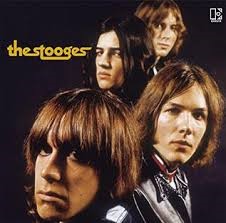
The Stooges announced themselves to the world in 1969 with a debut album that virtually nobody bought and virtually everybody copied. Produced by John Cale of The Velvet Underground, the record captured a band operating on pure instinct. Cale gave the sessions a wiry, minimal tension that perfectly suited the band’s primitive approach. The result was something that sounded unlike anything else in 1969 — raw, slow-burning, and menacing. “I Wanna Be Your Dog” remains one of rock’s most iconic opening salvos, driven by Ron Asheton’s churning riff and that relentless, droning sleigh bell. “No Fun” predated the Sex Pistols’ cover by nearly a decade, which alone speaks volumes. Elsewhere, “1969” opens with Iggy Pop staring down a meaningless year with magnificent contempt. The Stooges were not trying to write hit songs — they were trying to make noise that meant something, and they succeeded completely. Commercially ignored on release, the album is now universally recognised as a foundational text of punk and alternative rock.
Fun House (1970)
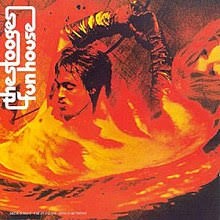
Fun House is the album where The Stooges pushed every boundary they had established on their debut — and then set those boundaries on fire. Recorded live in the studio to capture maximum energy, the album integrates free jazz saxophone, courtesy of Steve Mackay, into the band’s already ferocious attack. The result is extraordinary. “T.V. Eye” opens with a riff so heavy it practically dents the speakers, while “1970” builds into one of rock’s most thrilling crescendos. Producer Don Gallucci stepped back and let the band simply perform, trusting the sheer force of their live energy to carry the record. Consequently, Fun House crackles with an urgency and chaos rarely captured on tape before or since. The Stooges were also visibly deteriorating at this point — drug use was escalating, and the sessions had a dangerous, combustible edge. That tension, paradoxically, makes the album more compelling. Widely considered their masterpiece by critics and musicians alike, Fun House is the record that most directly bridges garage rock to the punk explosion that followed.
Raw Power (1973)
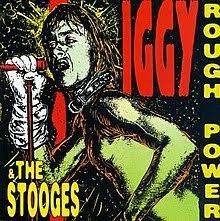
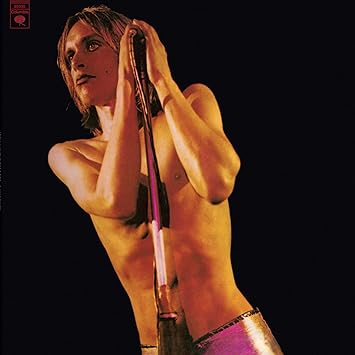
By 1973, The Stooges had technically ceased to exist. Iggy Pop, however, convinced David Bowie — then at the height of his Ziggy Stardust fame — to help him reconstitute the band as Iggy and The Stooges. James Williamson joined on guitar, and Ron Asheton moved to bass. The sessions produced Raw Power, a record of almost violent sonic intensity. Bowie handled the mixing, delivering a high-treble, trebly, top-heavy sound that remains controversial to this day — Iggy Pop himself remixed the album in 1997 for a notably heavier result. “Search and Destroy” opens the album like a wrecking ball, while “Gimme Danger” provides a rare moment of aching tenderness amid the carnage. The Stooges, in this incarnation, were sharper, more aggressive, and arguably more self-aware than before. Commercially, Raw Power again failed to break through. Historically, however, it stands as one of the most influential rock albums ever made, cited by members of The Clash, The Damned, and countless others as a primary inspiration.
The Reunion Era
The Weirdness (2007)
Thirty-four years is a long time between studio albums, and The Weirdness bore the weight of those expectations visibly. The Stooges reunited their classic lineup — Iggy Pop, Ron Asheton, Scott Asheton, and Mike Watt replacing the late Dave Alexander on bass — and recorded with producer Steve Albini, a man synonymous with raw, uncompromising sound. The album arrived to mixed reviews, with many critics finding the material uneven compared to the towering legacy of the classic trilogy. Truthfully, The Weirdness is a complicated listen. Some tracks, like “ATM,” channel the old energy effectively, and Albini’s production certainly delivers the sonic grit the band’s reputation demands. Nevertheless, others felt the song writing lacked the visceral urgency of Fun House or Raw Power. Yet, The Stooges’ reunion itself carried enormous cultural weight. Seeing Ron and Scott Asheton back alongside Iggy Pop reminded an entire generation — and introduced a newer one — to just how radical and important this band had always been. Flawed as it may be, The Weirdness remains a significant document of reunion and resilience.
Ready to Die (2013)
Ready to Die proved that The Stooges still had genuine fire left in them. Released in 2013, the album brought James Williamson back on guitar — his first recording with the band since Raw Power — and the shift in energy is immediately apparent. The record is tighter, more focused, and more deliberately aggressive than The Weirdness. Tracks like “Burn” and the title track “Ready to Die” crackle with a menace that recalls the band’s classic period without simply retreating into nostalgia. Williamson’s guitar work, sharp and economical, drives the album with real conviction. Furthermore, Iggy Pop’s vocals carry a lived-in authority that only decades of survival can produce. Tragically, Ready to Die became the band’s final studio album — Scott Asheton passed away from a stroke in March 2014, just months after the record’s release. The Stooges recorded it without knowing it would serve as their farewell. As final statements go, it is a dignified, energetic, and fittingly defiant one.
The Enduring Legacy of The Stooges
The Stooges never enjoyed mainstream commercial success during their original run. They were dropped by their label, derided by critics, and overshadowed by the more polished rock acts of their era. History, however, has rendered a very different verdict. Every major punk band of the 1970s — The Ramones, the Sex Pistols, The Clash — acknowledged The Stooges as a defining influence. Every alternative and grunge act of the 1980s and 1990s — Sonic Youth, Mudhoney, Nirvana — traced a direct line back to Fun House and Raw Power. Iggy Pop’s induction into the Rock and Roll Hall of Fame in 2010, alongside the surviving members, was long overdue recognition for a band that had spent decades being right about what rock music could be. Today, their five studio albums form one of rock’s most essential catalogues — proof that the most important music is not always the music that sells, but the music that changes everything that comes after it.