
Few acts in music history have reinvented themselves as boldly as The Beastie Boys. Starting as a New York hardcore punk band, they transformed into one of hip-hop’s most innovative and influential forces. Over three decades, they released eight studio albums, each one a deliberate left turn from the last. Their story is not simply about rap music. It is about artistic courage, cultural impact, and an refusal to stand still. This guide breaks down every album, answers the questions fans ask most, and explains why The Beastie Boys remain essential listening in 2026.
The Essentials: What You Need to Know About The Beastie Boys
Who are the three members of The Beastie Boys? The Beastie Boys consist of Michael “Mike D” Diamond, Adam “MCA” Yauch, and Adam “Ad-Rock” Horovitz. The three grew up in New York City and formed the group in the early 1980s. Together, they built one of the most distinctive and enduring voices in modern music. Their chemistry was unique — three sharp, witty personalities who constantly pushed each other creatively.
What happened to The Beastie Boys? The Beastie Boys disbanded in 2012 following the death of Adam “MCA” Yauch, who passed away from cancer on May 4, 2012. His passing brought an end to the group, as Diamond and Horovitz stated they could not continue as The Beastie Boys without him. Their legacy, however, endures powerfully. In 2018, Diamond and Horovitz published Beastie Boys Book, a rich memoir celebrating their history.
Was Adam Yauch a Buddhist? Yes. Adam Yauch became a devout Buddhist practitioner in the mid-1990s, a conversion that deeply influenced The Beastie Boys’ later work and public activism. He founded the Milarepa Fund, an organisation dedicated to Tibetan independence and nonviolence. His faith shaped the more introspective, socially conscious dimension of the group’s music, steering them away from the provocative frat-boy image of their early career.
Is Paul’s Boutique considered the “Sgt. Pepper’s of Hip-Hop”? Widely, yes. Paul’s Boutique earned that nickname because of its extraordinary density and ambition. The Dust Brothers and The Beastie Boys layered over 100 samples into a seamless sonic collage, creating something that critics initially misunderstood but later recognised as a landmark. Just as Sgt. Pepper’s redefined what a rock album could be, Paul’s Boutique permanently expanded hip-hop’s creative possibilities.
What was The Beastie Boys’ first hit? Their breakthrough hit was (You Gotta) Fight for Your Right (To Party!), released in 1986 from their debut album Licensed to Ill. The track became a cultural flashpoint, dominating radio and MTV. Ironically, The Beastie Boys intended it partly as a satirical send-up of party anthems — yet audiences embraced it completely straight. It remains one of the most recognisable songs of the 1980s.
The Beastie Boys’ Discography: Album by Album
| Album | Year | Key Themes |
|---|---|---|
| Licensed to Ill | 1986 | Rap-rock, party anthems, punk energy |
| Paul’s Boutique | 1989 | Sampling innovation, psychedelic collage |
| Check Your Head | 1992 | Live instruments, lo-fi funk, hardcore |
| Ill Communication | 1994 | Hardcore, jazz, Tibetan activism |
| Hello Nasty | 1998 | Futurism, electronica, hip-hop experimentation |
| To the 5 Boroughs | 2004 | NYC nostalgia, boom-bap, political commentary |
| The Mix-Up | 2007 | Instrumental jazz-funk |
| Hot Sauce Committee Part Two | 2011 | High energy, late-career vitality |




Licensed to Ill (1986)
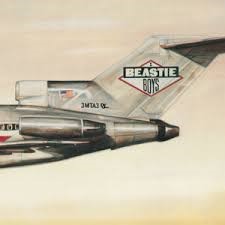
Licensed to Ill arrived like a grenade thrown into mainstream music. The Beastie Boys crashed onto the scene with an album that fused punk aggression with hip-hop swagger and hard rock riffs. Def Jam released it in November 1986, and it became the first rap album to top the Billboard 200. Consequently, it opened commercial doors for hip-hop that had previously been firmly shut. Producer Rick Rubin stripped the sound down to its bones — big drums, guitar samples, and sheer attitude. Tracks like “(You Gotta) Fight for Your Right (To Party!)” and “No Sleep Till Brooklyn” became immediate anthems. Critics debated whether The Beastie Boys were joking, satirising, or celebrating frat culture. In truth, they were doing all three simultaneously. Furthermore, the album’s chaos felt genuinely dangerous at the time, which is exactly what made it irresistible. It remains one of the most explosive debut albums in pop history, and its influence on rap-rock remains unmistakable.
Paul’s Boutique (1989)
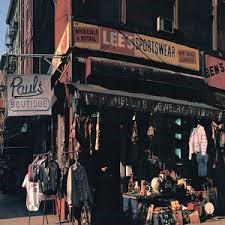
Initially, Paul’s Boutique confused and disappointed fans expecting more party anthems. The Beastie Boys partnered with the Dust Brothers to create something genuinely radical. Over 100 samples — drawn from sources as varied as the Beatles, Curtis Mayfield, and Johnny Cash — were layered into a dense, psychedelic tapestry. At the time, the album sold poorly and critics called it self-indulgent. However, history delivered a very different verdict. As sampling laws tightened throughout the 1990s, it became clear that Paul’s Boutique could never be legally recreated. Moreover, its influence on production grew exponentially — artists from DJ Shadow to Kanye West have cited it as transformative. The Beastie Boys essentially built a new sonic architecture on this record. Today, it consistently appears on “greatest albums” lists and earns near-universal critical reverence. Its nickname — the “Sgt. Pepper’s of Hip-Hop” — captures both its ambition and its complexity perfectly.
Check Your Head (1992)
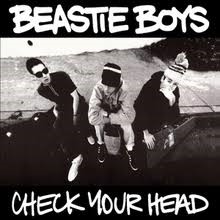
By 1992, The Beastie Boys had done something few acts manage: they reinvented themselves entirely. Check Your Head saw the trio pick up real instruments again, channelling their hardcore punk roots into a gritty, lo-fi stew of funk, jazz, and hip-hop. Rather than chasing commercial trends, they followed their own instincts. The result felt raw, urgent, and deeply cool. Tracks like “So What’cha Want” and “Pass the Mic” showcased a group firing on all cylinders. Additionally, the album introduced their in-house label Grand Royal and helped launch a broader cultural moment around skateboarding, alternative hip-hop, and DIY aesthetics. The Beastie Boys were no longer mere rappers — they were bandleaders. Furthermore, the decision to self-produce gave the record an authentic, lived-in feel that studio polish would have destroyed. Check Your Head proved that artistic risk-taking was always going to be their defining characteristic.
Ill Communication (1994)
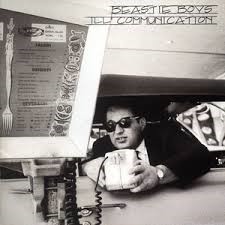
Ill Communication represented the commercial and creative peak of The Beastie Boys’ 1990s run. Released in May 1994, it debuted at number one in the UK and the US simultaneously. The album balanced hardcore aggression with jazz cool, political consciousness, and hip-hop precision. “Sabotage” — with its iconic Spike Jonze-directed video — became one of the decade’s defining rock moments. Meanwhile, tracks like “Sure Shot” showcased their growth as lyricists. Notably, Ill Communication also reflected Adam Yauch’s deepening Buddhist faith. The Beastie Boys began using their platform to advocate for Tibetan independence, leading directly to the Tibetan Freedom Concerts of 1996 and 1997. Those concerts drew hundreds of thousands of attendees and became landmark events in activist music history. Consequently, the album marked a clear transition from the group’s earlier provocateur image toward something more thoughtful and politically engaged.
Hello Nasty (1998)
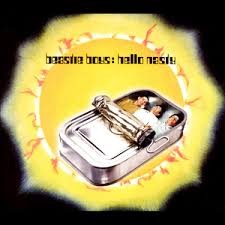
Hello Nasty arrived in 1998 and stunned even long-term fans. The Beastie Boys embraced futurism, electronica, and space-age aesthetics, producing an album that felt genuinely ahead of its time. “Intergalactic” — complete with its retro-robot video — dominated MTV and introduced the group to an entirely new generation. Furthermore, the album broke first-week sales records upon release. Yet beneath the commercial surface lay genuine experimentation. The group incorporated drum machines, theremin, and elaborate production techniques throughout. Moreover, The Beastie Boys demonstrated that they could adapt to shifting musical landscapes without sacrificing their identity. Hello Nasty won two Grammy Awards in 1999, including Best Rap Album. Critics praised its willingness to embrace absurdity and innovation in equal measure. At a time when many of their hip-hop peers were chasing increasingly gritty realism, The Beastie Boys boldly moved in the opposite direction.
To the 5 Boroughs (2004)
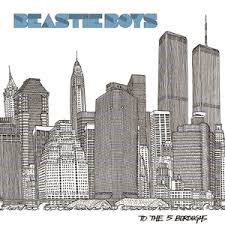
After a six-year hiatus, To the 5 Boroughs brought The Beastie Boys home — both literally and sonically. The album was a deliberate love letter to New York City, recorded in the aftermath of 9/11 and steeped in old-school boom-bap production. Stripped of live instruments and elaborate samples, it returned to the raw, looped beats of early hip-hop. Additionally, the album carried a strong political edge, with tracks addressing the Bush administration and the Iraq War directly. The Beastie Boys made no attempt to soften their views. Consequently, some listeners found the political commentary heavy-handed, while others welcomed the group’s willingness to speak plainly. To the 5 Boroughs debuted at number one in multiple countries, proving their audience remained devoted. While critics acknowledged it lacked the ground-breaking ambition of Paul’s Boutique or Hello Nasty, they praised its sincerity and focused energy. It remains a heartfelt document of New York resilience.
The Mix-Up (2007)
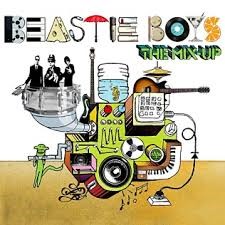
The Mix-Up stands as the most unconventional entry in The Beastie Boys’ catalogue — an entirely instrumental album rooted in jazz, funk, and psych-rock. No rapping. No hooks. No lyrics whatsoever. Initially, some fans were baffled by the departure. Nevertheless, The Mix-Up won the Grammy Award for Best Pop Instrumental Album in 2008, validating the experiment on a mainstream stage. The Beastie Boys had always positioned themselves as a band first and rappers second, and this record made that argument explicitly. Tracks like “Electric Worm” and “Suco de Tangerina” moved fluidly between moods, showcasing the trio’s genuine musicianship. Furthermore, the album reinforced their reputation as artists who refused to repeat themselves. In context, The Mix-Up feels like a palate cleanser — a deliberate step back from spectacle to focus on pure musical craft. It rewards patient listeners willing to meet it on its own terms.
Hot Sauce Committee Part Two (2011)
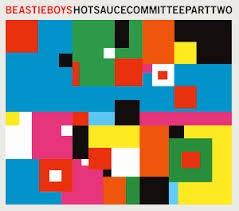
Hot Sauce Committee Part Two arrived under difficult circumstances. Adam Yauch had been diagnosed with cancer, and the original plan to release both Part One and Part Two together was shelved. Nevertheless, The Beastie Boys released Part Two in May 2011, and it crackled with energy that belied the surrounding hardship. The album blended old-school hip-hop aggression with contemporary production, resulting in one of the most vital records of their career. Tracks like “Make Some Noise” and “Too Many Rappers” (featuring Nas) demonstrated The Beastie Boys still had plenty to say. Moreover, the accompanying music videos — directed with playful absurdity — signalled their undiminished sense of humour. Critics responded warmly, recognising it as a genuine creative resurgence rather than a nostalgia exercise. In retrospect, Hot Sauce Committee Part Two serves as a powerful, defiant final statement — proof that The Beastie Boys never stopped swinging.
A Legacy That Refuses to Fade
The Beastie Boys were inducted into the Rock and Roll Hall of Fame in 2012, becoming only the third rap act ever to receive that honour. Their influence stretches across hip-hop, punk, alternative rock, and experimental music. They also built a broader cultural footprint through Grand Royal magazine — where they are often credited with popularising the term “mullet” — and through their Tibetan Freedom Concerts, which remain among the most significant instances of music-driven political activism in the 1990s.
What makes The Beastie Boys remarkable is not any single album or hit. It is the cumulative picture of a group that consistently chose growth over comfort. From the anarchic bravado of Licensed to Ill to the quiet musicianship of The Mix-Up, they refused to be pinned down. Their eight studio albums form a body of work that is restless, funny, politically aware, and sonically adventurous. In 2026, their catalogue sounds as fresh and necessary as ever — and that, more than any chart position or award, is the true measure of their greatness.