


You buy a turntable, clear a corner of the room, and put it on the nearest table. At first it looks fine. Then the problems start.
The bass gets woolly. Footsteps travel straight into the stylus. One person walks past and the needle twitches. In a busy room, especially during a party, the whole setup feels far less polished than it should. The turntable isn’t the only thing shaping the sound. The furniture underneath it is part of the system.
That matters more than ever in Britain’s current vinyl culture. By 2023, UK vinyl sales reached a record 6.7 million units, valued at £140 million, with record player unit sales surging 28% year-on-year to over 55,000 units according to this record industry overview. More people are bringing decks into homes, studios, venues, and wedding spaces. Many are giving serious thought to cartridges, speakers, and phono stages. Far fewer pay equal attention to the record player shelf.
That’s a mistake.
A proper record player shelf does three jobs at once. It supports weight safely. It keeps the deck level. It manages vibration before that vibration becomes part of the music. If you care about good listening at home or reliable playback at an event, that isn’t a styling detail. It’s foundation work.
For readers who care about a setup that looks as considered as it sounds, this visual reference is useful: Music That Feels Personal. Events That Feel Legendary.

The Unsung Hero of Your Vinyl Setup
A bad record player shelf usually reveals itself after the excitement wears off.
The turntable is out of the box. The first record goes on. Then you notice a faint haze around the sound, or the cabinet shifts slightly when you cue the arm. In a London flat with springy floorboards, that problem shows up fast. In a venue, it shows up even faster.
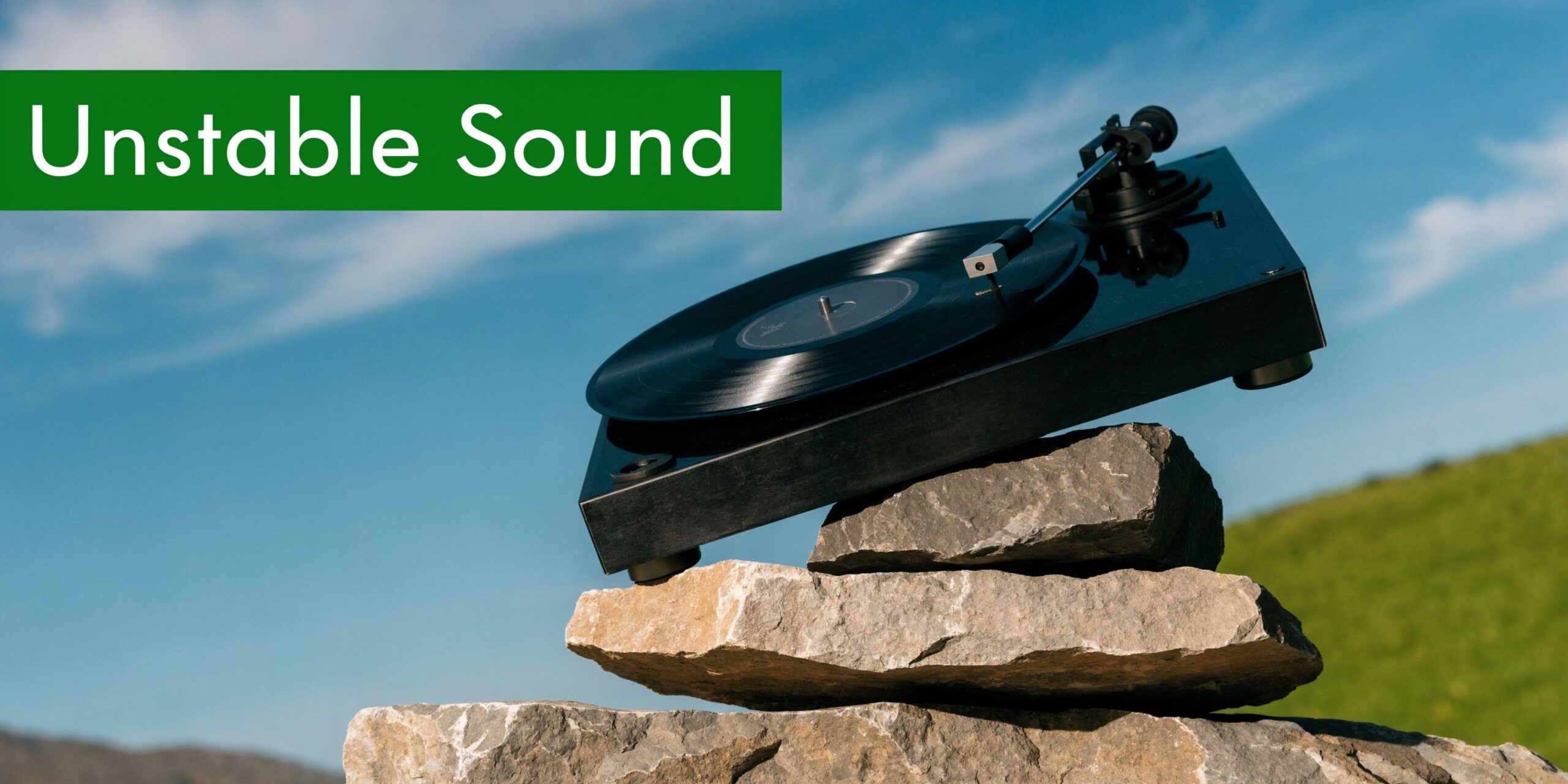
Many individuals begin by judging furniture visually. Does it suit the room. Does it match the walnut speakers. Does it hide the records neatly. Those things matter, but they come second. The shelf has to behave like stable equipment before it behaves like décor.
What goes wrong on the wrong surface
A flimsy table tends to do three things badly:
- It flexes under load and makes levelling difficult.
- It passes vibration into the plinth from footsteps, doors, and low frequencies.
- It encourages bad habits such as stacking heavy gear in unstable ways.
A turntable reads tiny groove information. It can’t tell the difference between music cut into the record and movement fed in from the room. If your shelf shakes, your playback changes.
A shelf that looks expensive can still perform badly if it rings, rocks, or sags.
The best setups I’ve seen, both in homes and at events, start with the same mindset. Treat the support furniture as part of the playback chain. Once you do that, your buying criteria become much clearer. Stability beats trend. Rigidity beats novelty. Proper isolation beats clever styling every time.
Why this matters now
Vinyl’s return has brought a lot of attractive furniture to market, but not all of it is built with audio in mind. Some pieces are designed mainly to display records and hide clutter. That’s useful, but playback quality asks for more.
A strong record player shelf should feel boring in the best possible way. No wobble. No sway. No surprise movement when someone leans nearby. If it disappears sonically and behaves predictably physically, it’s doing its job.
Vibration The Vinyl Killer
The stylus works like a miniature measuring instrument. Think of it as something closer to a seismograph than a simple needle. Its job is to trace microscopic groove variations and turn them into signal. That means it’s wonderfully sensitive to music, and annoyingly sensitive to everything else.

If the floor vibrates, the shelf vibrates. If the shelf vibrates, the turntable chassis vibrates. If the chassis moves, the stylus reads some of that movement as if it belongs in the groove. The result can be subtle or dramatic. Muddy bass, smeared timing, acoustic feedback, mistracking, and in bad cases, skips.
What vibration sounds like
Not every vibration problem announces itself loudly.
Sometimes the symptoms are small:
- Voices lose focus and seem less anchored in the middle.
- Bass notes bloom too long and stop sounding distinct.
- Piano and guitar attacks soften so rhythm feels less precise.
- Cueing becomes fiddly because the deck never feels settled.
In event work, the symptoms can become obvious. A lively dance floor can send energy through suspended floors. A resonant stage can feed low-end back into the turntable. A shelf that seemed acceptable in a quiet lounge can become unusable in a full room.
Isolation and damping are not the same thing
People often mix these terms up.
Isolation means reducing how much outside movement reaches the turntable. Damping means reducing how much a material or structure continues to ring after it has been excited. Good shelves usually need some of both.
Here’s the practical difference:
| Approach | What it does | Common result |
|---|---|---|
| Isolation | Limits transfer from floor or furniture into the deck | Fewer skips and less footfall interference |
| Damping | Reduces resonance in the shelf or platform itself | Cleaner, less smeared playback |
| Rigidity | Stops twisting or flex under load | More reliable levelling and steadier cueing |
A very rigid metal frame can still ring if it isn’t controlled. A thick timber top can feel solid but still transmit movement from a lively floor. A glass shelf may look elegant but often needs extra help underneath a turntable because it tends to favour the visual side over the acoustic one.
Practical rule: If you can feel the shelf move with your hand, the stylus will almost certainly notice more than you think.
The history of the LP is tied to this problem more than many people realise. In 1951, Decca Records launched the first British 33⅓ rpm LPs, enabling 12-inch vinyl discs to hold 20-25 minutes per side versus the prior 78 rpm shellac’s 3-5 minutes, boosting playback time by over 400% and driving shelf designs to accommodate stacked albums and players, as outlined in this history of the vinyl player. As record collections grew and playback became a household ritual, furniture had to support both storage and stable use.
A quick visual explanation helps if you want to see the mechanics discussed in motion.
The main sources of trouble in UK rooms
British homes and venues often create the same repeat offenders:
- Timber floors that flex when people walk across them
- Speakers placed too close to the deck
- Lightweight sideboards with long unsupported spans
- Old walls and uneven floors that make proper levelling harder
If you solve those before chasing cartridge upgrades, you often hear a bigger improvement than expected. Not glamorous, but effective.
A Guide to Record Player Shelf Materials and Types
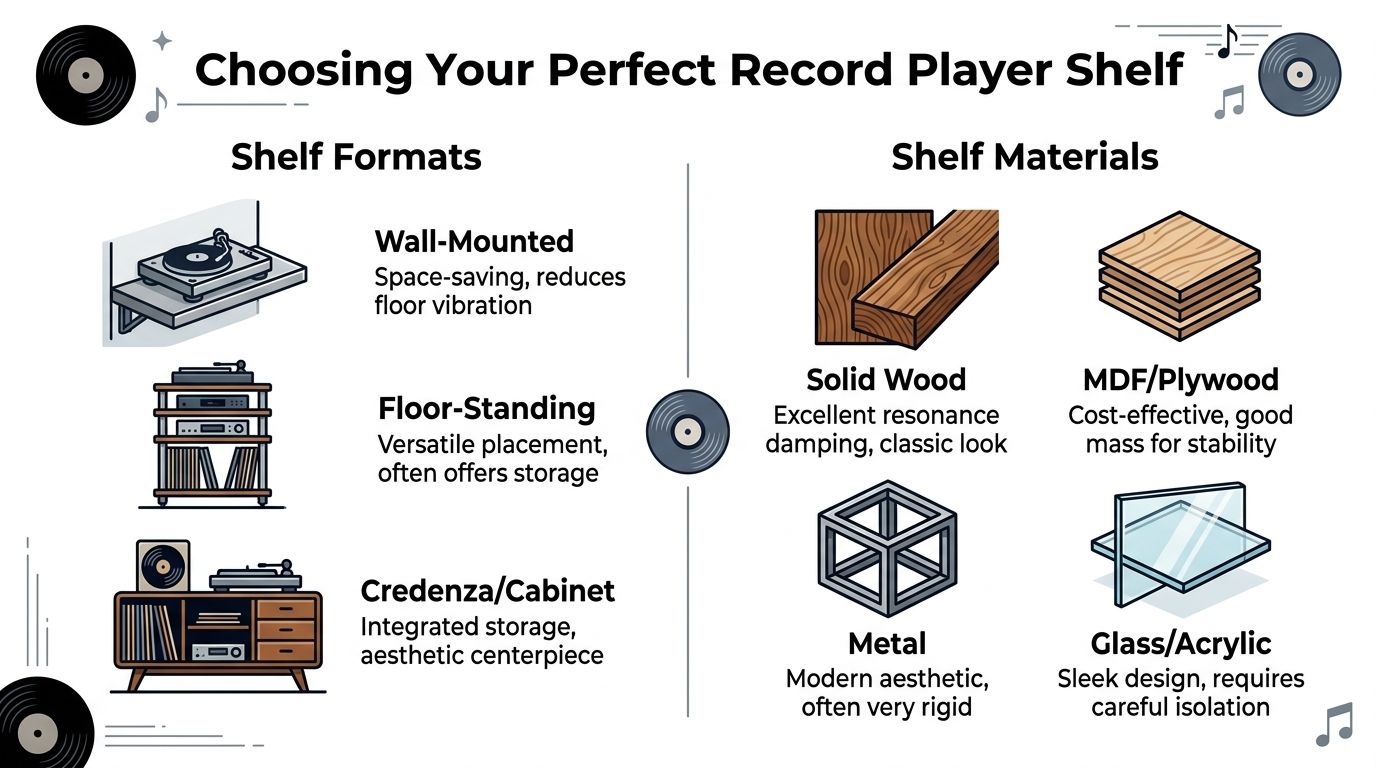
Choosing a record player shelf is partly about format and partly about material. Both affect performance. The format decides where vibration comes from and how the load is distributed. The material decides how the shelf stores or dissipates energy.
Shelf formats that work differently
A wall-mounted shelf can be brilliant in the right property. It takes the deck off a springy floor and can reduce the effect of footfall. It isn’t automatically better, though. The wall has to be suitable, and the fixings have to match the construction.
A floor-standing unit is the most flexible option. It gives you storage, placement freedom, and a larger visual presence. It also leaves you more exposed to movement through the floor, so the base, feet, and overall rigidity matter more.
A credenza or cabinet can be the best-looking choice in a living room. It hides clutter and gives a broad top surface for deck, phono stage, and accessories. The risk is that many domestic cabinets are built as furniture first. Long spans, thin backs, and decorative legs can make them less stable than they appear.
Material trade-offs in plain English
No material is perfect. The right choice depends on whether your main problem is resonance, flex, appearance, portability, or budget.
| Material | Strengths | Weak points | Best use |
|---|---|---|---|
| Solid wood | Good natural damping, handsome finish, substantial feel | Can move slightly with environment, quality varies | Home systems where sound and appearance matter equally |
| MDF or plywood | Predictable, dense, cost-effective, easy to build with | Edges need finishing, cheaper examples can swell if neglected | DIY builds and sensible budget racks |
| Metal | Rigid, durable, often excellent for frames | Can ring if not controlled, can sound “hard” structurally | Event-ready frames and mixed-material stands |
| Glass or acrylic | Clean visual look, light and modern | Poor damping, often needs added isolation | Design-led setups where acoustics are managed separately |
What tends to work in real rooms
Solid wood is often the most forgiving. It usually avoids the sharp, lively feel that some all-metal or glass-heavy units can introduce. A good hardwood top on a well-braced frame is hard to dislike.
MDF and plywood are underrated. Done properly, they offer useful mass and consistency. Many excellent custom shelves use them under veneers or paint finishes. They don’t have the romance of walnut, but they often behave better than trendier materials.
Metal excels where toughness matters. I like it most as part of a hybrid design, such as a steel frame with a properly supported timber shelf. That gives you rigidity without relying on metal alone to control resonance.
Glass is usually the hardest sell for serious playback. It can look superb in a magazine-style room, but it rarely earns its keep acoustically unless you build isolation into the setup elsewhere.
If you want one safe default, choose a rigid frame with a dense wooden or engineered-wood shelf and avoid decorative wobble.
Matching shelf type to user type
Different setups need different compromises.
- Small flat, light foot traffic: A wall shelf can solve more problems than any fancy accessory.
- Family living room: A low, broad cabinet with proper internal support often wins on safety and storage.
- Dedicated listening room: A purpose-built audio rack makes sense if you want to control every variable.
- Multi-use social space: A sturdy floor-standing unit with room for records and sensible cable paths is usually easiest to live with.
For readers finishing or refreshing a shelf rather than replacing it, this guide to a DIY vinyl finish for shelves is a useful reference. The finish won’t transform a poor structure into a good one, but it can improve durability and help a practical build sit more comfortably in the room.
What doesn’t work well
Furniture designed around thin panels, weak rear bracing, or spindly legs usually disappoints. So do deep shelves with very little support across the span. They may hold a turntable at first, then slowly reveal flex, sag, or mild rocking.
The safest buying question is simple. Would you trust the piece with expensive hi-fi on it in a crowded room. If the answer is hesitant, keep looking.
Sizing and Stability A Structural Guide for Flawless Playback
The weak point in many vinyl setups is not the cartridge or the phono stage. It is the structure underneath them.
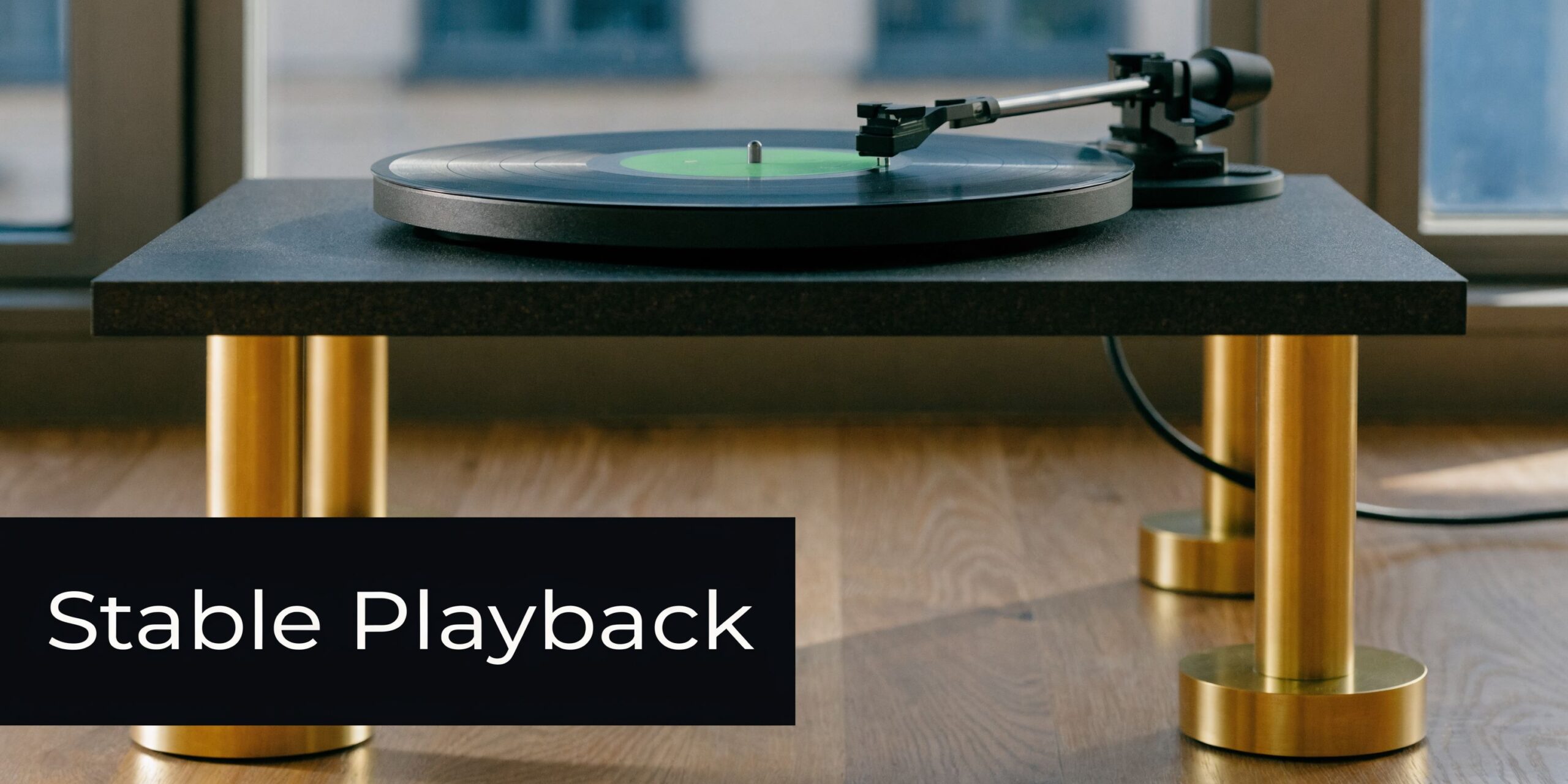
I see it at home installs and event jobs alike. The deck goes on a shelf that looks substantial, then the top flexes slightly, one foot sits proud on an uneven floor, and the stylus ends up reading that movement along with the groove. Good sound starts with a support that stays put under real load.
Size for the full system, not just the deck
A shelf only performs well if its dimensions and load capacity match the whole setup. That means the turntable, any mixer or phono stage, the amplifier if it shares the unit, and the records stored below. Vinyl is dense. A modest record collection adds far more weight than many buyers expect, and that weight keeps acting on the shelf every day.
Width matters too. The turntable needs enough space to sit fully supported with clearance for cables, dust cover movement, and safe cueing. Depth is just as important. If the feet of the deck sit close to the front and rear edges, the shelf has less margin for error and less resistance to rocking.
Leave some spare capacity. Furniture that operates close to its limit tends to reveal problems slowly through sag, twist, and fastener movement.
Levelling changes tracking behaviour
A deck should sit level before you touch cartridge alignment, anti-skate, or tracking force. If the shelf is out, every adjustment on the turntable becomes a correction for bad furniture.
A small spirit level is one of the cheapest tools in hi-fi.
Check left to right, then front to back, then recheck after the full system is in place. Floors in older London houses and temporary event spaces often shift the result once the weight settles. Adjustable feet help because they let you correct the support itself instead of asking the turntable feet to compensate for a crooked base.
What stability looks like in practice
A stable record player shelf has clear structural logic. Weight should travel straight down into solid legs or side panels. The top should resist bending across its span. The frame should resist racking when pushed from the side.
These are the features worth checking first:
-
A wide, planted base
Narrow units are easier to disturb, especially on springy floors or in busy rooms. -
Short spans with proper support
Long unsupported shelves bow over time, particularly with records stored in the centre. -
Rear or side bracing
Bracing stops the whole unit from swaying diagonally. -
Adjustable feet or another reliable levelling method
Fixed feet only work well on flat floors. -
A sensible centre of gravity
Heavy records stored low down improve stability. Weight high up does the opposite.
Why event work demands better structure
Domestic use is one test. Professional use is harsher.
At an event, people brush past the furniture, cables get tugged, and floors rarely behave like a showroom slab. A shelf that feels acceptable in a quiet lounge can become unpredictable at a wedding venue or bar set. For that reason, I favour lower units with a broad footprint and obvious bracing whenever a turntable has to perform in public.
If you want to see how commercial furniture makers handle uneven floors and side loads, self-stabilizing table technology is a useful reference. It is not a turntable shelf solution on its own, but the engineering principle is relevant. Stability comes from controlled contact with the floor and a structure that does not wobble under changing conditions.
A quick structural check before you buy or install
Use this checklist with the shelf empty, then loaded:
| Check | What you’re looking for |
|---|---|
| Push lightly from the side | Minimal sway and no visible racking |
| Press on the centre of the top | Little to no flex |
| Check all feet contact the floor | No rocking at any corner |
| Load records where they will live | No change in level once weight is added |
| Inspect joints and fixings | Tight connections, no creaks, no movement |
Common sizing and support mistakes
Some faults only show up after a few months of use.
| Mistake | Why it causes trouble |
|---|---|
| Using a top that is too deep with little support underneath | The shelf can flex across the span and drift out of level |
| Choosing style-led legs with limited bracing | Side movement increases during cueing or footfall |
| Storing a heavy block of records on one side only | Uneven loading twists the frame over time |
| Leaving no clearance for cables and lid movement | The deck ends up pushed forward or sitting awkwardly on the shelf |
If the unit stays level, resists a side push, and keeps its shape under the full load, it is doing its job. If it creaks, rocks, or settles unevenly, fix the support first. Upstream upgrades will not solve a structural problem underneath the turntable.
Strategic Placement and Tidy Installation
Placement changes how well a record player shelf performs. You can buy the right unit, level it carefully, and still compromise the setup by putting it in the wrong part of the room.
The first rule is distance from obvious disturbance. Keep the shelf away from speaker stands, heavy foot traffic, slamming doors, and direct sun. Heat and vibration are both enemies, just in different ways.
Where the shelf should go
The best location is usually the quietest part of the room structurally, not the spot that first seems most convenient.
A useful order of preference looks like this:
- Against a solid wall rather than in the middle of a springy floor
- Outside main walking routes so no one brushes the furniture during playback
- Away from corners loaded with bass energy if speakers are nearby
- Out of direct sunlight to protect records and avoid heat build-up around equipment
If you live in an older property with lively timber floors, even moving the shelf half a metre can change how much footfall reaches the stylus. Test before committing. Walk the room while a record plays. You’ll often hear the problem zones immediately.
Keep speakers and turntable from fighting each other
Turntables and speakers don’t want to share too much physical intimacy.
If speakers sit on the same unit as the deck, low frequency energy can travel straight into the shelf. Sometimes isolation pads help, but the cleaner answer is separation. Put speakers on their own stands or wall mounts where possible.
This is especially important in party spaces. Once the volume comes up, the shelf starts doing more than supporting weight. It also becomes a route for acoustic feedback.
Put the deck where people won’t dance near it, lean on it, or shout directly over it while reaching for a drink.
Cable management that improves reliability
Messy cables aren’t just ugly. They can tug the deck, create hum problems, and make servicing harder.
A tidy installation usually follows three habits:
-
Power and signal take different paths
Don’t bundle mains leads tightly with phono cables if you can avoid it. -
Leave a service loop
Give each cable enough slack that moving the deck slightly for cleaning or levelling doesn’t strain the connection. -
Anchor runs to the furniture
Clips, ties, and adhesive mounts stop cables pulling against sockets or hanging where feet can catch them.
Make it neat without trapping the gear
People often push a cabinet hard against the wall and cram all excess cable into a hot, tangled knot behind it. That looks tidy for a day and becomes a nuisance later.
A better approach is simple:
- Route the phono lead cleanly
- Separate mains adapters if possible
- Label anything hidden
- Keep ventilation clear around amplifiers and powered components
If the setup serves both listening and entertaining, leave enough access to swap records and clean the stylus without wrestling around the back panel. A neat shelf should still feel usable. Too much visual perfection can create practical frustration.
Quick room check before final placement
Before you call the job done, stand back and ask:
| Check | Good sign |
|---|---|
| Traffic | Nobody needs to squeeze past the deck |
| Sunlight | No harsh direct beam onto records or plinth |
| Speaker relationship | No speaker sharing the same shaky surface |
| Cable path | Nothing under tension, nothing dangling |
The right location makes every later tweak more effective. The wrong location forces you to chase problems with accessories.
The Professional DJ’s Guide to Event-Ready Shelving
Home listening and event playback overlap, but they don’t ask for the same priorities. A domestic shelf can favour beauty and permanence. A professional setup has to survive transport, rushed load-ins, uncertain floors, and guests who assume every horizontal surface is a place to lean.
That changes the brief.
What event shelving must do
A record player shelf for mobile work has to be stable first, portable second, and presentable third. If those priorities are reversed, you get a smart-looking setup that becomes stressful the moment the room fills.
An event-ready unit should offer:
- Fast assembly without mystery fixings or awkward balancing
- Rigid structure that doesn’t loosen after repeated moves
- Enough top area for deck, mixer, and workflow space
- A sensible footprint that fits venues without feeling precarious
- Clean appearance suitable for weddings, private parties, and brand events
The best rigs are often modular. A dedicated turntable position, a separate mixer surface, and storage underneath usually outperform all-in-one furniture that tries to do everything at once.
Road-worthiness matters more than showroom beauty
A shelf that lives in one room can be precious. A shelf that goes out to Kent venues on weekends cannot.
Look for joinery and hardware that tolerate repetition. Bolted frames usually outlast flimsy cam-lock furniture. Replaceable feet are useful. Durable finishes matter because edges take abuse in vans, lifts, and service corridors.
For event professionals, material choices also change. Heavy stone tops may sound appealing in theory, but they’re awkward to transport. Very thin decorative tops travel easily but often perform badly. The sweet spot is usually strong mixed-material construction with predictable assembly and enough mass to feel planted.
Layout for professional use
A DJ shelf or console needs flow, not just support.
The hand movements have to make sense. Cueing, mixing, record handling, and laptop access should happen without crossing over yourself. That often means a wider working surface than domestic buyers expect.
A strong event layout usually includes:
- Turntable on the most stable side
- Mixer centred for quick access
- Laptop or controller raised or offset
- Record crate access below or immediately beside the deck
- Cable exits hidden from guest view
One visual benchmark for the kind of polished booth presence clients remember is Golden vibes in the DJ booth.

Venue reality changes everything
Weddings and private events rarely hand you a perfect floor and endless setup time. You get old halls, marquees, polished boards, temporary stages, and load-in windows that are tighter than planned.
That’s why simple, dependable design wins. A shelf that can be levelled quickly, cleaned quickly, and trusted under pressure is far more valuable than one with clever details that only matter in photos.
Professional shelving should lower your mental load. If it adds uncertainty, it isn’t professional enough.
The strongest event setups feel calm. They don’t wobble when the room gets lively. They don’t force emergency fixes. They let you focus on reading the crowd.
Maintenance and Simple Acoustic Upgrades
A shelf rarely goes bad in one dramatic moment. Playback gets slightly less stable over time, and many owners only notice once mistracking, low-level feedback, or a vague softness in the sound has already crept in.
That slow drift usually comes from simple mechanical changes. Fixings relax with use. Pads compress. Timber responds to humidity. Floors settle. On a turntable setup, small shifts matter because the stylus is reading tiny groove movements, so any extra vibration or tilt gets turned into audible problems.
The checks worth doing routinely
A quick inspection every so often is enough. Keep it practical.
- Confirm level with a small spirit level on the platter
- Tighten fixings if the shelf uses bolts or screws
- Inspect feet and pads for compression or uneven contact
- Check for shelf sag by sighting across spans
- Make sure records stay upright rather than leaning hard to one side
These checks protect sound quality as much as furniture condition. A deck that is fractionally out of level can affect tracking force across the record. A sagging span can store and release vibration instead of damping it.
Upgrades that usually earn their keep
The best upgrades are usually modest and targeted.
Isolation feet help when the shelf is solid but the room feeds vibration up through the floor. That is common in older London flats with suspended timber floors, and in venues where people are moving around near the setup.
A separate isolation platform is useful when the shelf is structurally decent but still passes a bit too much energy into the deck. Cork-rubber composites, layered birch ply, or properly designed sorbothane-based products can all work, but the right choice depends on the weight of the turntable and the type of vibration you are trying to control.
Added mass can steady a light unit, though it is not a free win. More weight on a weak shelf can increase flex, lower the resonant frequency, and make the problem worse. Added mass only makes sense when the structure underneath is already stiff enough to carry it cleanly.
Wall attachment or anti-tip restraint improves safety and can reduce unwanted movement from accidental knocks. For event work, that matters. Guests brush past furniture, cables get tugged, and temporary floors are rarely perfectly predictable.
Treat the shelf as part of the audio chain
A record player shelf is a mechanical component in the playback system. It affects resonance, energy transfer, cartridge behaviour, and cueing confidence. This is why maintenance and acoustic upgrades matter.
I judge a shelf by what reaches the stylus. If footsteps no longer travel into the deck, bass stays tighter, and the arm tracks cleanly during cueing, the shelf is doing its job. If it only looks good in the room, it is still unfinished from an audio point of view.
Even visual details should support that thinking. A restrained finish or a small brand marker such as the Vinyl Gold logo graphic can sit nicely in a listening space, but decoration comes after rigidity, level support, and vibration control.

When to stop tweaking
Stop once the system is stable and repeatable.
If the deck stays level, records cue cleanly, footfall does not interrupt playback, and the shelf stays quiet under normal use, leave it alone. Chasing accessories beyond that point often adds cost without solving a real problem. The goal is controlled playback, not endless adjustment.
Frequently Asked Questions
Can I use a Kallax-style unit as a record player shelf
Yes, sometimes. It can work for storage and casual playback if it’s properly assembled, level, and not overloaded in a way that creates flex. I wouldn’t treat it as the best answer for demanding audio use or busy event environments.
What’s the ideal height for a record player shelf
The best height is the one that lets you cue records comfortably without hunching or lifting your shoulder. For home listening, that often means around waist level or slightly above. For DJ use, a bit higher usually makes record handling easier over a long session.
Do wall-mounted shelves sound better than floor-standing ones
Not automatically. On springy floors, a well-installed wall shelf can outperform a floor unit because it avoids footfall problems. On the wrong wall, or with poor fixings, it can be no better and sometimes worse.
Should speakers sit on the same shelf as the turntable
Usually no. Separation is safer. Shared furniture gives vibration an easy route into the stylus.
Is solid wood always better than MDF
Not always. Good MDF or plywood can outperform poor solid timber if the design is better. Judge the whole structure, not the material label alone.
How much record storage should sit in the same unit
Enough to keep the collection practical, but not so much that the shelf becomes strained or awkward to level. Heavy records concentrated on one side can twist a unit over time.
Do I need special isolation accessories straight away
Only if you have an actual problem. Start with rigid furniture, proper levelling, and good placement. Add isolation products when you can identify what they need to solve.
If you want help with event-ready vinyl setups, trusted DJ gear, or a soundtrack that feels as polished as the system playing it, VinylGold is worth a look. Based in London and working across South East London and Kent, VinylGold brings together professional DJ experience, dependable equipment choices, and a real understanding of how sound, space, and atmosphere work together.