
Gram Parsons didn’t just make music. He invented a genre. Before alt-country, before Americana, before Taylor Swift played arenas in cowboy boots, there was a restless Southern boy from Georgia who believed country music and rock and roll belonged together. He called it Cosmic American Music. The world is still catching up.
He died at just 26. Yet in that brief, blazing career, Gram Parsons reshaped the sound of popular music so profoundly that the Rock and Roll Hall of Fame officially recognised him as a Musical Influence in 2024 — long overdue, but finally cemented in history. This is the definitive guide to his recorded legacy, from his honky-tonk beginnings to his posthumous masterpiece.


Everything You Wanted to Know About Gram Parsons
What is Gram Parsons’ “Cosmic American Music”? Cosmic American Music was Gram Parsons’ term for the sound he spent his entire career chasing. It fused country, rock, soul, and rhythm & blues into something that felt deeply rooted yet entirely new. Rather than treating these genres as separate traditions, Parsons believed they shared the same emotional DNA — working-class heartbreak, spiritual longing, and raw human joy. His music proved he was right.
How did Gram Parsons die? On September 19, 1973, Gram Parsons died of a drug overdose at the Joshua Tree Inn in the California desert — a place he loved deeply and visited often. He was 26 years old. His death robbed popular music of one of its most visionary architects, just as he seemed poised to break through to a wider audience. Adding to the tragedy, his road manager Phil Kaufman famously stole his body and attempted to cremate it at Joshua Tree National Monument, honouring what he claimed was Parsons’ final wish.
Was Gram Parsons in the Rolling Stones? No — but his fingerprints are all over their greatest work. Parsons forged a deep friendship with Keith Richards in the late 1960s, and the two spent long stretches together at Richards’ French villa. That relationship profoundly shaped the Stones’ country-inflected recordings on Sticky Fingers (1971) and Exile on Main St. (1972). Parsons never joined the band, but his influence on that era of their music is undeniable and widely acknowledged by Richards himself.
Who discovered Emmylou Harris? Gram Parsons discovered Emmylou Harris performing in a Washington D.C. folk club in 1971 and immediately recognised her exceptional talent. He invited her to become his duet partner for his solo recordings, and the chemistry between them was instantaneous. Harris had little country background at the time, yet she brought an angelic precision to Parsons’ music that perfectly complemented his weathered, world-weary voice. After his death, she became one of country music’s most enduring and respected artists — a living testament to what Parsons heard in her that night.
Phase 1: The Early Years
The International Submarine Band – Safe at Home (1968)
Long before Gram Parsons became a countercultural icon, he was a young musician with an audacious idea. Safe at Home, released in 1968, is widely cited as the first true country-rock album. Parsons assembled the International Submarine Band and walked straight into Nashville’s musical territory — at a time when rock musicians simply didn’t do that. The result was raw, unpolished, and genuinely thrilling.
The album opens with a statement of intent. Parsons had already absorbed the Bakersfield sound of Buck Owens and Merle Haggard. He blended it with rock instrumentation in a way that felt natural rather than forced. Tracks like Luxury Liner and Do You Know How It Feels showcase his gift for melody and his instinctive feel for heartache.
Notably, the album arrived at an awkward moment. Gram Parsons had already departed for The Byrds by the time LHI Records released it. Consequently, it received almost no promotion and sank without trace commercially. History, however, has been far kinder. Today, Safe at Home stands as a cornerstone document of a genre being born in real time. Furthermore, it established the blueprint Parsons would spend the rest of his life refining — honest songs, pedal steel guitar, and emotional truth above all else. For any serious student of American music, this album is essential listening.
Phase 2: The Byrds
The Byrds – Sweetheart of the Rodeo (1968)
When Gram Parsons joined The Byrds in early 1968, the band was already legends. They had defined the Californian sound of the mid-sixties. Parsons, however, had other ideas entirely. Within months, he steered one of rock’s most celebrated acts straight into Nashville. The resulting album, Sweetheart of the Rodeo, became a landmark in music history.
Recording at Columbia’s Nashville studios, the band worked with session legends and emerged with something genuinely radical. Parsons brought Bob Dylan’s You Ain’t Goin’ Nowhere and Nothing Was Delivered to the sessions, transforming them into country readings. He also contributed originals that displayed his maturing song writing voice. The album introduced rock audiences to pedal steel guitar, fiddles, and old-time country structures — genres they had been culturally conditioned to dismiss.
Parsons departed before the album’s release, following a dispute over a South Africa tour he refused to join. Moreover, record label complications meant his lead vocals were partially replaced on several tracks. Despite this, his influence permeates every groove. Gram Parsons had permanently altered The Byrds’ trajectory and, by extension, rock music’s relationship with country. Additionally, Sweetheart of the Rodeo planted seeds that would grow into the entire Americana movement. Decades later, artists from Beck to Wilco acknowledge this album as a foundational text. Without this record, the musical map of the 1970s and beyond looks entirely different.
Phase 3: The Flying Burrito Brothers
The Flying Burrito Brothers – The Gilded Palace of Sin (1969)
If Gram Parsons made a perfect album, this is it. The Gilded Palace of Sin, released in 1969, is universally regarded as the holy grail of country-rock. Together with co-founder Chris Hillman, Gram Parsons built a band that looked like outlaws and sounded like nothing else on earth. The iconic Nudie suits — embroidered with marijuana leaves and naked women — announced that these were not Nashville traditionalists.
Musically, the album pushed boundaries in every direction. Sin City is devastating in its clarity, a song about spiritual corruption that feels timeless. Hot Burrito #1 and Hot Burrito #2 rank among the most emotionally raw ballads of the era. Furthermore, the band incorporated soul and R&B in ways that felt completely organic rather than appropriated. The rhythm section locked in tight, and the pedal steel wept through every track.
Critically, the album flopped on release. However, its influence spread through the music world like wildfire. It reached the Rolling Stones’ circle, seeping into the DNA of their early-seventies recordings. Additionally, it demonstrated that country music could carry the weight of rock’s rebellious spirit without losing its emotional authenticity. Therefore, The Gilded Palace of Sin remains the definitive statement of what Cosmic American Music could achieve. No collection of American roots music is complete without it.
The Flying Burrito Brothers – Burrito Deluxe (1970)
By 1970, internal tensions were pulling the Flying Burrito Brothers apart. Nonetheless, Burrito Deluxe contains moments of genuine brilliance — and one historically significant track that ensures its permanent place in music history. This album features the first officially released recording of the Rolling Stones’ Wild Horses, a song Mick Jagger and Keith Richards gifted to Parsons before the Stones recorded it themselves.
That gesture alone speaks volumes about Gram Parsons’ standing among rock royalty at the time. Richards and Parsons were close friends and musical kindred spirits. Allowing Parsons first release rights to one of the Stones’ finest compositions was an act of genuine affection and respect.
Beyond Wild Horses, the album showcases a band stretching in multiple directions simultaneously. The production is noticeably more polished than its predecessor. Some fans argue this smoothness dulled the raw edge that made The Gilded Palace of Sin so electrifying. Conversely, others point to the expanded sonic palette as evidence of artistic growth. Tracks like Cody, Cody and Image of Me demonstrate that Gram Parsons retained his gift for heartfelt, intimate song writing even as the band dynamic shifted. Furthermore, the album marks the end of Parsons’ tenure with the Burritos. He departed shortly after recording, moving toward the solo career that would define his final chapter.
Phase 4: The Solo Years
Gram Parsons – GP (1973)
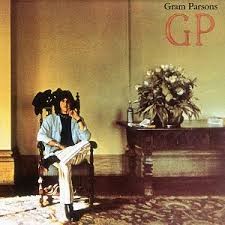
1973 was a pivotal year. Gram Parsons signed to Reprise Records, assembled a new backing band called the Fallen Angels, and introduced the world to a young folk singer named Emmylou Harris. The album simply titled GP is where that extraordinary partnership first took shape on record.
The Fallen Angels deserve acknowledgment here. This road-hardened group of musicians gave Parsons a live sound that was loose, warm, and deeply human. They toured extensively behind this album, and those performances were later captured on Live 1973, released in 1982 — an essential document for anyone wanting to understand how electric Gram Parsons was as a live performer.
On record, GP opens with Still Feeling Blue, a track that sets the emotional temperature immediately. Throughout the album, Parsons and Harris trade harmonies with effortless, aching grace. Their voices fit together with an almost uncanny naturalness. Covers like Streets of Baltimore and She sit comfortably alongside originals that display Parsons at his most lyrically direct. Additionally, the album’s production, handled by Merle Haggard collaborator Hugh Davies, keeps everything warm and uncluttered. GP is not his most celebrated album. However, it is the essential first chapter of his greatest story — the musical partnership with Harris that would reach its peak on the record that followed.
Gram Parsons – Grievous Angel (1974)
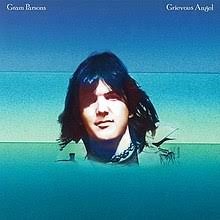
Some albums are great. Grievous Angel is something else entirely. Released posthumously in January 1974, just months after Gram Parsons died at Joshua Tree, it stands as one of the most beautiful and heart breaking records in American music. Parsons completed the recordings before his death. Fortunately, the world received them intact.
The album opens with Return of the Grievous Angel, a song so perfectly constructed it sounds like a mission statement from beyond. Parsons and Harris trade verses with breath taking ease, their voices intertwining around images of highways, heartbreak, and hard-won freedom. Subsequently, the album moves through Hearts on Fire, a honky-tonk romp, and Brass Buttons, a delicate, deeply personal song that feels almost too intimate to hear.
The centrepiece, however, is Love Hurts — the Felice and Boudleaux Bryant classic, here transformed into something transcendent. Gram Parsons and Harris sing it as if they have both lived every syllable. Furthermore, the closing In My Hour of Darkness reads unmistakably as an elegy — for lost friends, for a world slipping away, for Gram Parsons himself. Critically and commercially overlooked at release, Grievous Angel has since achieved the canonical status it always deserved. Today, it is the album most cited when musicians speak of Parsons’ genius. This is his masterpiece.
A Legacy Finally Recognised
Gram Parsons spent much of his afterlife being described as a footnote — influential but forgotten, seminal but unheard. That finally changed. His 2024 induction into the Rock and Roll Hall of Fame as a Musical Influence marked an official acknowledgment of what serious music listeners have always known. He didn’t just influence country-rock. He invented it.
His fingerprints are everywhere. They are on Emmylou Harris’s entire career. They are on the Eagles’ early sound, the Rolling Stones’ country period, and the Americana movement that dominates festival stages today. Moreover, every artist who dares to cross genre boundaries — who believes a great song belongs to no single genre — is working in the tradition Gram Parsons established.
He was 26 when he died in that California desert. Yet in a career spanning barely six years, he produced a body of work that genuinely changed music. The albums documented here are not merely historical curiosities. They are living, breathing records that still sound vital, honest, and achingly human in 2026. Put on Grievous Angel tonight. You’ll understand immediately why the world is still talking about him.