

You can feel it at events now. The playlist is technically fine, the room looks polished, the drinks are cold, and yet the atmosphere never quite lands. Guests drift back to their phones. The music sits in the background like filler. Nothing feels wrong, but nothing feels unforgettable either.
Then compare that with a room where the music has weight to it. A DJ lifts a record from its sleeve, drops the needle, nudges the next transition by hand, and the crowd notices. People stop scrolling. They look up. They ask what track is playing. They remember where they were when that tune came in.
That shift sits at the heart of Analog Lifestyle Trends 2026. This is not just retro styling with a few vintage props scattered around the venue. It is a move towards events that feel tactile, deliberate, and human. For couples, planners, and hosts in London and Kent, that matters because guests can tell the difference between a themed event and an experience that has been designed.
The Return of Real Experiences
A lot of modern events rely on convenience. A playlist gets plugged in. Lighting runs on a preset. Photos are taken, filtered, posted, and forgotten by the next morning. The event happens, but it does not always leave a strong imprint.
By contrast, analog elements slow the room down in the right way. They give people something to notice with their hands, ears, and attention.

That is why the wider culture matters here. Searches for analog hobbies in the UK surged 136% in the six months leading to 2026, with crafting and physical media drawing particular interest among Gen Z, according to the source provided in this brief via this reference. You can see that appetite reflected at parties as well. Guests are responding to experiences that feel less automated and more curated.
What guests respond to
A good analog event does not scream “nostalgia.” It feels considered.
Some examples:
- Music with presence: Guests notice when someone is actively selecting records rather than letting an algorithm fill the gaps.
- Objects with memory attached: Printed menus, handwritten details, and physical guestbooks become keepsakes instead of disposable touchpoints.
- Moments with friction: A little effort can be a feature. Waiting for a Polaroid to develop or flipping through records creates anticipation.
Those details matter because memory usually forms around texture, interruption, and surprise. Smooth, frictionless systems are efficient. They are not always emotionally sticky.
The strongest events do not just look good in photos. They give guests something to do, hear, hold, and remember.
The difference between theme and experience design
A retro theme is mostly surface. It borrows the look.
Experience design goes deeper. It asks better questions. What should the room feel like during drinks? When should the energy lift? What object will guests take home? What sound tells people the night has started properly?
That is where analog choices become useful. They are not there to tick a trend box. They shape mood, pace, and attention in ways that digital shortcuts rarely do.
Understanding the Analog Movement in 2026
The analog movement is best understood as a response to overload. People have spent years living through notifications, auto-generated recommendations, and endless convenience. Useful, yes. Memorable, not always.
Analog living answers that with tangibility. It puts value back into objects, rituals, and choices that require a bit more care.
Why tangibility matters
A streamed track is access. A vinyl record is access plus object, artwork, ritual, and handling. That difference changes behaviour.
When people interact with physical media, they tend to become more present. They look longer. They listen more actively. They discuss what they are hearing. The object itself invites attention.
That helps explain why vinyl has moved beyond a niche collector culture. According to the British Phonographic Industry, UK vinyl sales reached 6.5 million units in 2025, continuing a 17-year growth streak, and 45% of buyers were under 35, as cited in the provided reference to the LA Times analog lifestyle coverage. That is not just nostalgia from older listeners. Younger audiences are choosing a format that asks more from them and gives more back.
What is driving the shift
Several forces sit behind Analog Lifestyle Trends 2026.
Digital fatigue
Many people are tired of events that feel like extensions of their feeds. The same tracks circulate. The same content style repeats. The same visual language shows up everywhere.
Analog choices break that loop because they are less interchangeable. A DJ’s record bag is not the same as a generic playlist. A handwritten place card does not feel like a Canva template printed at the last minute.
The search for authenticity
People use the word “authentic” too loosely, but in event terms it has a practical meaning. It means the details feel selected for this room, this crowd, and this occasion.
That can be heard in music programming. It can be seen in print, paper, and decor. It can also be felt in pacing. Analog experiences often leave more room for anticipation, conversation, and human judgement.
Sensory engagement
Digital experiences are often visually dominant. Analog ones distribute attention across more senses. Guests hear the needle drop. They handle textured paper. They watch film being loaded or a record being changed. The event becomes more embodied.
If guests can only consume your event through a screen, the design is incomplete.
What this means for planners and couples
For weddings and private events, the analog movement offers a practical advantage. It helps create distinction without becoming gimmicky.
A well-designed analog event tends to feel:
| Event quality | Digital-first version | Analog-led version |
|---|---|---|
| Music | Efficient and broad | Curated and characterful |
| Guest interaction | Passive | Participatory |
| Keepsakes | Mostly digital files | Physical mementoes |
| Atmosphere | Generic polish | Specific mood |
This is the appeal. Analog is not about rejecting technology outright. It is about using fewer shortcuts in the moments that deserve more care.
Key Analog Trends for Unforgettable Events
When people talk about analog trends, they often lump everything together. For events, that is not useful. The better approach is to treat each analog element as a design tool with a specific job.

Vinyl as the atmosphere setter
Vinyl does more than provide songs. It changes how music enters the room.
Records encourage pacing. Sets breathe differently. Transitions feel chosen rather than processed. Guests can also see the act of selection, which makes the soundtrack part of the event rather than hidden infrastructure.
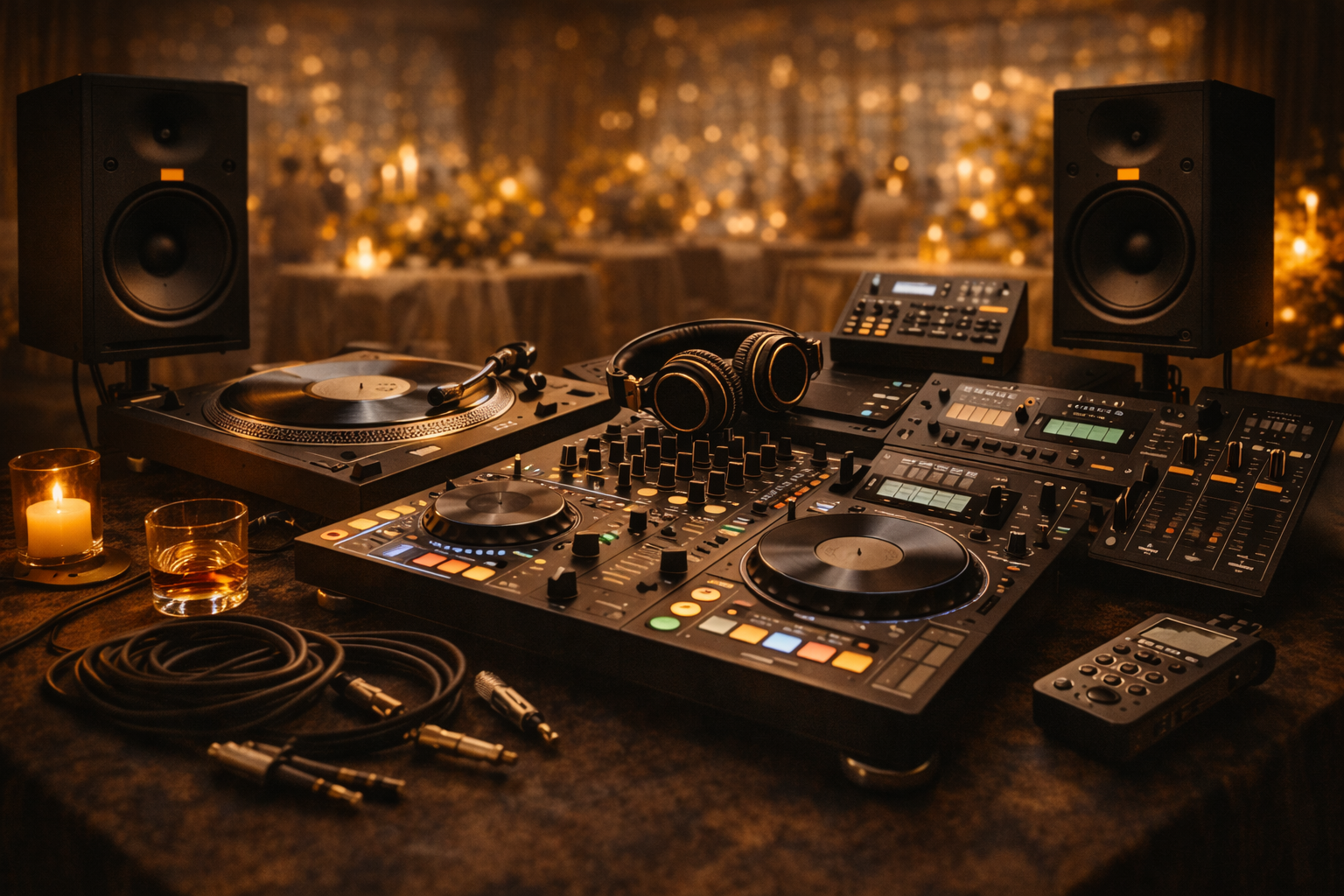
For visual inspiration, this DJ booth image captures the sort of setup that turns music into a focal point instead of background furniture.
Film and instant photography for memory making
Film and Polaroid-style photography work well because they change guest behaviour. People pose more carefully. They value the result more. The photo becomes an object rather than just another file in the camera roll.
This suits weddings especially well. A guestbook built around instant prints gives people a reason to stop, write, and contribute something with a bit of personality.
Print that does more than inform
Printed materials matter long before the first track plays. Invitations, menus, place cards, and signage can all establish tone.
The key is not to over-style them. Good print work should feel tactile and coherent, not costume-like. Thick stock, restrained typography, and a bit of handwriting often land better than trying to make everything look aggressively vintage.
Interactive analog moments
Some of the most effective event details are small ones. A record browsing corner. A typewriter guestbook. A board game table in a breakout area. A handwritten request card.
If you want ideas for low-screen social interaction that still feel lively, these unforgettable family game night ideas are useful because they show how physical play creates conversation without relying on devices.
Live acoustic texture
Not every analog element needs to be fully vintage. A short acoustic performance during a drinks reception, dinner, or room transition adds intimacy and resets attention.
This works especially well when paired with recorded music later in the evening. The contrast gives the night more shape.
The best analog events rarely use one idea in isolation. Music, print, photography, and interaction should support the same mood.
What works and what does not
A quick reality check helps.
- Works well: A few strong analog features integrated into the flow of the event.
- Works badly: Throwing in random “retro” props that do not affect how guests feel or behave.
- Works well: Physical details that invite participation.
- Works badly: Decorative analog styling that guests only notice in staged photos.
- Works well: Cohesion between music, visual identity, and tempo of the night.
- Works badly: A vinyl deck in the corner while the rest of the event runs like any standard digital setup.
The point is not to recreate the past. It is to use analog tools to make the present feel richer.
Why Vinyl Is the Sonic Centrepiece Your Event Needs
If you only choose one analog element for an event, make it the music. Guests may admire stationery, notice the flowers, and enjoy the camera booth, but music controls the room minute by minute.
That is why vinyl matters so much. It is not just a format. It is a way of building atmosphere with intention.

Sound that feels inhabited
People often describe vinyl as warm. That word gets overused, but there is a practical point behind it. Vinyl listening encourages attention to texture.
In an event setting, that can make soul feel fuller, disco feel rounder, funk feel more alive, and old-school house feel more physical. It is not only about technical sound quality. It is about the psychological effect of hearing music delivered through a format that feels crafted and deliberate.
A room notices that difference, even when guests cannot explain it in technical terms.
The DJ becomes part of the experience
With streaming, the music source often disappears into the background. Vinyl does the opposite. The act of playing records is visible.
Guests see sleeves being pulled, records being cued, and transitions being worked in real time. That creates theatre. It gives the crowd something to lock onto.
This matters more than many planners realise. People respond to visible skill. They trust the room more when they can see someone steering it.
A strong vinyl set also improves timing. A good DJ can hold a groove for conversation, then stretch the energy, then pivot the mood without making the shift feel abrupt. That judgement is hard to automate because it depends on reading people, not just matching tempos.
Curation beats abundance
Digital platforms offer endless choice, but abundance often produces blandness. The wider the menu, the easier it is to default to obvious tracks.
A vinyl-led event tends to avoid that trap. The limits of the format create discipline. Selections feel sharper. Sets develop identity.
That is especially useful for events that want refinement without stiffness. A curated selection of disco, funk, soul, and classic house often says more about a room than a giant playlist full of crowd-pleasers dumped together with no narrative.
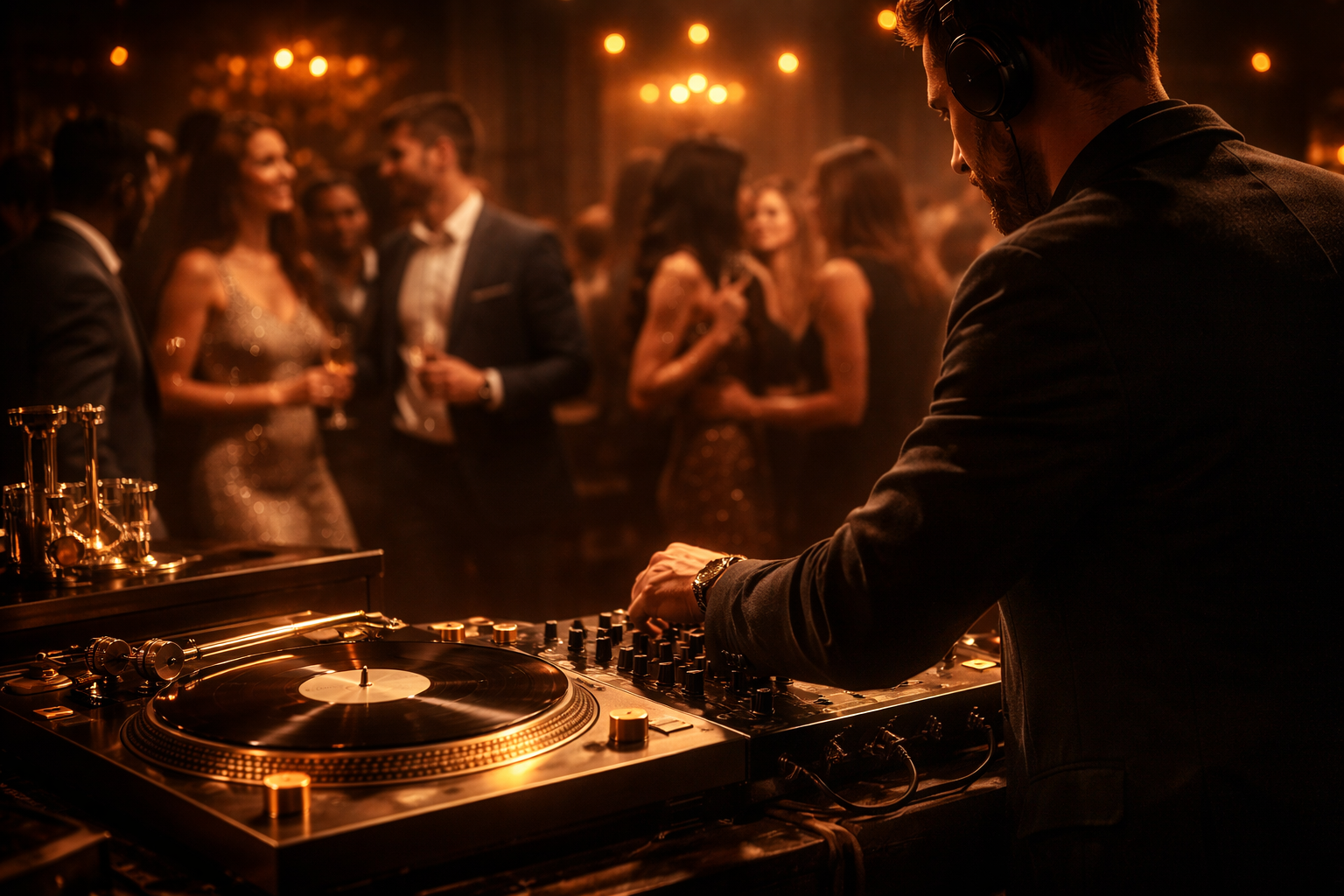
The visual side matters too. This music-focused event visual reflects how strongly a physical setup can shape the feel of a space.
Vinyl works best when it is programmed for the room, not treated as a novelty add-on.
A note on sustainability and local value
There is also a more serious conversation around Analog Lifestyle Trends 2026. The wellness and cultural appeal get plenty of attention, but the economic and sustainability impacts are less examined, according to the supplied reference from UC Riverside School of Education.
That gap matters. Physical media is not automatically virtuous, and digital systems are not automatically cleaner or more responsible. Anyone speaking openly about analog culture should admit the trade-offs.
For events, the most grounded approach is to focus on intention and local value:
- Use local specialists: Hiring a craft-based service keeps spend tied to a real person with real expertise.
- Choose quality over excess: One well-executed music setup usually adds more value than a pile of throwaway themed decor.
- Plan for reuse: Good audio equipment, proper print pieces, and durable event details can serve more than one moment.
The sustainability case for vinyl events should not be reduced to slogans. The better argument is that curated, local, skill-based services often create deeper value than disposable digital convenience. That is not a spreadsheet claim. It is a practical one.
Bringing Your Analog Vision to Life
The easiest way to get analog wrong is to make it too literal. You do not need every detail to look vintage. You need the whole event to feel intentional.

A London wedding with soul in the room
A stylish wedding reception might begin with low-tempo soul and warm funk during drinks. Guests arrive to a soundtrack that invites conversation rather than forcing energy too early.
Dinner can stay musical without becoming intrusive. Then, once the formalities are done, the music shifts through disco into house with clear intention. Add an instant-photo guestbook and handwritten table details, and the whole celebration feels tactile without becoming themed.
The visual identity should stay clean. Cream paper, restrained signage, and proper lighting usually outperform anything kitschy.
A corporate launch that avoids feeling corporate
Brand events often make the same mistake. They focus so heavily on image that they forget atmosphere.
An analog-led launch works best when the music gives the brand some human texture. A vinyl disco or funk set can keep the room moving while still sounding refined. Printed menus or tasting cards help, especially if the brand wants guests to slow down and engage.
Interactive elements should be selective. One physical touchpoint done well is stronger than several weak activations.
A simple planning asset like this Vinyl Gold logo visual is a reminder that branding itself can stay elegant while the event experience does the heavier emotional work.

A birthday party with proper personality
Private parties are often where analog design lands best because the host’s taste can lead. A fortieth, an anniversary, or a house party with a stronger setup can all benefit from a listening-led approach.
One practical format works particularly well:
- Start with listening music: Let the first phase welcome people in.
- Build through recognisable grooves: Soul, funk, boogie, or house can raise the energy naturally.
- Create one memorable physical moment: A stack of records for requests, a photo station, or handwritten message cards can anchor the night.
The rule for combining analog elements
Not every event needs vinyl, film, print, acoustic music, a typewriter, and game tables all at once. Too many ideas can muddy the mood.
Use this simple filter:
| If you want guests to feel | Use more of this | Use less of this |
|---|---|---|
| Relaxed and connected | Soulful vinyl, soft print details, candid film | Busy activations |
| Stylish and high-energy | Disco, bold lighting, visible DJ setup | Overdecorated nostalgia |
| Personal and intimate | Handwritten touches, guestbook objects, slower pacing | Generic playlists |
The strongest analog events feel edited. Leave some breathing room.
Choosing Intention Over Automation in 2026
A key lesson in Analog Lifestyle Trends 2026 is not that old things are better. It is that intentional choices create stronger memories than automated ones.
That applies to music first. It also applies to every other detail that guests can touch, hear, or take away. When an event is designed with care, people feel it immediately. They stay present for longer. They connect more easily. They remember the atmosphere, not just the schedule.
This idea is not limited to music culture. You can see the same logic in food and drink. The appeal of traditional espresso methods comes from the same place. Process matters. Craft matters. The human hand still changes the result.
In 2026, the most compelling luxury is not excess. It is attention.
For planners, couples, and hosts, that means resisting the temptation to solve every problem with convenience. Use digital tools where they help. Then make deliberate space for the details that deserve a human touch.
That is how a party becomes an occasion. That is how a wedding gets its own character. That is how a room sounds, feels, and lives in memory after the last guest goes home.
If you want an event soundtrack built with that level of care, VinylGold brings bespoke vinyl-led DJ experiences to weddings, private parties, and brand events across London and Kent. Reach out to plan a set that fits your crowd, your space, and the exact feeling you want the night to leave behind.