
Let’s cut through the jargon. You’ve probably seen the term ‘amp Bluetooth speaker’ floating around, and it can sound a bit technical. In reality, it’s just the industry name for a professional all-in-one audio unit that combines a speaker, a built-in amplifier, and a Bluetooth receiver into one portable box.
What Exactly Is an Amp Bluetooth Speaker?
Think of it like a professional singer. The speaker itself is their voice, the built-in amplifier provides the powerful lung capacity to project that voice, and the Bluetooth connection is like a wireless teleprompter feeding them the lyrics from a phone or tablet.
This all-in-one design, known in the pro audio world as an active or powered speaker, is a total game-changer for event professionals. Instead of messing around with separate amps, mixers, and a tangled mess of cables, you have one solid, reliable piece of kit. That integration is what makes it so appealing.
The Power of an All-In-One Design
The real beauty of an active speaker lies in how perfectly its internal parts work together. The manufacturer designs the amplifier specifically for the speaker it’s paired with, which means you get the best possible performance and sound quality right out of the box. There’s no guesswork involved, which removes a huge point of failure compared to old-school passive systems.
For DJs and event organisers, this translates to some very real-world benefits:
- Faster Setup: With fewer bits to connect, you can get high-quality sound up and running in minutes, not hours.
- Reduced Failure Points: Fewer cables and external boxes mean fewer things that can go wrong at a crucial moment, like during a wedding speech or a corporate presentation.
- Guaranteed Compatibility: The internal amp and speaker are literally made for each other, so you never have to worry about technical issues like impedance mismatches that can damage gear or ruin the sound.
An active speaker with a built-in amp is like buying a performance car where the engine has been perfectly tuned for that specific model. A passive system is like buying the engine and the car body separately and just hoping you can bolt them together correctly.
More Than Just a Speaker
This design philosophy is all about making professional-grade audio dependable and easy to use. When you see a DJ setting up for a wedding, those sleek, powerful speakers they put on stands are almost always active speakers. Adding Bluetooth to the mix just adds another layer of modern convenience.
It makes playing background music from a phone during cocktail hour or between sets completely effortless. By understanding that an “amp Bluetooth speaker” is just a professional active speaker with wireless smarts, you can see why it’s become the go-to choice for mobile events. It delivers the power, clarity, and reliability needed to make sure your sound is a seamless part of the experience, not a technical headache.
Understanding Your Core Audio Components
To get great sound at any event, you first need to know what you’re working with. Every sound system, from a compact portable speaker to a full-on concert rig, is built from a few essential parts. Getting your head around what each one does is the secret to making smart audio choices.
The three key players are the speaker, the amplifier, and the receiver. The speaker is the part that actually creates the sound waves you hear. The amplifier gives the speaker the electrical muscle it needs to do its job. Finally, the receiver—in our case, the Bluetooth part—is what catches the wireless audio signal from your laptop or phone.
Think of it as a simple chain of command. The Bluetooth receiver gets the music, the amplifier boosts it, and the speaker cone turns that signal into sound.
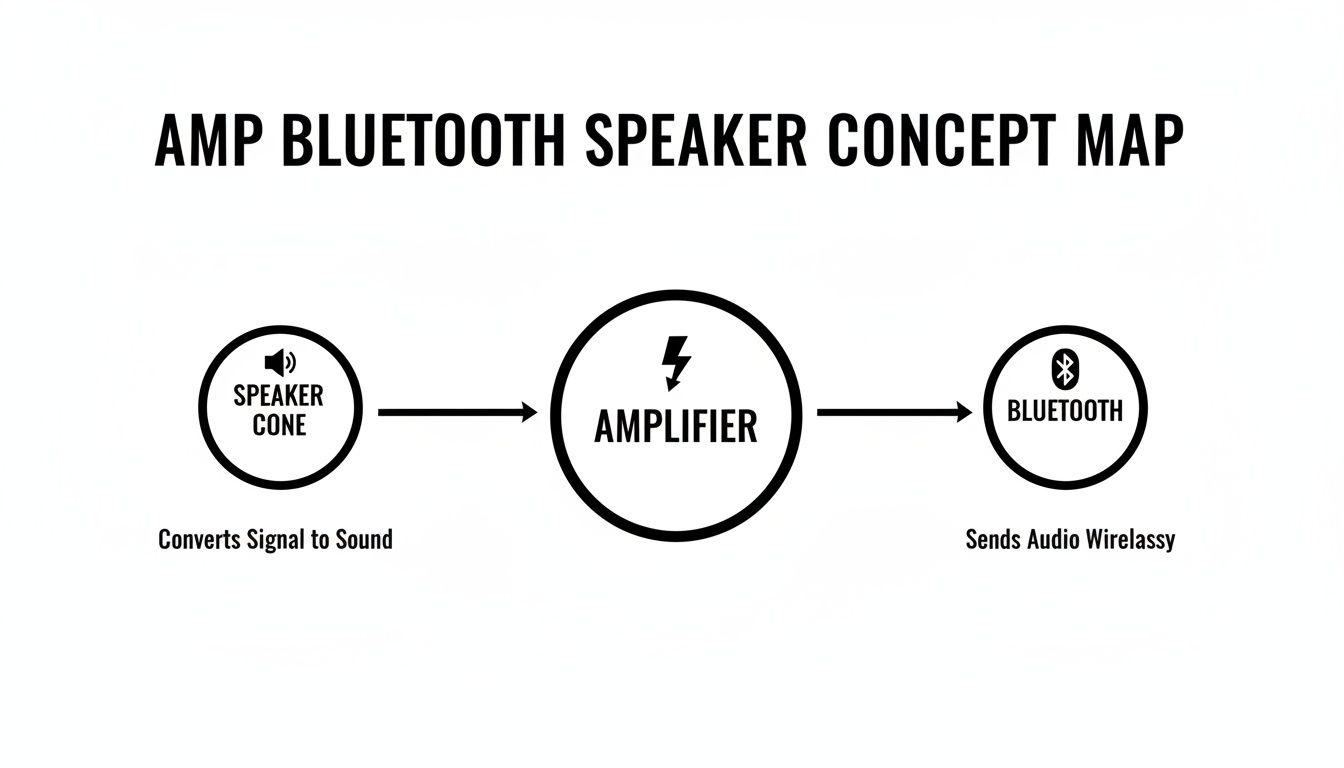
This diagram shows a self-contained system where everything is built into one box. That integration is what defines a modern, professional active speaker.
Active Speakers Versus Passive Speakers
Here’s where things get really important. Speakers fall into two main camps: active (or powered) and passive. This is probably the single most critical concept to grasp when you’re hiring a DJ or renting equipment for an event.
-
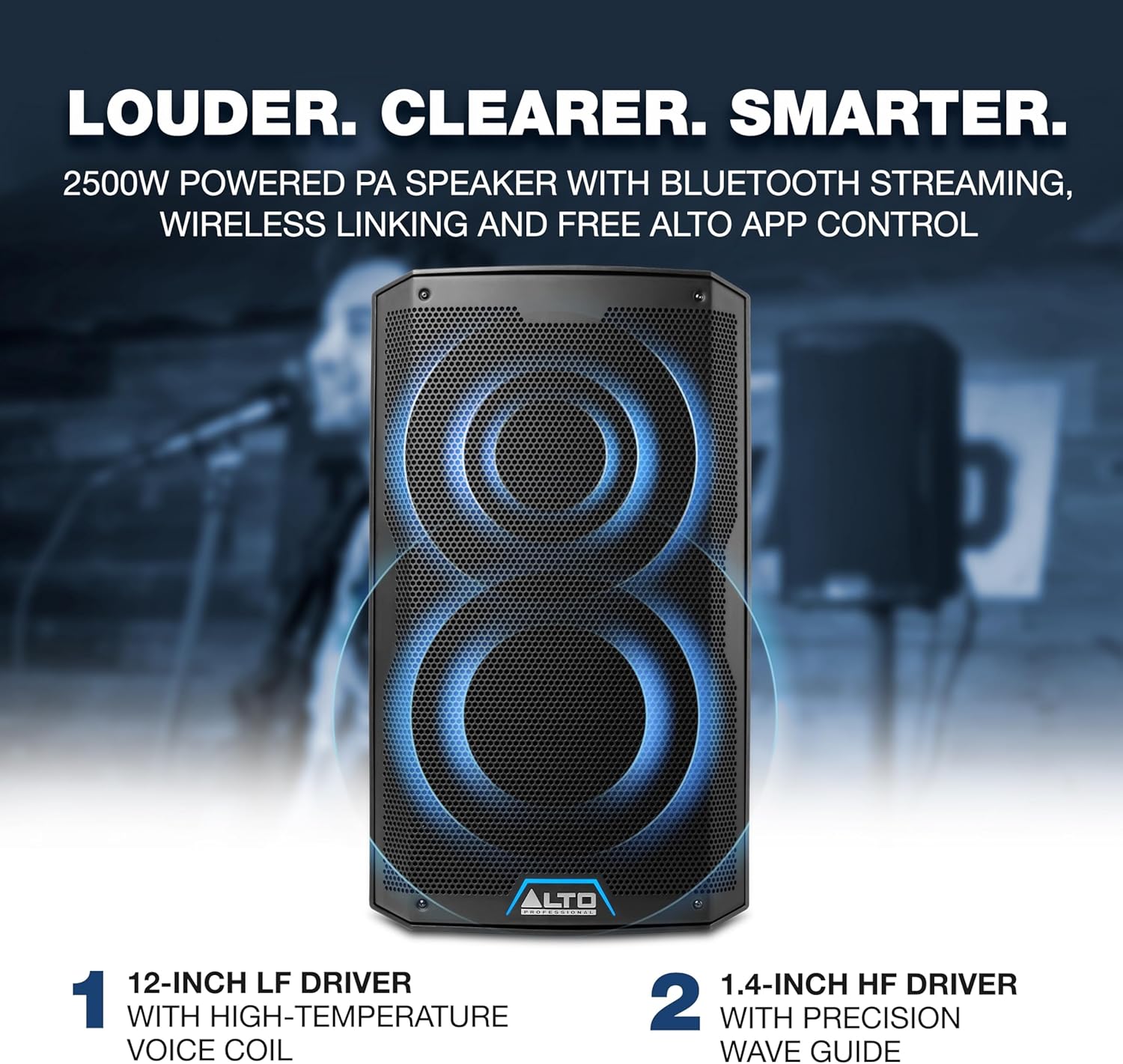
Active Speakers: These are your all-in-one powerhouses. The amplifier is built right into the speaker cabinet. The ‘amp Bluetooth speaker’ we’re talking about is a perfect example of an active speaker. They’re designed to be simple and reliable because the amp inside is perfectly tuned for the speaker it’s driving.
-
Passive Speakers: These are just the speaker cones in a box—they have no voice on their own. Passive speakers need a separate, external amplifier to give them power and make any sound. You’ll see these used in more complex setups, like for a live band or in a venue’s permanent sound installation.
Think of it like this: Active speakers have the engine inside; passive speakers need an engine from outside. This simple rule helps clear up exactly what gear is needed for any job.
For a wedding ceremony, a DJ might use a single, tidy active speaker. It’s quick to set up for playing background music wirelessly from a tablet. But for the big evening reception with a live band and 200 guests, a more involved passive system with hefty external amplifiers might be the only way to get the power and coverage needed.
The demand for this kind of convenient, high-quality audio is undeniable. The UK’s portable Bluetooth speaker market was valued at USD 522.8 million in 2023 and is set to grow even more, showing just how much people prefer these integrated solutions. You can dive deeper into this trend in the full Grand View Research report.

Matching the Speaker to Your Venue and Event
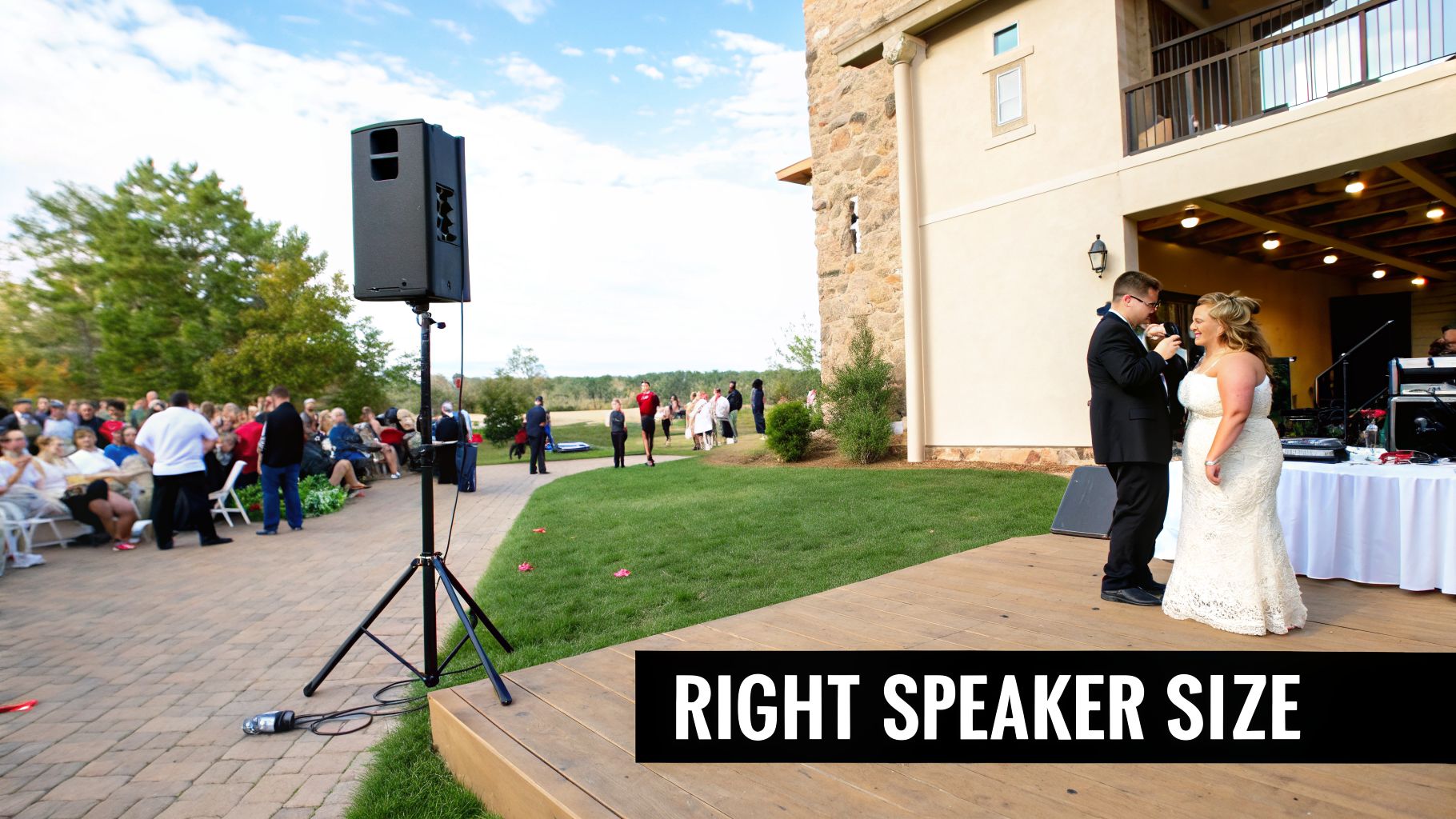
Knowing the tech is one thing, but making it work for your event is what really counts. Choosing the right amp Bluetooth speaker isn’t about grabbing the loudest or priciest model off the shelf. It’s about matching the gear to the unique demands of your space and your guests.
This is where we leave the theory behind and get into the practical, on-the-ground decisions that make or break an event’s atmosphere. To do that, you need to know what the key specs on a professional speaker actually mean for your big day.
Power Ratings: What Does RMS Mean?
When looking at power ratings, the number you want to find is RMS (Root Mean Square). This figure gives you the honest, continuous power a speaker can handle without distorting the sound. It’s a real-world measure, not some brief, misleading peak power figure designed to look good on a box.
A higher RMS value means the speaker can fill a bigger room or simply go louder while keeping everything crystal clear. A speaker rated at 500W RMS is a great workhorse for a medium-sized indoor event, comfortably covering around 100-150 guests without breaking a sweat.
Woofer Size and Frequency Response
The size of a speaker’s main driver, the woofer, has a huge impact on how well it handles bass. Think of the woofer as the engine for the low-end thump. For different parts of an event, the right size is crucial.
-
10-Inch or 12-Inch Woofers: These are your go-to for events where vocal clarity is everything. Think wedding ceremonies, corporate speeches, or background music during a cocktail hour. They deliver crisp, articulate sound that ensures every word is heard.
-
15-Inch Woofers: If you want a dance floor that’s not just heard but felt, a 15-inch woofer is a must. This bigger driver moves more air, delivering the deep, punchy bass that gives dance music its energy—from classic funk and soul to house and modern pop. It creates a physical feeling smaller speakers just can’t touch.
This is why a seasoned DJ often brings different speakers for different moments. A pair of 12-inch speakers might be perfect for the ceremony and drinks reception, but when it’s time to party, the big 15-inch speakers come out to play.
Matching the speaker to the music is key. A 15-inch woofer gives dance music its soul, while a 12-inch speaker ensures every word of a heartfelt speech is heard perfectly.
A practical way to think about this is to match the power and size to your venue. Not all spaces are created equal, and what works in a small boutique hotel won’t cut it in a large marquee.
Here’s a simple table to help you visualise the right fit for your event.
| Venue Type / Guest Count | Recommended RMS Power (per speaker) | Woofer Size | Best For |
|---|---|---|---|
| Small Room / Up to 50 guests | 250W – 350W | 10″ or 12″ | Intimate ceremonies, background music, speeches |
| Medium Hall / 50-150 guests | 400W – 750W | 12″ or 15″ | Most wedding receptions, parties, corporate events |
| Large Venue / 150+ guests | 1000W+ | 15″ | Big dance floors, marquees, outdoor parties |
| Outdoor Ceremony / Speeches | 300W – 500W | 12″ | Vocal clarity over a wide, open area |
Remember, these are just guidelines. A room with lots of soft furnishings will absorb more sound than one with stone walls, so it’s always best to have a little more power than you think you need.
Finally, frequency response tells you the full range of tones a speaker can reproduce, from the deepest bass to the highest treble. A wider range, like 45Hz–20kHz, means the speaker can create a richer, more detailed soundscape. By understanding these specs, you can look at an equipment quote and know for certain that your audio pro has brought the right tools for the job. To see how these choices translate into creating legendary events, you can learn more about crafting a personal musical atmosphere for your big day.
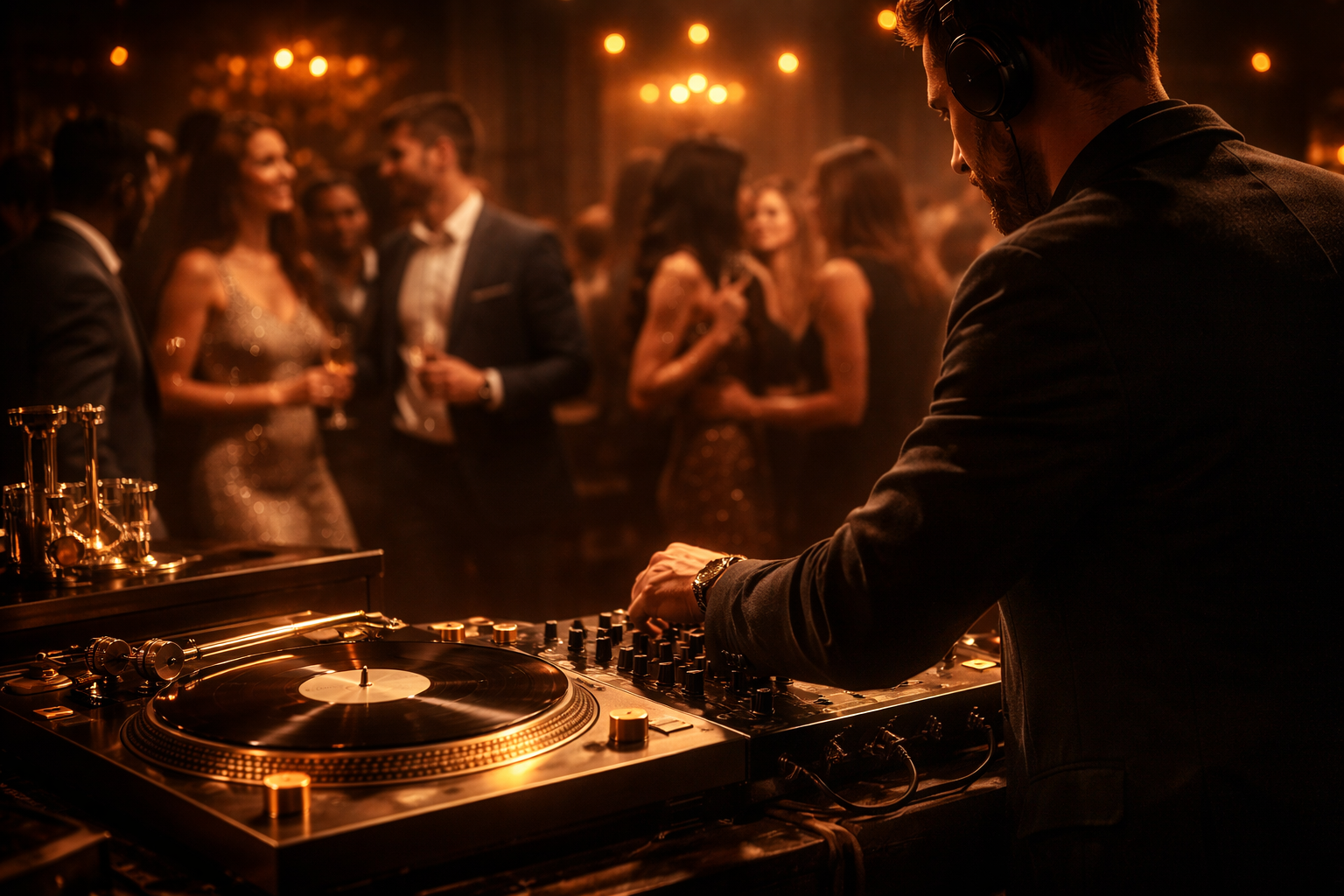
Hooking Up Your Speakers To Professional DJ Gear
This is where the real work begins—getting the sound from your decks to the dance floor. A clean, reliable signal path is the absolute foundation of any great DJ set. It ensures the music you’re carefully mixing is exactly what the audience hears: powerful, crisp, and free from any unwanted noise or dropouts. That’s why professional DJs have a very specific, time-tested way of connecting their equipment.
It all starts at the DJ mixer’s Master Out sockets. This is the final audio signal, ready to be sent to the speakers. From here, a pro will almost always run balanced XLR cables directly into the active speaker’s Line In port. This isn’t just a matter of habit; it’s all about protecting the quality of the sound.
Wired Reliability vs. Wireless Convenience
So, where does a speaker with Bluetooth fit into a proper DJ rig? While the wireless feature is brilliant for certain situations, it has a very specific job. It’s perfect for playing a chilled background playlist from a phone or tablet during guest arrival or a dinner service.
But for the main event—the DJ performance itself—a hardwired connection is completely non-negotiable.
Why are we so insistent on cables? Professional audio is a game of eliminating anything that can go wrong. Wireless connections introduce a few risks that are simply unacceptable when a first dance or a packed dance floor is on the line. These include:
- Signal Dropouts: Bluetooth can be interrupted by other wireless signals, walls, or even a person walking between the source and the speaker at the wrong moment.
- Audio Latency: There’s a tiny delay while the audio is encoded, sent, and then decoded. It might seem minor, but this lag makes it impossible for a DJ to beatmatch by ear, which is a fundamental skill for seamless mixing.
- Quality Loss: Bluetooth compresses the audio to send it wirelessly, which can subtly strip away the richness and detail. A high-quality track played through a cable will always sound fuller.
A wired connection is the DJ’s insurance policy. It guarantees the only thing affecting the music is the DJ’s skill, not random radio interference or a dying battery.
The sheer convenience of wireless audio has driven massive demand, with the global Bluetooth speaker market hitting USD 20.98 billion in 2023 and projected to reach USD 36.06 billion by 2029. That popularity explains why so many active speakers now include this feature.
The Professional Signal Path
This dual-use approach gives you the best of both worlds. You get the easy, wire-free option for background music and the rock-solid reliability you need for the main performance.
Understanding this difference makes it clear why a professional setup always prioritises a clean, cabled signal path above all else. For a DJ, preventing even a single moment of dead air is worth far more than any amount of wireless convenience. The goal is a flawless experience, and that starts with a connection you can trust completely. To see how this professional approach creates unforgettable events, check out our gallery of golden vibes in the DJ booth.
Solving Common Live Audio Problems
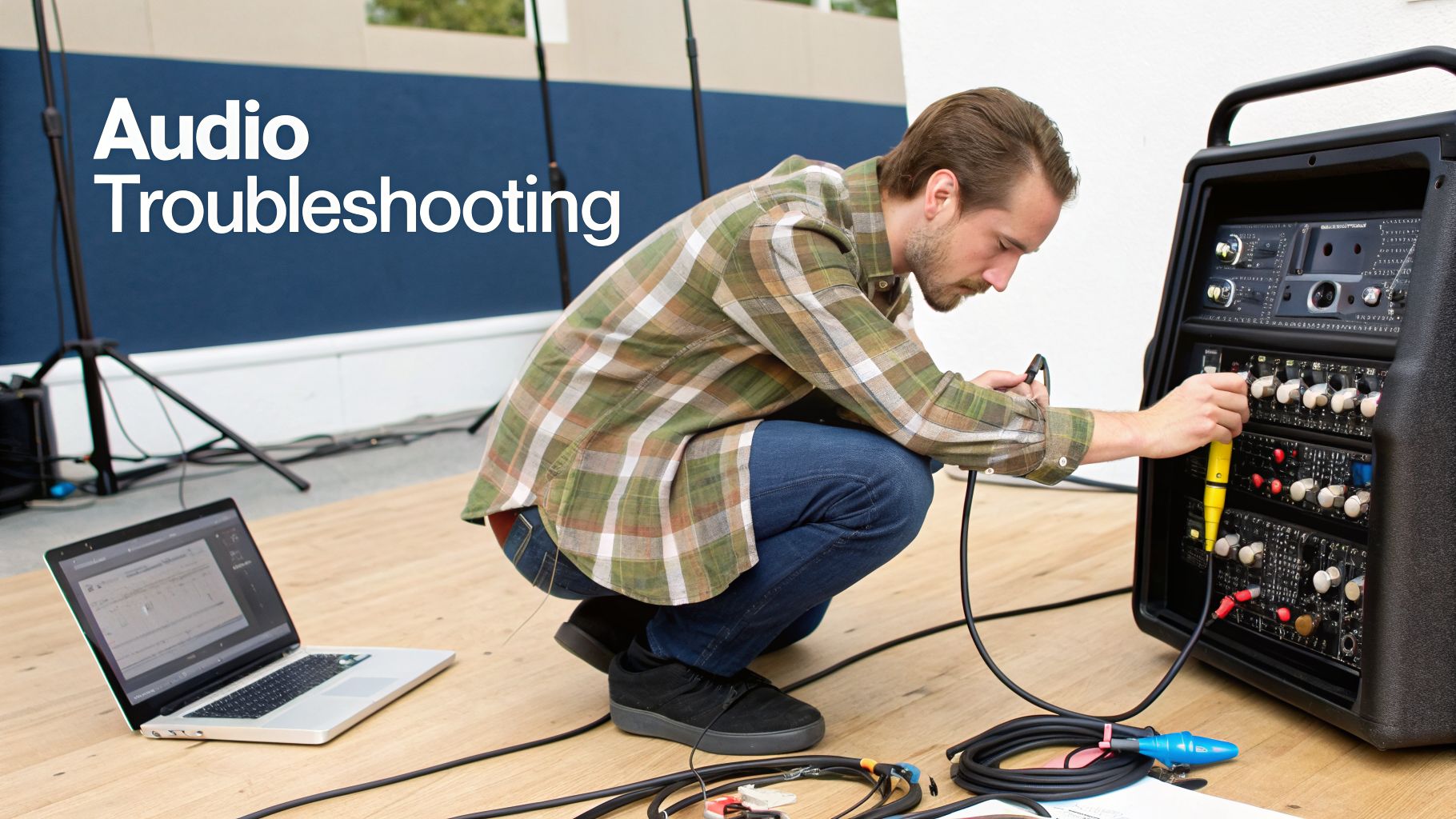
Even with the best gear in the world, live events have a knack for throwing curveballs. A sudden, dead silence. That persistent, nagging buzz. Distorted audio that grates on the ears. These moments can derail a perfect event in seconds.
This is where a real professional earns their stripes. It’s not about having equipment that never fails; it’s about staying calm, figuring out the problem fast, and getting it fixed before the client—or their guests—even realise something’s amiss.
The trick is having a mental checklist ready to go. Panicking solves nothing, but methodically working through the signal chain will almost always lead you straight to the cause. It turns a potential disaster into a minor blip on the radar.
The Problem of No Sound at All
It’s every DJ’s worst nightmare: the music stops, and the speakers go completely silent. Don’t panic. More often than not, it’s a simple fix. Your job is to trace the signal path from start to finish.
Troubleshooting Checklist: Silent Speakers
- Check the Mute Buttons: It happens to the best of us. Is a channel or the master fader on your mixer accidentally muted?
- Inspect the Power: Is the active speaker actually plugged in and switched on? Look for the power light and make sure the IEC cable is seated firmly.
- Confirm Cable Connections: Are the XLR cables clicked in securely at both the mixer’s output and the speaker’s input? A loose connection is a classic culprit.
- Verify Volume and Gain: Is the volume knob on the back of the speaker turned up? Then check the gain on your mixer channel to make sure a signal is actually being sent out.
This step-by-step process quickly isolates the problem. If you see the lights dancing on your mixer’s LED meters but get nothing from the speaker, the issue is somewhere between the mixer and the speaker itself.
An audio setup is just a chain of connections. When one link breaks, the whole thing fails. Troubleshooting is simply the art of finding that broken link, one piece at a time.
Fighting Buzzing and Distortion
A less dramatic but equally annoying problem is that unwanted noise creeping into your system. A constant hum or a fuzzy, crackling distortion can ruin the audio quality and make listening unpleasant.
The most common cause of that low-frequency hum is a ground loop. This happens when multiple pieces of gear are plugged into different electrical sockets, creating a tiny voltage difference that you hear as a 50Hz buzz. The quickest fix? Plug all your audio equipment into a single, high-quality power strip.
Distortion, often called clipping, sounds like a harsh, cracking noise, especially when the bass hits. This means your signal is too hot for the amplifier to handle. The solution is to check your gain staging—turn down the input gain on your mixer channel or the master output until those red ‘peak’ lights stop flashing. An amp Bluetooth speaker has its amplifier perfectly tuned for its drivers, but even it can be overloaded by an aggressive signal from the mixer.
Why Investing in Quality Sound Pays Off
At the end of the day, all the technical jargon and fancy hardware are just tools. The real goal is the feeling in the room—the unforgettable moments that only happen when the sound is just right. An amp Bluetooth speaker gives you amazing convenience, but getting the most out of it takes a professional touch.
Choosing the right speaker is only step one. The real magic happens when you tune it to the room’s acoustics, creating a musical flow that feels deliberate and alive. This is what separates background noise from a truly immersive experience. It’s the difference between just hearing the music and actually feeling it.
From Technical Specs to Unforgettable Moments
This focus on the complete experience is why investing in quality sound always pays off. You’re not just buying equipment; you’re investing in the success of your event. The demand for flexible, high-quality audio is growing fast—smart speakers already make up 32% of wireless speaker sales globally.
What’s more, Bluetooth-enabled speakers are on track to grab 28.2% of the market share by 2025, which shows just how much people want these integrated solutions. You can dig deeper into these trends in this comprehensive market analysis.
The best sound system is the one you don’t notice. It blends into the background, elevating the mood and energy of the room without ever drawing attention to itself.
This seamless integration is what we’re always aiming for. It takes more than great gear; it takes skill. It means making sure the audio lifts up every moment, from a heartfelt speech to a dance floor packed with energy.
When you put a premium on the audio experience, you’re making sure the soundtrack to your event creates lasting, positive memories for everyone there. To see how we put this philosophy into practice, take a look at the core values behind the VinylGold experience.

Frequently Asked Questions
When it comes to event audio, a few key questions always come up. We’re cutting through the noise to give event planners and DJs the straight answers you need to make the right call for your big day. Let’s tackle the most common queries about using an amp Bluetooth speaker setup.
Can I Use a Consumer Bluetooth Speaker for My Wedding?
While that little speaker is perfect for your kitchen, it just won’t cut it for a live event. It’s a common mistake. Consumer speakers simply lack the power, professional inputs (like XLR), and sheer ruggedness needed to fill a big room with clear, reliable sound and survive a proper party.
A professional active speaker, on the other hand, is built for this exact job. It’s designed to throw clean audio across a large space, making sure every single guest hears the vows and feels the music. Its robust build and high-quality parts are non-negotiable for delivering a flawless show from the first toast to the final song.
How Many Speakers Do I Need for My Event?
For an indoor event, a decent rule of thumb is one pair of professional speakers for every 100-150 guests. But honestly, that’s just a starting point. So many other things can change what you actually need.
The venue’s shape, how high the ceilings are, and even the materials on the walls all play a massive part. If the night is all about dancing or if you’re setting up outside, you’ll definitely need more power and wider coverage to create the right vibe and stop the sound from getting lost in the open air.
Key Takeaway: Always lean towards having more coverage than you think you need. It’s far better to have your speakers cruising comfortably at 70% volume than to push a smaller setup to its breaking point. That’s how you get distortion, or worse, total equipment failure.
Is a Subwoofer Really Necessary for My Party?
If your playlist is packed with dance-heavy music like hip-hop, R&B, EDM, or modern pop, then yes—a subwoofer is absolutely essential. It’s not about just being louder; it’s about making the music feel complete.
A sub is purpose-built to handle those deep, low-end frequencies—the booming bass lines and thumping kick drums that standard speakers just can’t reproduce with any real impact. This is what creates that full, rich sound you can actually feel. It’s what gets people out of their seats and onto the dance floor.
At VinylGold, we don’t just bring the gear; we bring the expertise to make your event sound incredible. Explore our DJ services and let’s build the perfect soundtrack for your day.