
Few bands in rock history have a story as volatile, triumphant, and utterly compelling as Van Halen. The drama behind the scenes was often as loud as the Marshall stacks on stage. To truly understand the band’s ground breaking music, you have to dig into the complex history of Van Halen band members, a revolving door of colossal talent and even bigger egos that somehow produced some of the most iconic rock anthems of all time.
This isn’t just a story about who played what. It’s a saga of brotherhood, betrayal, innovation, and a relentless pursuit of rock and roll glory. From the Pasadena house parties to global stadium tours, the line-up changes defined eras and shaped the very sound of rock guitar and showmanship for decades.
The Genesis: Forging a Rock Behemoth in Pasadena
Before the sold-out arenas and platinum records, there were two brothers, a tiny house in Pasadena, California, and an obsession with making noise. The seeds of Van Halen were sown not in a boardroom, but in a cramped bedroom where musical genius was being forged through sheer will and endless practice.
The Brothers Van Halen: Edward and Alex
The story begins with Edward and Alex Van Halen. Immigrants from the Netherlands, they were initially pushed into classical piano training by their musician father, Jan. But the raw energy of rock and roll, particularly bands like Cream, captured their imagination.
They famously swapped instruments. Eddie, originally the drummer, was tired of Alex mastering his drum solos while he was out on his paper route. He picked up the guitar, and one of the greatest instrumentalists in history found his true calling. Alex, with his thunderous and uniquely syncopated style, became the rhythmic engine. Their band, initially called Genesis and then Mammoth, was built on this almost telepathic musical connection.
The Ringmaster Arrives: David Lee Roth
Mammoth was an instrumental powerhouse, but they needed a frontman. They needed a spectacle. They found it in David Lee Roth. Roth wasn’t the most technically gifted singer, but he possessed something far more valuable: an unmatched, larger-than-life charisma and a flair for shameless showmanship.
Roth didn’t just sing; he commanded the stage. He was part acrobat, part carnival barker, and all rock god. Critically, he also owned a PA system, which was the initial reason the Van Halen brothers started working with him. It was a practical arrangement that quickly blossomed into a legendary, if combustible, creative partnership.
The Secret Weapon: Michael Anthony’s Bass and Backing Vocals
The final piece of the classic puzzle was bassist Michael Anthony. Recruited from a local rival band, Anthony wasn’t just a solid, in-the-pocket bass player; he was the band’s secret sonic weapon. His distinctive, high-harmony backing vocals became an essential and often-imitated part of the Van Halen sound.
Anthony’s background harmonies were so crucial that they were often mistaken for studio trickery. They added a melodic sheen and a massive sense of scale to Roth’s lead vocals and Eddie’s roaring guitar, creating that signature “gang vocal” sound on choruses like “Runnin’ with the Devil.” This original four-piece line-up was a perfect storm of talent.
The Diamond Dave Era (1974–1985): A Decade of Decadence and Dominance
When these four individuals finally clicked, they didn’t just form a band; they unleashed a cultural force. The David Lee Roth era is defined by explosive energy, musical innovation, and a party-hard attitude that set the standard for 80s rock.
The Eruption: Van Halen’s Debut and a New Guitar Language
After being discovered by Kiss’s Gene Simmons and later signed by Warner Bros. executive Ted Templeman, the band released their self-titled debut album in 1978. It was a watershed moment. The album, one of the Best Albums Of The 1970s, hit the rock scene like a lightning bolt.
The instrumental track “Eruption” completely rewrote the rulebook for electric guitar. Eddie’s use of two-handed tapping, dive bombs, and insane harmonics was unlike anything heard before. He instantly became the new guitar hero, the player every aspiring rocker wanted to be. The album was raw, powerful, and captured their live energy perfectly, largely because it was recorded almost live in the studio.
“The first album was a free-for-all. We were just kids, you know? We just went in and let it rip.” – Michael Anthony
You can still feel that raw energy today. Grab the debut on vinyl to truly appreciate the power they captured on tape. You can find a copy using this Amazon search link: https://www.amazon.com/s?k=Van+Halen+I+Vinyl&tag=vinylgolduk-21.
Internal Friction and Creative Peaks
The band’s rise was meteoric, but so were the internal tensions. Eddie was a relentless musical innovator, constantly pushing the band’s sound into heavier and more complex territories, as heard on albums like Fair Warning. Roth, on the other hand, was drawn to a poppier, more accessible, and party-centric vibe.
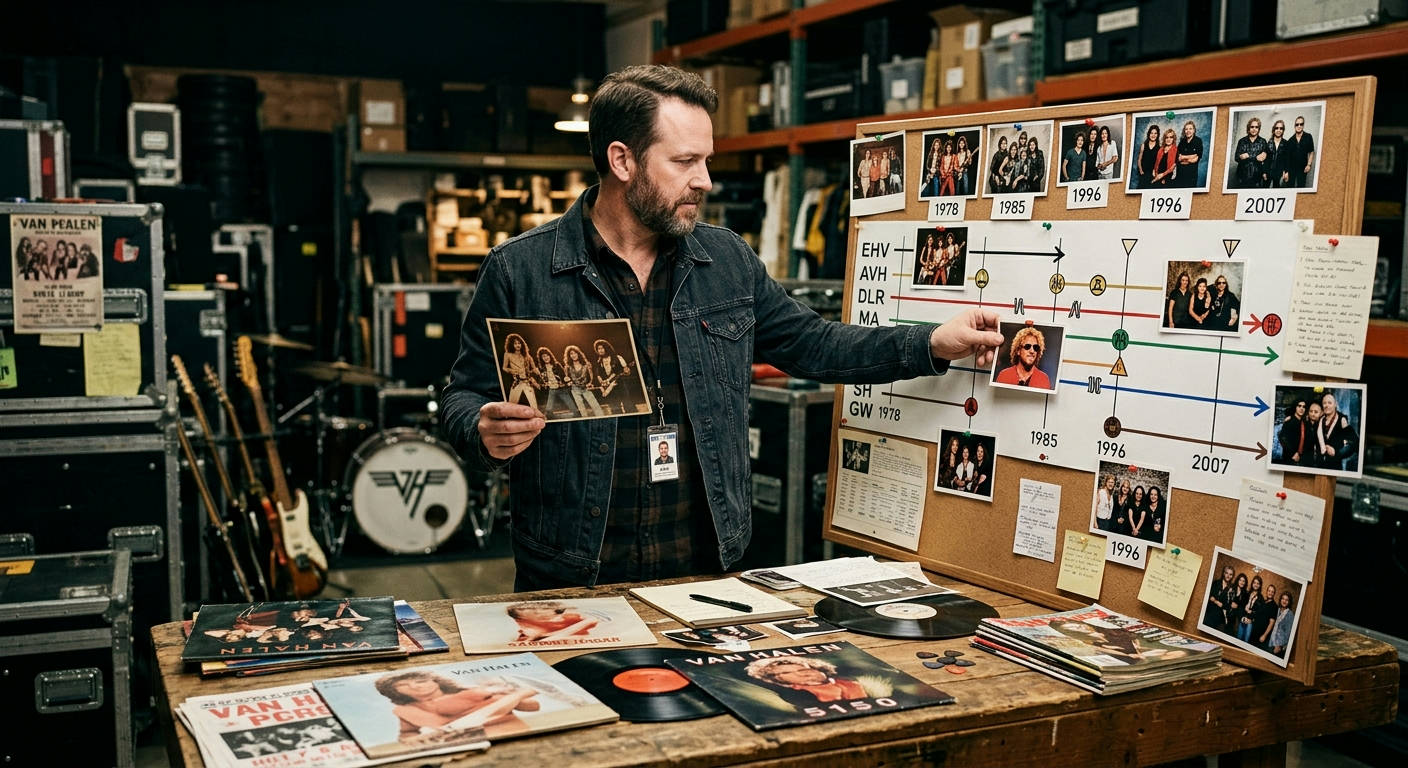
This creative clash was both a source of immense friction and the catalyst for their greatest successes. The tension between Eddie’s musical ambition and Dave’s Vaudevillian showmanship created a unique dynamic that no other band could replicate. They were the ultimate rock and roll odd couple.
1984: The Keyboard, The Crossover, and The Collapse
The breaking point and their commercial peak arrived with the album 1984. Eddie, wanting to expand the band’s sonic palette, leaned heavily into synthesizers, much to Roth’s initial disgust. The result was “Jump,” a synth-driven anthem that became their only number-one single.
The album was a monster success, spawning hits like “Panama” and “Hot for Teacher.” But the divide between the members was now a chasm. Roth, buoyed by the success of his solo EP Crazy from the Heat, felt creatively stifled. He believed the band was becoming Eddie’s personal project. In 1985, at the absolute height of their fame, David Lee Roth left Van Halen. The rock world was stunned.
Van Hagar (1985–1996): A New Voice, A New Direction
Many thought Van Halen was finished without its iconic frontman. They were wrong. Eddie Van Halen wasn’t just a guitar player; he was the band’s musical soul. He just needed a new voice.
Finding the Red Rocker: Sammy Hagar Joins the Fold
After a brief flirtation with offering the job to Patty Smyth of Scandal, Eddie found his man in Sammy Hagar. The “Red Rocker” was a successful solo artist in his own right and, crucially, a completely different type of performer than Roth. Hagar was a powerhouse vocalist with a more earnest, anthemic style.
Hagar’s arrival marked a seismic shift. The party-rock sleaze was replaced with more mature themes of love and life, and the music became more melodic and arena-ready. The new line-up, dubbed “Van Hagar” by fans, was born.
The 5150 Era: Unprecedented Chart Success
Their first album together, 1986’s 5150, was a statement. It went straight to number one on the Billboard charts, a feat the Roth-era band never achieved with a studio album. This kicked off a period of incredible commercial success.
The Hagar-fronted Van Halen released four consecutive number-one studio albums between 1986 and 1995. Songs like “Why Can’t This Be Love,” “Dreams,” and “Right Now” became massive hits. This version of the band was more polished, more professional, and arguably more consistent, even if some old-school fans missed Roth’s chaotic energy.
Communication Breakdown: The Second Major Split
History repeated itself. By the mid-90s, the relationship between Hagar and the Van Halen brothers had deteriorated. Disagreements over a greatest hits compilation and the direction for a new album led to a bitter and public falling out. In 1996, Sammy Hagar was either fired or quit, depending on who you ask. The Van Hagar era was over.
## A Deep Dive into the History of Van Halen Band Members: The Revolving Door
The period following Hagar’s departure was marked by chaos, confusion, and a series of line-up changes that left fans with whiplash. The band seemed to be searching for an identity, leading to some of the most controversial moments in their history.
A Fleeting Reunion and the Cherone Experiment
For a brief, tantalizing moment, it seemed a reunion with David Lee Roth was imminent. The classic line-up recorded two new songs for a best-of compilation and even appeared together at the 1996 MTV Video Music Awards. The reunion imploded spectacularly backstage almost immediately after it began.
With Roth out of the picture again, the band made a surprising choice for their third lead singer: Gary Cherone, from the funk-metal band Extreme. Cherone was a technically skilled vocalist and a huge Van Halen fan, but the chemistry just wasn’t there.
The resulting album, 1998’s Van Halen III, was a commercial and critical disappointment. The songs were dark and meandering, and the album lacked the signature Van Halen spark. The tour was poorly attended, and Cherone was unceremoniously dismissed shortly after. This album is a fascinating but flawed chapter in the history of Van Halen band members.
The Michael Anthony Controversy and the 2004 Tour
Things got even uglier in the new millennium. The band coaxed Sammy Hagar back for a reunion tour in 2004, but the goodwill didn’t last. The tour was reportedly plagued by infighting, with Eddie struggling with his health and sobriety.
More controversially, this period saw the beginning of the side-lining of Michael Anthony. His bass tracks on the new songs for a 2004 greatest hits package were minimal, and his percentage of band royalties was reportedly reduced. According to Hagar’s autobiography, this was the beginning of a concerted effort to push the founding bassist out.
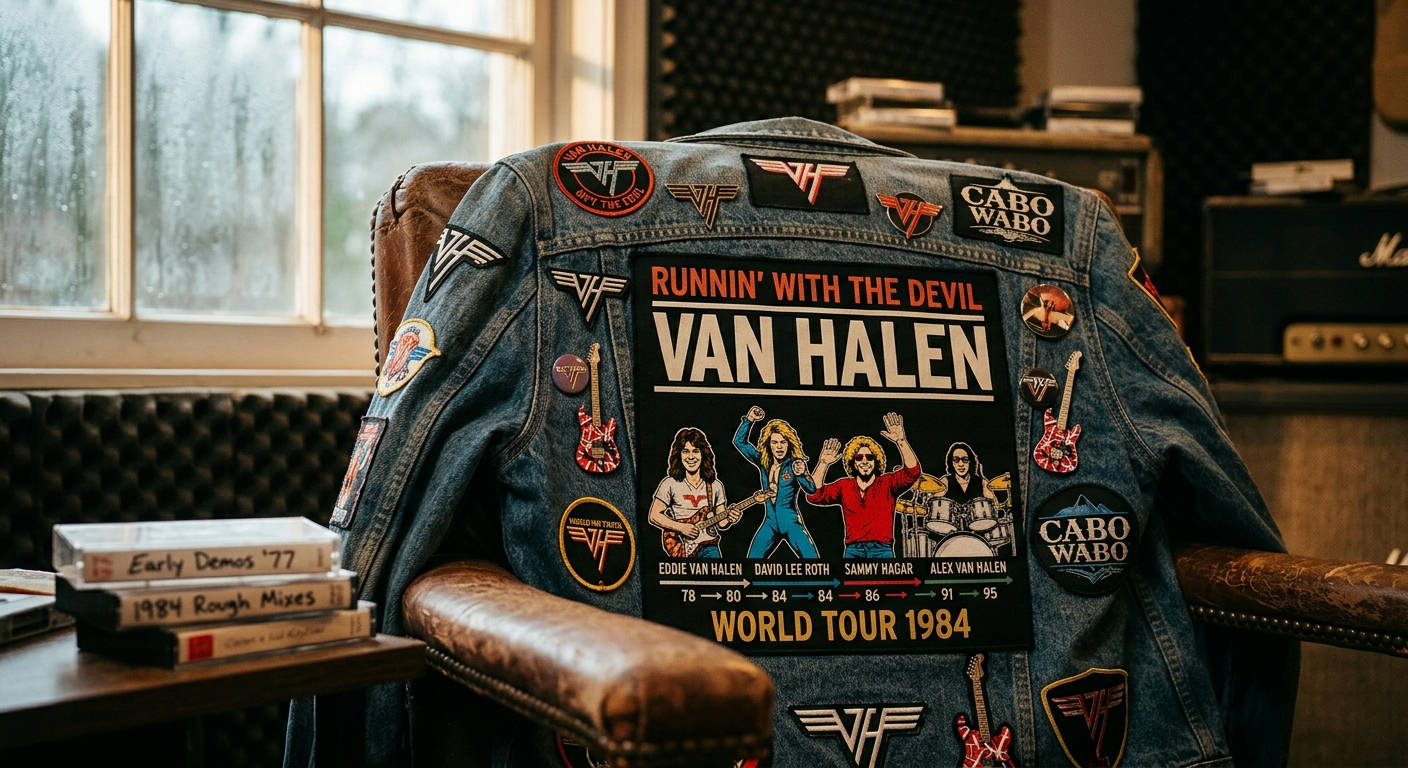
“I was a founding member of the band. And for them to try to erase my history with the band was just wrong.” – Michael Anthony
This treatment of a founding member who was beloved by fans remains one of the most contentious points in the band’s history. It created a rift that, for many, was never truly healed.
The Final Lineup: A Family Affair (2006–2020)
After years of public turmoil and musical silence, the band re-emerged in 2006 with its fourth and final configuration. This time, it was a family matter.
Wolfgang Steps In
In a move that shocked the rock community, Michael Anthony was officially replaced on bass by Eddie’s own son, Wolfgang Van Halen. Wolfgang, a teenager at the time, was a gifted multi-instrumentalist who had grown up around the band’s music.
This decision was met with a mixed reception. While some saw it as a touching father-son story, many loyal fans felt it was a deep betrayal of Michael Anthony, whose backing vocals were an irreplaceable part of the classic sound. Wolfgang, however, proved to be a formidable musician in his own right, handling the complex bass lines and providing backing vocals on tour.
### The Core Four: A Detailed History of Van Halen Band Members (Revisited)
With Wolfgang on bass, the band finally orchestrated a full reunion with David Lee Roth. The 2007-2008 tour was a massive success, proving the public’s appetite for the classic material was as strong as ever. This lineup—Eddie, Alex, Wolfgang, and Dave—became the final stable version of the band.
They solidified this new chapter by releasing A Different Kind of Truth in 2012, their first studio album with Roth in 28 years. The album was surprisingly strong, built from riffs and ideas dating back to their pre-fame club days. It was a raw, aggressive record that sounded like a modern take on their classic 70s sound. You can hear this late-career return to form by searching for the album here: https://www.amazon.com/s?k=A+Different+Kind+of+Truth+Van+Halen&tag=vinylgolduk-21.
The End of the Road
The band toured successfully behind the album and again in 2015. Sadly, this would be their last run. Eddie Van Halen’s long battle with cancer worsened, and he passed away on October 6, 2020. His death brought an immediate and definitive end to Van Halen. As Wolfgang stated, you can’t have Van Halen without Eddie Van Halen. The final chapter in the incredible history of Van Halen band members had been written.
The Unsung and “Almost” Members
The official history only tells part of the story. Over the years, several other musicians were part of the Van Halen machine, either in the very beginning or in “what if” scenarios that could have drastically changed their trajectory.
Mark Stone: The First Bassist
Before Michael Anthony, the original bassist in Mammoth was Mark Stone. He played with the Van Halen brothers from 1972 to 1974. By all accounts, he was a solid player, but the band felt he lacked the creative drive and professional ambition to take them to the next level, leading to his replacement by Anthony.
Mitch Malloy: The Singer Who Said No
After the second split with Hagar, and before they hired Gary Cherone, the band offered the lead singer gig to Mitch Malloy. Malloy, a melodic rock singer, spent time jamming and writing with the band. However, he ultimately turned down the job, reportedly uncomfortable with the idea of a chaotic reunion with Roth happening at the MTV awards while he was waiting in the wings.
Patty Smyth: The Offer on the Table
As mentioned, before settling on Sammy Hagar, Eddie’s first choice to replace Roth was Patty Smyth, the powerhouse singer from the band Scandal. He famously went to her house and asked her to join. Smyth, pregnant at the time and wary of the band’s wild reputation, declined the offer. It remains one of rock’s biggest “what ifs.” How would a female-fronted Van Halen have sounded in 1985?
The Individual Legacies: Four Corners of a Dynasty
Each core member of Van Halen brought something unique to the table, and their individual contributions are worth celebrating.
- Eddie Van Halen: The innovator. He wasn’t just a guitarist; he was an inventor and a sonic architect. His “Brown Sound” guitar tone, his popularization of tapping, and his custom-built “Frankenstrat” guitars changed everything. His influence is immeasurable, as detailed by the Rock & Roll Hall of Fame, which inducted the band in 2007.
- David Lee Roth: The showman. He set the template for what a rock frontman could be. His witty lyricism, acrobatic stage presence, and media-savvy personality made him an icon. He understood that rock and roll was as much about entertainment as it was about music.
- Alex Van Halen: The foundation. The powerhouse drummer whose unique, hard-hitting style was the perfect complement to his brother’s guitar pyrotechnics. His sound, particularly his snare and rototoms, is instantly recognizable. He was the anchor that held the chaos together.
- Sammy Hagar: The vocalist. He brought a different kind of legitimacy to the band. His incredible vocal range and song writing prowess allowed Van Halen to evolve, proving they were more than just one singer’s backing band. He gave them a second act that was just as successful as the first.
- Michael Anthony & Wolfgang Van Halen: The low end. Michael provided the rock-solid foundation and iconic backing vocals that defined the classic sound. Wolfgang brought a new generation’s energy and immense musical talent, honouring the past while holding his own as a formidable bassist.
The turbulent history of Van Halen’s members is a testament to the idea that true creative genius is often born from conflict. The clashing personalities, the line-up shuffles, and the public drama all fueled a musical legacy that remains untouchable. Whether you prefer the swagger of Roth or the soaring melodies of Hagar, the one constant was the revolutionary music, forever driven by the vision of the Van Halen brothers. Their story is a messy, brilliant, and quintessentially rock and roll saga.