
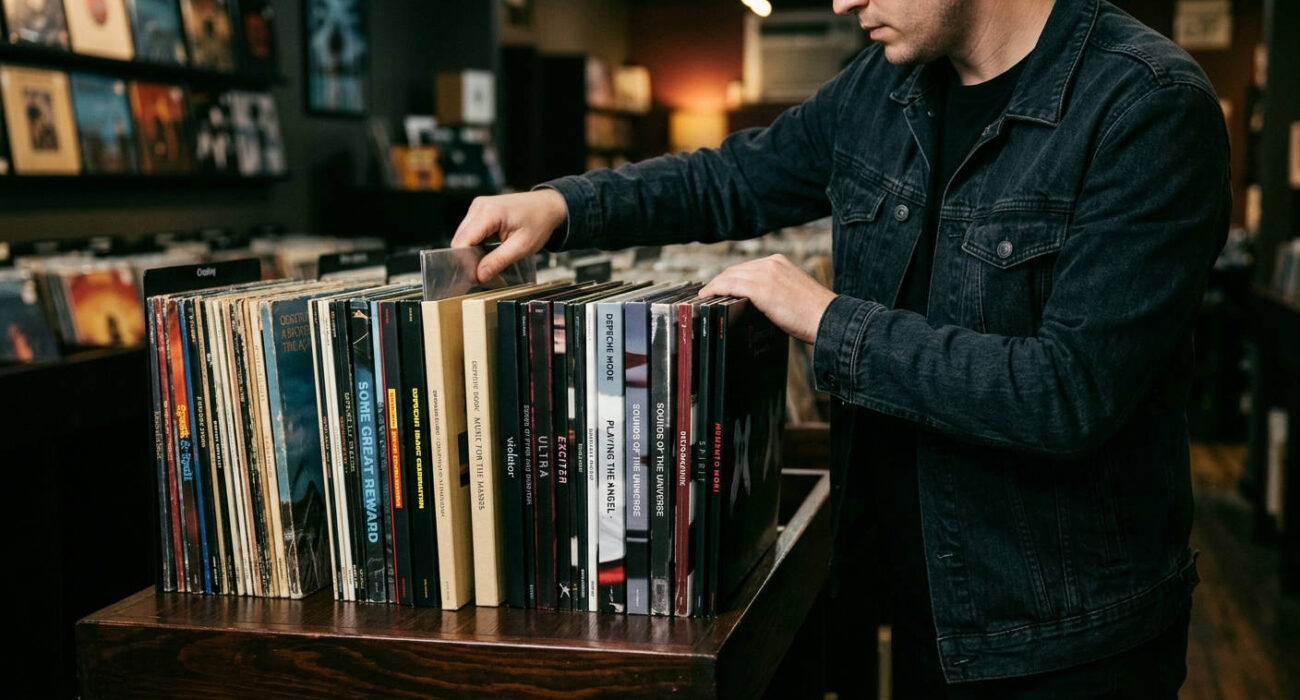
Trying to piece together the complete The Depeche Mode official discography order can feel like mapping a vast, evolving sonic territory. It’s not just a list of albums; it’s a four-decade journey from synth-pop innocence to stadium-filling darkness and back again. For new fans and seasoned collectors alike, understanding this chronology is essential to appreciating the band’s profound artistic arc. At Vinyl Gold UK, we live and breathe this stuff, so let’s cut the noise and lay out the definitive guide to experiencing Depeche Mode the way it was meant to be heard: one groundbreaking record at a time.
For fans delving into the intricacies of the music industry, the The Depeche Mode official discography is a pivotal resource that showcases the band’s evolution over the years.
Why the Chronological Order is Non-Negotiable
Skipping straight to a “Best Of” compilation is a massive disservice to what Depeche Mode accomplished. You’ll get the hits, sure, but you’ll miss the story. You won’t feel the seismic shift from Vince Clarke’s bright, poppy melodies to Martin Gore’s darker, more introspective songwriting.
The significance of the The Depeche Mode official discography extends beyond mere releases; it’s about understanding the cultural impact and the shifts in musical direction that define each era.
You’ll bypass the moment Alan Wilder joined and transformed the band from a promising synth act into a textural, atmospheric powerhouse. You won’t understand the tension and turmoil that produced an album like Songs of Faith and Devotion, or the resilience required to create Ultra in its aftermath.
Every change in the lineup and sound is documented in the The Depeche Mode official discography, providing invaluable context for fans and newcomers alike.
Listening in chronological order allows you to witness the technology evolve alongside the band. The primitive analogue synths of Speak & Spell give way to the sophisticated sampling of Construction Time Again and Some Great Reward. This technological progression is as much a part of the Depeche Mode narrative as Dave Gahan’s commanding baritone or Martin Gore’s lyrical genius.
Each album is a reaction to the one that came before it and a stepping stone to the next. They are chapters in a long, complex, and utterly compelling book. Reading just the highlight reel is cheating yourself out of the full experience.
The Complete Depeche Mode Official Discography Order: Studio Albums
It’s essential to appreciate the full scope of the The Depeche Mode official discography to grasp the nuances of their musical journey.
This is the main event. The core canon. Here is the complete list of Depeche Mode’s studio albums, presented in their correct release order. Each entry marks a distinct period in the band’s sonic and thematic development.
A thorough understanding of the The Depeche Mode official discography will enhance your listening experience and appreciation for their artistry.
The Vince Clarke Era: Pop Beginnings (1981)
It all started here. This brief but crucial period established the band’s synth-pop credentials, even if it barely hinted at the darkness to come.
-
1. Speak & Spell (1981): Pure, unadulterated synth-pop. Driven by Vince Clarke’s knack for infectious, buoyant melodies, this album is home to “Just Can’t Get Enough.” It’s bright, optimistic, and sounds like four young lads from Basildon having an absolute blast with their new toys. It’s an essential starting point and a world away from what they would become.
Find Speak & Spell on vinyl at Amazon UK
Exploring the The Depeche Mode official discography is a rewarding experience that can lead to newfound appreciation for the band’s early work.
The Wilder Era Part I: Forging a Darker Identity (1982-1984)
With Vince Clarke gone, Martin Gore stepped up as the primary songwriter. The arrival of Alan Wilder, initially as a touring musician and then a full member, began to reshape their sound into something far more complex and industrial.
-
2. A Broken Frame (1982): The sound of a band in transition. Gore’s songwriting is immediately more melancholic than Clarke’s. Tracks like “See You” and “The Meaning of Love” still have a pop sheen, but a creeping sense of unease begins to permeate their work. It’s a fascinating and often overlooked album.
-
3. Construction Time Again (1983): This is where everything changes. The band discovered sampling, incorporating the sounds of metal, machinery, and industrial noise into their music. The result is a harder, more political, and sonically ambitious record. “Everything Counts” is the standout track and a clear signal of their new direction.
-
4. Some Great Reward (1984): The industrial-pop blueprint perfected. This album masterfully blends catchy, radio-friendly hooks with dark, provocative themes and clanging, metallic textures. It gave us “People Are People,” “Master and Servant,” and the haunting Gore-led ballad “Somebody.” It’s the moment they truly found their unique voice.
Find Some Great Reward on vinyl at Amazon UK
This album is a significant chapter in the The Depeche Mode official discography and reflects the band’s evolution during the mid-’80s.
The Wilder Era Part II: The Imperial Phase (1986-1993)
This is the period that cemented Depeche Mode as global superstars. With Alan Wilder’s arranging and production skills at their peak, the band released a string of critically and commercially successful albums that are considered masterpieces.
-
5. Black Celebration (1986): The mood darkens considerably. The pop elements are still there, but they’re buried under layers of gothic atmosphere and existential dread. It’s a cohesive, immersive, and deeply emotional album that feels like a singular statement. “Stripped” is perhaps the ultimate encapsulation of this era’s sound.
-
6. Music for the Masses (1987): The title was ironic, but it became prophetic. This album is widescreen, cinematic, and built for stadiums. It retains the darkness of Black Celebration but projects it on a massive scale. With anthems like “Never Let Me Down Again” and “Strangelove,” it’s the record that broke them in America.
-
7. Violator (1990): The perfect synthesis of electronic and organic. Violator is sophisticated, slick, and impossibly cool. It seamlessly blends electronic beats with Gore’s burgeoning love for the electric guitar. Every single track is iconic: “Personal Jesus,” “Enjoy the Silence,” “Policy of Truth,” “World in My Eyes.” For many, this is their magnum opus.
Find Violator on vinyl at Amazon UK
For fans, the understanding of the The Depeche Mode official discography is key to unlocking the depth of their lyrical themes and musical explorations.
-
8. Songs of Faith and Devotion (1993): The messy, glorious, rock and roll album. Fuelled by internal turmoil and a changing musical climate, the band leaned heavily into live drums, distorted guitars, and gospel influences. It’s a raw, powerful, and often uncomfortable listen that shows a band pushing itself to the absolute limit.
The Post-Wilder Reinvention: The Trio Era (1997-2005)
After Alan Wilder’s departure in 1995, many wrote the band off. As a trio, Gore, Gahan, and Fletcher had to find a new way of working. This period is defined by experimentation, recovery, and a return to their electronic roots.
-
9. Ultra (1997): A dark, fractured, and beautiful album born from chaos. Recorded during Dave Gahan’s recovery from addiction, it’s a slow, brooding affair filled with trip-hop beats and gritty textures. “Barrel of a Gun” and “It’s No Good” are highlights, showcasing a band that’s bruised but not broken.
-
10. Exciter (2001): A collaboration with producer Mark Bell (of LFO fame), Exciter is arguably their most minimalist and experimental record. It’s subtle, glitchy, and warm, focusing on texture and atmosphere over big anthems. It’s a grower, with tracks like “Dream On” and “I Feel Loved” revealing their charms over time.

Visuals included in the The Depeche Mode official discography enhance the narrative of their artistic journey.
-
11. Playing the Angel (2005): A massive return to form. Produced by Ben Hillier, this album brought back the analogue synth grit and industrial stomp of their classic era. It’s loud, aggressive, and confident, powered by killer tracks like “Precious” and “A Pain That I’m Used To.” It also features the first songwriting contributions from Dave Gahan.
The Modern Era: Legacy and Loss (2009-2026)
Continuing their collaboration with producer Ben Hillier and later James Ford, the modern era sees Depeche Mode settling into their role as elder statesmen of electronic music, all while continuing to push their sound forward and dealing with the tragic loss of Andy Fletcher.
The contemporary tracks in the The Depeche Mode official discography showcase how the band continues to evolve while staying true to their roots.
-
12. Sounds of the Universe (2009): A love letter to vintage analogue synthesizers. The band amassed a huge collection of old gear for this record, and you can hear it in the retro-futuristic bleeps and bloops. It’s a dense, sprawling album that rewards dedicated listening.
-
13. Delta Machine (2013): Raw, blues-infused, and menacing. Delta Machine strips back some of the layers for a more direct and confrontational sound. Gore’s guitar work is prominent, and there’s a dirty, distorted feel to the electronics. “Welcome to My World” is a perfect, ominous opener.
-
14. Spirit (2017): Their most overtly political album since the early ’80s. Produced by James Ford, Spirit is an angry and cynical response to the state of the world. It’s a fiery, powerful statement, with tracks like “Where’s the Revolution” pulling no punches.
-
15. Memento Mori (2023): An album created in the shadow of loss. Written before the passing of Andy Fletcher, its themes of mortality took on a profound new meaning upon release. It’s a beautiful, melancholic, and ultimately life-affirming record that stands as one of their very best. A testament to the enduring creative partnership of Gahan and Gore.
Expanding the Collection: Essential Compilations and Live Albums
While the studio albums form the core of the Depeche Mode official discography order, a few other releases are essential for a complete picture. These aren’t just filler; they contain non-album singles, iconic live performances, and brilliant remixes.
These compilations provide crucial context that complements the primary albums in the The Depeche Mode official discography.
Key Compilations
- The Singles 81→85 (1985): The perfect summary of their formative years. It collects their brilliant run of early non-album singles like “Get the Balance Right!” and “Shake the Disease.” An absolute must-have.
- The Singles 86>98 (1998): Picks up where the last one left off, covering their imperial phase and post-Wilder reinvention. It’s a murderer’s row of hits, but also includes the fantastic new track “Only When I Lose Myself.”
- Remixes 81–04 (2004) / Remixes 2: 81–11 (2011): Depeche Mode always took their remixes seriously, often commissioning pioneers of the electronic scene. These collections are a treasure trove of innovative and alternative takes on their classic tracks.
“We’ve always seen the B-sides and the remixes as a way of experimenting and doing things that might not fit on an album. It’s a place to be a bit more adventurous.” – Martin Gore
Essential Live Recordings
Listening to these live recordings can provide deeper insights into the dynamic energy captured within the The Depeche Mode official discography.
- 101 (1989): More than just a live album, this is a cultural document. It captures the final, triumphant show of the Music for the Masses tour at the Pasadena Rose Bowl. It’s the sound of the band conquering America and is utterly electrifying. The accompanying film by D. A. Pennebaker is also essential viewing.
- Songs of Faith and Devotion Live (1993): A raw, sweaty, and intense document of their most chaotic tour. It showcases the rock-oriented sound of that era and is a completely different beast from the slick perfection of 101.
- Live in Berlin (2014): A fantastic recording from the Delta Machine tour, directed by their long time visual collaborator Anton Corbijn. It’s a beautifully shot and recorded performance that captures the power of their modern-day live show. You can find out more about their Rock & Roll Hall of Fame induction, which was long overdue.
A Collector’s Guide: Tips for Hunting Depeche Mode Vinyl
Understanding the The Depeche Mode official discography can greatly enhance your vinyl hunting experience.
Here at Vinyl Gold UK, we know the thrill of the hunt. Collecting Depeche Mode on vinyl is a deeply rewarding experience, but it helps to know what you’re looking for.
### Navigating the Depeche Mode Official Discography Order on Wax
Understanding the Depeche Mode official discography order is crucial for a collector. You might decide to collect the entire studio run, focus on a specific era (like the Mute Records UK first pressings from the ’80s), or hunt down all the 12″ singles with their exclusive B-sides and remixes.
First Pressings vs. Reissues
- Original UK Mute Pressings: Generally considered the gold standard. For the albums from Speak & Spell through Violator, the original Mute vinyl often has a dynamic range and warmth that is hard to beat. Look for the “MPO” or “Damont” etchings in the runout groove.
- Sire Records (US Pressings): Good quality, but sometimes sonically different from their UK counterparts. A solid option if UK originals are hard to find.
- Modern Legacy Reissues (Post-2014): In recent years, Sony’s Legacy Recordings has undertaken a comprehensive reissue campaign on 180-gram vinyl. These are sourced from the original analogue tapes (where available) and are generally excellent. For anyone starting a collection in 2026, these are a fantastic and affordable way to get great-sounding copies of the entire catalogue.
When buying, always check the condition of both the vinyl (look for scratches and scuffs under a bright light) and the sleeve. A well-preserved original is a thing of beauty.
The insights offered through the The Depeche Mode official discography are invaluable for any collector.
I’m a New Fan. Where Do I Even Begin?
Jumping into a 15-album discography can be daunting. Forget what the internet tells you. Here are a few curated entry points based on your potential taste.
- If you love synth-pop and new wave: Start at the beginning. Go with Speak & Spell to understand their roots, then immediately jump to Some Great Reward to see how they twisted that pop formula into something darker and more interesting. This path highlights their early genius.
- If you crave dark, atmospheric anthems: There is only one answer: Violator. It is their most perfect, accessible, and rewarding album. From there, work backwards to Black Celebration and Music for the Masses to explore the world that Violator perfected.
- If you prefer alternative rock and ’90s grit: Start with Songs of Faith and Devotion. It’s their most guitar-heavy, emotionally raw album. If you connect with its turmoil, move on to Ultra to hear the fractured, trip-hop-infused aftermath.
The thing about our music is that it’s always been about the emotion. The technology is just the tool we use to get that emotion across. Whether it’s a simple synth line or a wall of guitars, it has to serve the feeling of the song. – Dave Gahan
For many, the emotional resonance found in the The Depeche Mode official discography is what draws them to the band’s music.
The Sonic and Thematic Evolution
Depeche Mode’s journey is a masterclass in artistic evolution. Their early work, influenced by bands like Kraftwerk and The Human League, was pure synth-pop. This is the era that also saw the rise of artists like Gary Numan, who proved that electronic music could have a dark, alienated soul.
Each phase in the The Depeche Mode official discography reveals a different facet of the band’s artistic vision.
The arrival of samplers in the mid-’80s was a turning point. Martin Gore and Alan Wilder embraced this technology not just to replicate sounds, but to create entirely new ones from industrial clatter. Thematically, Gore’s lyrics moved from teenage love to complex explorations of sin, redemption, religion, politics, and interpersonal relationships.
The ’90s saw them incorporate more organic rock elements, a move that alienated some purists but gained them a massive new audience. In the 21st century, they have masterfully blended all these elements—the pop sensibility, the industrial noise, the rock swagger, the electronic experimentation—into a sound that is unmistakably their own. Their continued relevance into 2026 and beyond, as detailed on their official website, is a testament to their relentless refusal to stand still.
The milestones in the The Depeche Mode official discography mark significant developments in the broader landscape of electronic music.
Exploring the Depeche Mode official discography order isn’t just about listening to a band’s history. It’s about witnessing the constant, fearless evolution of a group of artists who have never been afraid to destroy their own formula and build something new from the wreckage. It’s a journey every serious music fan should take. So pick a starting point, drop the needle, and enjoy the silence.
Ultimately, the The Depeche Mode official discography is a testament to their unwavering creativity and impact on music.