In an era dominated by instantaneous digital streaming and compressed audio files, the resurgence of vinyl records represents more than just a nostalgic trend; it is a profound shift toward intentional, high-fidelity auditory engagement. As we navigate through 2026, the global appreciation for analog playback has reached unprecedented levels, proving that the tactile experience of music remains superior to the fleeting nature of the cloud.
At Vinyl Gold UK, we observe daily how enthusiasts are trading the convenience of a smartphone app for the deliberate ritual of placing a needle on a spinning disc. This guide explores the multifaceted benefits of listening to vinyl records, unpacking why this medium continues to define the pinnacle of the listening experience.
The Superior Sonic Landscape of Analog Audio
Many casual listeners believe that digital files provide the “perfect” reproduction of music. However, audiophiles and sound engineers alike understand that the digital process involves “sampling,” which inherently creates gaps in the waveform.
Understanding Waveform Continuity
Vinyl records are an analog format, meaning they store the continuous waveform of sound waves directly into the grooves of the disc. Unlike digital recordings that chop audio into binary code, vinyl captures the full spectrum of the recorded performance.
By maintaining this continuous signal, the output through high-quality speakers preserves the warmth and natural decay of instruments. This is what many enthusiasts describe as the “analog glow,” a sonic profile that digital compression often fails to emulate accurately.
The Role of Dynamic Range
Dynamic range refers to the difference between the quietest and loudest parts of a piece of music. Modern digital mastering often compresses this range to ensure songs sound “loud” on small smartphone speakers, which can lead to listener fatigue.
Vinyl production inherently requires more careful mastering to ensure the physical needle can track the grooves effectively. This technical limitation actually serves as a benefit, as it encourages engineers to retain the natural dynamics, nuance, and breath of the original studio session.
The Ritual of Intentional Listening
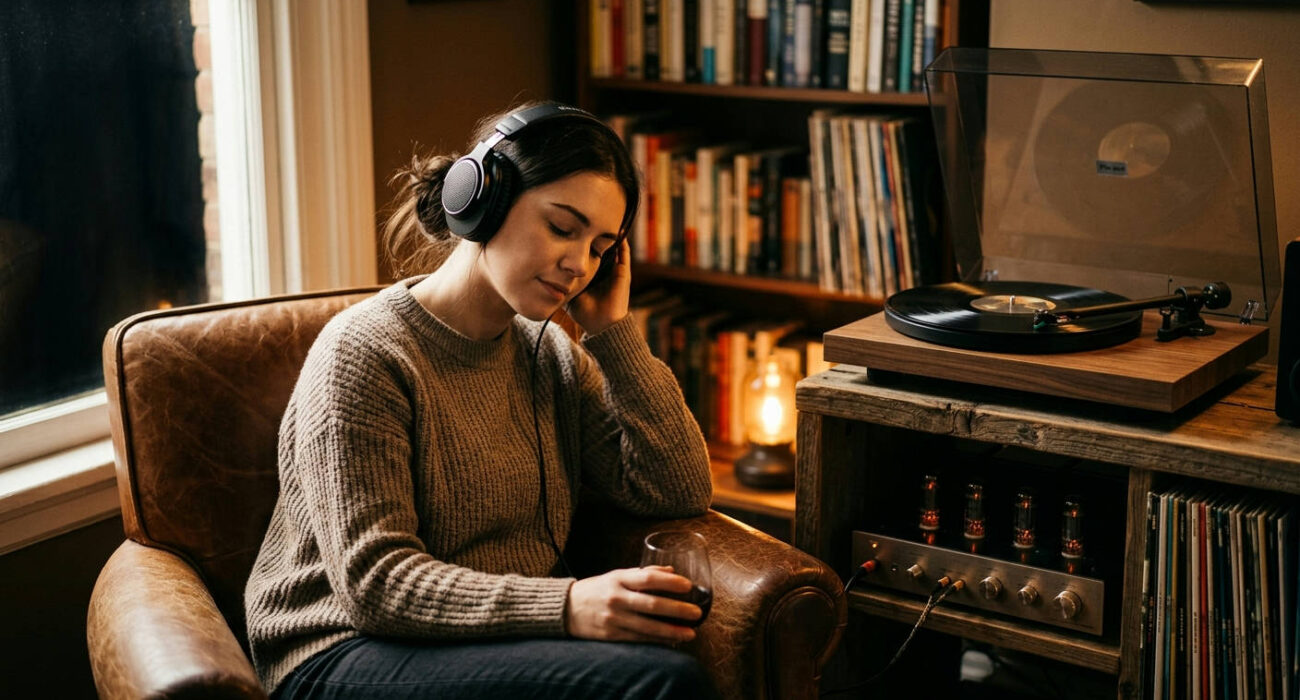
In 2026, our lives are increasingly fragmented by multitasking and rapid-fire notifications. Vinyl records force a different approach to time, requiring the listener to be present and engaged with the environment they have created.
Creating a Sacred Space
Listening to a record is an event, not a background activity. It requires you to clear a space, handle the vinyl with care, and dedicate 20 minutes per side to the artist’s vision.
This act of “curated stillness” has been shown to reduce stress levels significantly. By stepping away from the digital interface of a computer or tablet, you allow your brain to focus entirely on the auditory experience, which acts as a form of active mindfulness.
“Music is the strongest form of magic, and the vinyl record acts as the physical conduit for that spell, transforming an empty room into a resonant chamber of memory and emotion.”
The Full Album Experience
Streaming services encourage “playlist culture,” where listeners skip tracks or shuffle albums to avoid songs they find less immediately catchy. Vinyl discourages this behavior entirely.
When you play a record, you listen to the album as the artist intended—the sequence of tracks, the flow from the opening note to the closing silence. This provides a narrative cohesion that is often lost in a shuffled digital environment.

The Tangible Connection to Art and History
The tactile nature of vinyl is perhaps its most distinct advantage over digital assets. In an intangible, cloud-based world, owning a physical record provides a sense of permanence and ownership that a streaming subscription can never replicate.
The Aesthetics of Large-Format Artwork
A record sleeve is a canvas. In the 12-inch format, album artwork, photography, and liner notes are presented in a way that is immersive and detailed.
You can read the credits, look at the photography, and appreciate the graphic design while the music plays. This provides a visual context that complements the audio, creating a multi-sensory engagement that elevates the music to a work of art rather than a disposable commodity.
The Value of Archivability
A well-maintained record collection is an investment that lasts for decades. Unlike a digital file on a hard drive that may become corrupted or disappear if a service shuts down, a piece of vinyl is a physical asset.
If you clean your records regularly and store them in the proper conditions, they will sound just as clear in 2056 as they do in 2026. This archival quality makes the hobby feel like building a personal museum of your own musical history.
Technical Considerations for the Modern Audiophile
To truly reap the benefits of listening to vinyl, you must pair your records with a sound system that respects the integrity of the format. A high-quality turntable and pre-amplifier can unlock details in the grooves that remain hidden on budget equipment.
The Importance of Proper Cartridge Setup
The cartridge, specifically the stylus, is the part of the turntable that makes physical contact with the record grooves. A high-quality moving magnet or moving coil cartridge can track high-frequency information with significantly more precision.
Upgrading your cartridge is one of the most effective ways to hear the “air” and separation between instruments. At Vinyl Gold UK, we emphasize that the journey to better sound is a step-by-step process of hardware refinement.
Room Acoustics and Speaker Placement
The benefits of vinyl are heavily dependent on how the audio enters the room. Placing your speakers on stands away from walls and ensuring they are at ear level can drastically change the soundstage.
Proper acoustics involve balancing the absorption and reflection of sound within your room. By treating your listening area, you allow the rich, analog signal from your turntable to project without the muddying effect of standing sound waves.
The Social and Cultural Community
Vinyl collecting is rarely a solitary endeavor. It is a vibrant, global community that shares a common language of pressings, labels, and rare finds.
The Community of Record Stores
Visiting a local record store remains a cornerstone of the vinyl experience. The opportunity to flip through crates, exchange recommendations with shop owners, and stumble upon hidden gems is a thrill that digital algorithms cannot simulate.
This human interaction fosters a deeper appreciation for music as a social glue. It connects generations, as parents and children share the ritual of playing a record, bridging the digital divide through analog warmth.

The Collector’s Market
The market for vinyl in 2026 is robust, with both new pressings and vintage finds holding significant value. For many, collecting is also about preservation—finding original pressings that capture the definitive sound of a specific recording session.
“The true value of a record collection is not in its market price, but in the collection of moments, moods, and musical discoveries it holds for the listener over a lifetime.”
Addressing Common Myths About Vinyl
Despite the resurgence, there are still skeptics who cling to misconceptions about the format. It is vital to separate fact from fiction regarding the longevity and quality of records.
Is Vinyl Too Fragile?
A common myth is that vinyl is too delicate to be practical. In reality, vinyl records are remarkably durable if stored vertically and kept away from extreme heat.
Modern carbon fiber brushes and specialized cleaning solutions make maintenance easier than ever before. With basic care, records can be played thousands of times without significant degradation in audio quality.
Is Digital Resolution Always Higher?
While digital files can have high sample rates, vinyl playback captures the physical vibration of the needle. Many listeners find that even “low-resolution” vinyl sounds more “natural” to the human ear than high-resolution digital files, which can sometimes sound overly clinical or harsh.
Frequently Asked Questions (FAQ)
Why does vinyl sound “warmer” than digital?
The warmth attributed to vinyl often comes from a combination of the analog mastering process and the subtle, pleasing harmonic distortion introduced by the turntable and cartridge, which the human ear often perceives as a natural, pleasant richness.
How do I store my vinyl collection correctly?
Always store records vertically. Never lay them flat, as this causes the weight of the discs to warp the vinyl over time. Keep them in a cool, dry place away from direct sunlight or heavy heat sources like radiators.
Does the year of the pressing matter?
Yes. Different pressing plants used different “mastering lacquers” and raw materials. In many cases, an original first-pressing from the year of the album’s release captures a specific frequency balance that is highly sought after by collectors.
Can I clean my records at home?
Absolutely. Using a soft carbon fiber brush before every play is essential for removing surface dust. For a deep clean, a manual or automated record-washing system using distilled water and a non-alcoholic cleaning solution is highly recommended to remove oils and debris from deep inside the grooves.
Is it expensive to get into vinyl?
It can be as budget-friendly or as luxury-focused as you choose. A modest, reliable starter turntable can provide years of enjoyment, and you can upgrade your components—like the phono stage, speakers, or cartridge—gradually as your budget and ears grow.
Conclusion: Embracing the Analog Future
As we look toward the later part of the 2020s, it is clear that the benefits of listening to vinyl records extend far beyond the audio quality alone. Vinyl offers a pathway to a more intentional life, a connection to musical history, and a physical community of like-minded individuals.
At Vinyl Gold UK, we believe that music deserves more than just a passing glance on a screen. It deserves the respect of the turntable, the ritual of the rotation, and the focus of the ear. Whether you are a seasoned collector or just beginning your journey, the rewards of analog listening are deep, lasting, and profoundly satisfying.
By choosing to listen to vinyl, you are choosing to prioritize quality over convenience. You are investing in a medium that demands your presence, rewards your curiosity, and offers a sonic experience that remains, in the context of 2026, the gold standard for music lovers everywhere.
Built with MadeFine.ai