
Ever felt a track where the bassline wasn’t just part of the rhythm, but the entire point? That’s the heart of bassline. Picture the soulful hooks of UK Garage, but strip away the syncopated, 2-step shuffle and replace it with a relentless, four-to-the-floor beat. It’s UKG’s tougher, more energetic cousin, born and bred in the clubs of Sheffield and the North.
At its core, bassline is high-octane UK dance music built to make you move. You feel it just as much as you hear it. The foundation is a driving, repetitive kick drum that hits on every beat, just like in house music, creating a non-stop momentum perfect for the dancefloor.
The tempo sits in a very specific sweet spot, usually between 135 and 142 beats per minute (BPM). This pace is quicker than most house but a touch slower than drum and bass, hitting a frantic but functional energy that keeps a club locked in all night.
The Sound You Can Feel
The genre’s real signature is right there in the name: the bass. This isn’t just a low-end rumble; it’s a melodic, snarling, and often aggressive hook that leads the entire track. Producers spend hours crafting these “warped” or “wobbling” textures, making the bassline so distinctive it cuts right through the mix.
In a proper bassline tune, the bass is the lead instrument. It doesn’t just support the melody; it twists, turns, and growls in a way that physically commands the crowd’s attention.
To balance out all that low-end aggression, bassline producers often use pitched-up vocal samples. These are typically chopped from old R&B or soul acapellas, then sped up to create catchy, euphoric hooks. It’s this clash of a gritty, in-your-face bass and a soulful, high-pitched vocal that gives the genre its unique character.
Here’s a quick summary of bassline’s defining characteristics to help you spot it in the wild.
| Characteristic | Description |
|---|---|
| Rhythm | A steady, driving four-to-the-floor kick drum pattern. |
| Tempo | A fast-paced club energy, typically 135-142 BPM. |
| Bass | A complex, melodic, and often ‘warped’ or ‘wobbling’ bassline that acts as the main hook. |
| Vocals | Pitched-up and chopped R&B or soul samples, providing a memorable, soulful contrast. |
These core elements combine to create a sound that’s impossible to ignore—a true product of UK club culture.
The Gritty Origins of Bassline in Northern England
To get to the heart of bassline, you can’t just look at a production studio. You have to go back to the dark, sweaty clubs of Northern England in the early 2000s. This is where the sound was born—forged not in a lab, but from pure, underground energy.
The story of bassline is tied to one place above all others: Niche Nightclub in Sheffield. Niche wasn’t just another venue; it was the epicentre, the testing ground, and the spiritual home of this emerging sound. Here, the polished rules of mainstream dance music simply didn’t exist.
Inside, the air was electric, and the sound system was a physical force. It had to be, to handle the punishing, rib-cage-rattling bass that gave the music its name. The community was a tight-knit congregation of ravers who travelled from all over the North and the Midlands for their weekly sonic pilgrimage. For many, it wasn’t just a night out; it was a core part of their identity.
The Epicentre in Sheffield
Niche wasn’t just playing records; it was building a movement from the ground up. DJs like Jamie Duggan, Les Skelton, and Nev Wright were the trailblazers, taking the foundations of speed garage and twisting it into something faster, darker, and far more aggressive. They were the architects of the bassline sound.
The club even developed its own notorious culture and dress code. Ravers would often show up in expensive designer gear, a stark contrast to the gritty, industrial feel of the music and the venue. This created a unique, high-stakes atmosphere that was equal parts glamour and menace.
Niche became so synonymous with the sound that the music itself was often just called “Niche” or “Niche music.” The club and the genre were one and the same, a testament to its singular role in this corner of UK dance culture.
This was the golden era. Week in, week out, producers and DJs would test their newest tracks—often freshly burned onto CDs—on the Niche dancefloor. If a tune could survive and ignite that crowd, you knew you had an anthem. The club was the ultimate proving ground.
A Scene Forced Underground
The same raw, chaotic energy that defined bassline also attracted trouble. While the sound exploded across South Yorkshire and the West Midlands, Niche’s legendary status was soon overshadowed by controversy. On June 25, 2005, a major police raid forced its closure amid concerns over violence and underage clubbers. Official reports noted over 50 arrests and that 37 minors were taken from the premises, a moment that would change the scene forever. You can find more details on bassline’s history and the Niche raid on Wikipedia’s dedicated page).
The closure of Niche was a massive blow, but it didn’t kill the genre. Instead, it pushed it deeper underground. The scene fractured, spreading from one central hub to countless smaller venues, warehouse parties, and—most importantly—pirate radio stations across cities like Leeds, Huddersfield, and Birmingham.
This decentralisation had an unexpected side effect: it made bassline stronger. Now operating outside the mainstream’s glare, producers and DJs were free to experiment. The sound became even more defined, and its regional roots deepened. Pirate radio became the new lifeline, broadcasting the sound to a dedicated audience and keeping the community connected when they no longer had a physical home. That period of adversity cemented bassline’s status as a truly authentic, grassroots movement, built not by industry suits, but by a passionate community that refused to let the beat die.
Breaking Down the Signature Sound of Bassline
So, what is it that makes a bassline track hit you square in the chest on a packed dancefloor? It’s a sound you can spot a mile off. While the name gives away the main attraction, the real magic is in how the rhythm, bass, and melody all slam together. To get what this music is all about, you have to pull apart its sonic toolkit.
At its core, every bassline track is driven by a powerful, relentless rhythmic engine. Forget the syncopated shuffle of its cousin, UK Garage. Bassline is all about a driving four-to-the-floor (4×4) kick drum pattern. Picture the steady pulse of house music, then crank up the speed and give it a much harder, more aggressive edge.
That kick provides the relentless momentum. On top of it, producers stack sharp, off-beat hi-hats and skittering snare or clap patterns, creating a frantic, almost skippy feel. The groove is both hypnotic and full of raw energy, practically forcing you to move. While bassline has its own unique swagger, it shares some of that high-energy DNA with genres like drum and bass; you can get a feel for that complexity by exploring common drum patterns used in Drum N Bass beats.
The All-Important Bass Textures
Of course, the star of the show is the bass itself. In this scene, the bass isn’t just some low-end rumble filling out the mix. It’s the lead instrument, the main hook, and the absolute central character of the tune. Bassline producers are masters of crafting weird and wonderful bass textures that make their tracks unforgettable.
These textures vary wildly, which gives the genre a surprising amount of sonic range.
- The “Donk” Bass: This is that sharp, almost percussive sound, famously made with organ presets like those on the Korg M1. It’s a calling card of early bassline, known for its distinct, rubbery bounce.
- The “Wobble” Bass: A much deeper, more menacing sound that twists and modulates in pitch and filter cutoff. This is the bass you feel rattling through your bones on a proper club system.
- The Warped Bass: A heavily processed and distorted monster of a sound that can snarl, morph, and contort itself throughout a track. This is where producers really show off their sound design chops, creating something truly alien.
Let’s be clear: a bassline track lives or dies by its main riff. It has to be instantly catchy, rhythmically complex, and big enough to command the entire dancefloor’s attention from the very first bar.
This diagram helps show how the sound bubbled up from its specific roots to become an underground force.
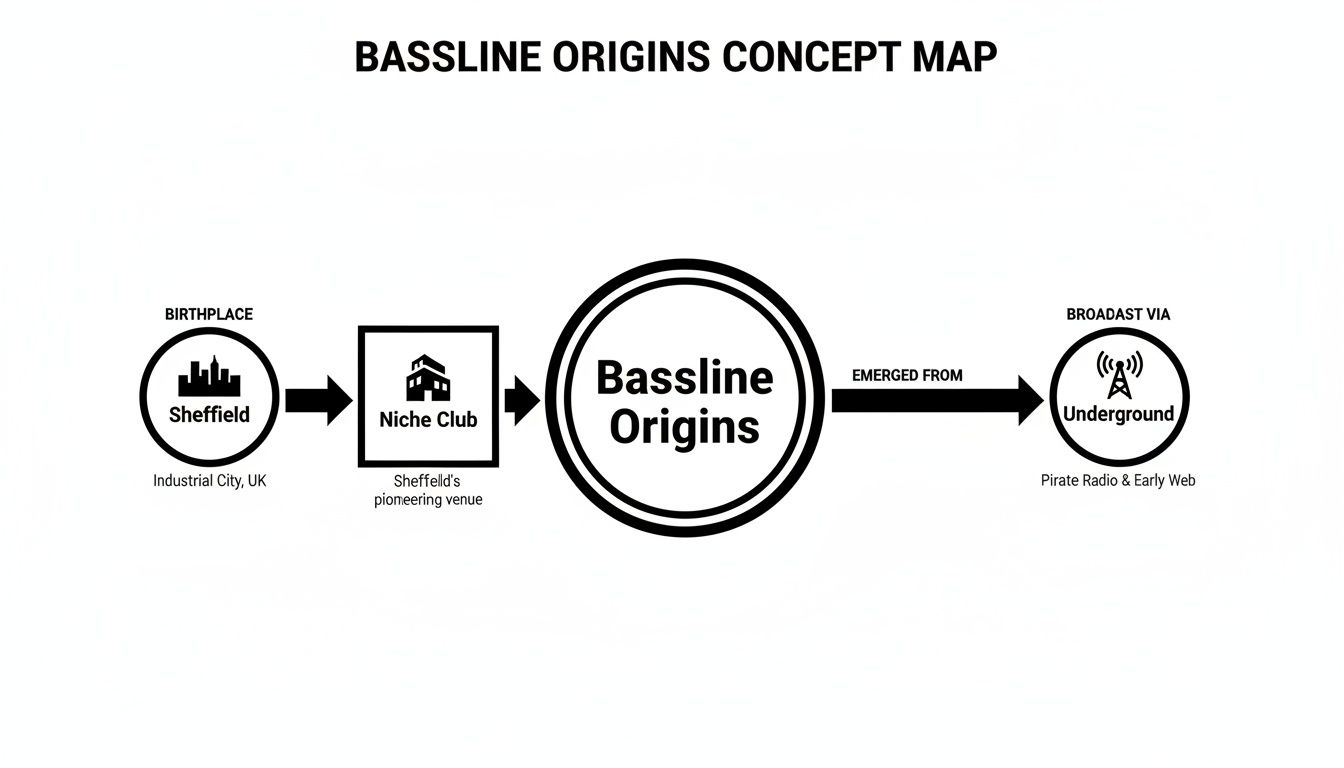
You can see the direct line from Sheffield’s club scene to the genre’s underground spread, a perfect example of how a location’s unique vibe shaped both a sound and how it got out into the world.
The Soulful Counterpart to the Grit
Now, a track with just aggressive bass and frantic drums would be pure energy, but it might feel a bit soulless. This is where the final, crucial ingredient comes into play: the vocals. Bassline producers created a signature style by grabbing classic R&B and soul acapellas, then pitching them up and chopping them into new hooks.
These sped-up vocal snippets provide a perfect melodic and emotional contrast to the raw, gritty intensity of the rhythm section. They inject a shot of pure euphoria and soulfulness, making the tracks not just something to dance to, but something you can’t get out of your head.
It’s this perfect formula—the clash between the raw, dark, heavy low-end and the sweet, melodic, high-pitched vocal—that gives the music its incredible dancefloor energy. This combination creates a “push and pull” effect, drawing you in with a soulful hook before flooring you with an irresistibly heavy bass drop.
Bassline’s Journey from Underground to UK Charts
For years, bassline was a regional secret, bubbling away in the clubs of Northern England. It was a sound forged in the dark, sweaty rooms of places like Sheffield’s Niche, hardened by years in the underground. You had to travel to hear it, to feel it. But by the late 2000s, that was all about to change.
This wasn’t a slow burn into the mainstream. It was a full-blown chart invasion. A handful of tracks exploded out of pirate radio and onto the national airwaves, leading the charge with a more polished version of the genre. They kept the raw club energy but wrapped it in slick production and undeniable vocal hooks that radio couldn’t ignore.
You can almost pinpoint the exact moment everything shifted. Two anthems became the public face of bassline, proving the sound from Sheffield’s gritty clubs could shine just as brightly under the commercial spotlight. They didn’t just get airplay; they dominated it.
The Crossover Anthems
The first shot was fired by T2 with his absolute monster of a track, ‘Heartbroken’. Featuring Jodie Aysha’s soulful vocals, it was the perfect storm. You had the signature heavy, warped bass that defined the scene, but the vocal hook was pure pop gold, creating a crossover hit that was simply impossible to resist.
Right on its heels came H Two O’s ‘What’s It Gonna Be?’. With vocals from the trio Platnum, this was another masterclass in blending club grit with commercial gloss. The clean production, a ridiculously catchy chorus, and that relentless 4×4 beat made it an instant favourite on dancefloors and radio playlists, cementing bassline’s arrival. These tracks are still a must for any DJ wanting to inject authentic UK flavour. You can find more advice on finding hidden gems for your events in our other guides.

These songs weren’t just hits; they were commercial juggernauts. T2’s ‘Heartbroken’ soared to No. 2 on the Official UK Singles Chart in 2007, shifting over 300,000 copies that year alone. A year later, H Two O’s ‘What’s It Gonna Be?’ peaked at No. 16, selling another 150,000 units—a staggering achievement for a sound with such underground roots. You can dig into the commercial impact of these bassline hits on Chartmetric to see the data for yourself.
The Mainstream Breakthrough
So, how did these regional club bangers become national chart-toppers? It was a mix of perfect timing and the immense power of national media.
The success of ‘Heartbroken’ and ‘What’s It Gonna Be?’ demonstrated a crucial formula. They proved that you could retain the authentic, speaker-rattling core of bassline while making it accessible to a wider audience through strong, memorable songwriting.
Major broadcasters were essential. Support from BBC Radio 1 was a game-changer, with influential DJs giving the tracks daytime exposure to millions of listeners who had never heard of Niche. This national airplay gave the genre a legitimacy it had never experienced before.
At the same time, music video channels were at the peak of their influence. The videos for these tracks went into heavy rotation, putting faces to the names and turning the artists into recognisable stars. This visual element helped build a story around the sound, transforming it from an anonymous club movement into a full-blown cultural moment. The combination of radio saturation and constant video play created an unstoppable wave that carried bassline to the top of the charts and secured its place in UK dance music history.
The Modern Revival of Bassline in 2026
Just when some wrote bassline off as a nostalgic sound, it’s roared back with a vengeance. This isn’t just a dusty relic getting a polish; the bassline music genre is alive and kicking, driven by a perfect storm of viral social media moments and a new wave of artists who get its raw power.
The engine behind this comeback is pretty clear. For starters, platforms like TikTok have become a breeding ground for music trends, and the sheer, infectious energy of a classic bassline drop is custom-made for short, shareable videos. This has thrown the genre in front of millions of younger listeners who completely missed its first wave.
At the same time, a fresh crop of influential artists are weaving bassline’s DNA into their own tracks. They aren’t just paying tribute; they’re reintroducing its core ingredients to a mainstream audience, proving its dancefloor credentials are as solid as ever.
The New Stars Championing the Sound
Artists like PinkPantheress have become central figures in this new chapter. Her music often pulls from a mix of UK dance styles, but it’s her bassline-infused tracks that have really landed, injecting its frantic drum patterns and wobbly bass textures into a modern pop sound. The result is something that feels both new and strangely familiar, bridging the gap between underground grit and chart-friendly hooks.
You also can’t ignore the cultural force of acts like Bradford’s Bad Boy Chiller Crew. Their music and larger-than-life personalities have put a massive spotlight back on Northern club culture, and bassline is right at the heart of their sound. They’ve managed to connect with the original heads who remember the Niche era and a whole new crowd drawn to their raw energy and humour.
This revival hit a fever pitch in the last couple of years. In fact, industry insiders dubbed 2025 as bassline’s ‘biggest moment in 15 years’, thanks to this mix of new talent and social media hype. Chartmetric data showed a jaw-dropping 250% surge in UK streams for bassline tracks year-over-year, while PinkPantheress’s releases alone racked up 150 million Spotify plays in the UK by mid-2025. Stars like Jorja Smith also helped push bassline into the Top 40, contributing to a 35% rise in the dance genre’s market share, according to BPI reports. You can dig deeper into bassline’s chart performance and revival on Music Metrics Vault.
The Evolution of the Genre
Today’s producers aren’t just hitting copy-and-paste on the old formula. They’re actively re-imagining it, fusing classic bassline DNA with other modern genres to create some seriously exciting hybrids.
- Bassline x Drill: Some producers are blending the dark, menacing bass wobbles of bassline with the unmistakable rhythmic flow and lyrical style of UK drill.
- Pop-Bassline: Just look at PinkPantheress. The core elements are being dropped into polished pop structures, making the sound more accessible than ever before.
- House & Bassline Fusion: DJs are finding a sweet spot between the groove of modern tech house and the 4×4 drive of bassline, building high-energy, rolling sets that keep the floor moving.
The modern revival proves that the core components of the bassline music genre—a driving beat, a dominant bass hook, and soulful vocals—are a timeless formula for creating dancefloor excitement. It’s a sound that adapts without losing its identity.
This renewed cultural relevance goes way beyond streaming numbers. Bassline-focused club nights are making a strong comeback, and festival stages are once again carving out slots for the genre, showing its unmatched ability to light up any modern event. To learn more about curating events with that legendary feel, check out our guide on how we deliver music that feels personal and events that feel legendary.

How to DJ with Bassline and Energise Any Crowd
So, you’re ready to drop some bassline in your sets? Good. This isn’t just about playing tracks; it’s about wrestling with some serious energy. Mixing bassline properly takes a sharp ear and a steady hand, especially with its blistering tempos and those chest-rattling low frequencies.
The whole game when DJing with bassline is managing its biggest weapon: the bass itself. A sloppy mix can turn a powerful club system into a muddy, distorted mess in seconds. Your mixer’s EQs are your best friends here, used to carve out space for each track’s gnarly, warped bass to hit hard and clean.
When you’re bringing two bassline tunes together, you can’t let their low-end frequencies fight it out. The classic move is the ‘bass swap’. You kill the bass on the incoming track, mix it in, and then flip the EQs at just the right moment. It keeps the energy high and the bottom-end punchy, not soupy.
Essential Mixing Techniques
Your first hurdle is the speed. These tracks fly by, typically clocking in between 135 and 142 BPM, so your beatmatching has to be on point. Long, drawn-out blends often sound chaotic. You’re better off aiming for quick, energetic cuts and transitions that keep the floor moving.
Phrase matching is just as vital. Bassline is all about structure—intros, vocal hooks, that massive bass drop, and breakdowns. You need to line these sections up. Dropping the new track’s bassline just as the outgoing tune’s vocal phrase wraps up creates a flow that feels deliberate and keeps the crowd completely locked in. For more on building a set that flows perfectly, have a look at our guide on achieving golden vibes in the DJ booth with smart playlisting.

Blending Bassline with Other Genres
Bassline is more versatile than you might think. It’s the perfect tool for injecting a shot of pure adrenaline into a set. Its solid 4×4 kick pattern makes it a great mixing partner for other genres, letting you pull off some creative blends that nobody sees coming.
-
With UK Garage: This is the most natural fit. You can take the crowd from a choppy 2-step garage rhythm and slam them straight into a driving 4×4 bassline beat for a massive energy lift. The shared soulful vocals often make the transition feel seamless.
-
With House Music: Since both genres are built on that four-to-the-floor foundation, mixing bassline with house is a breeze. Try layering a bassline acapella over a deep, rolling house track before unleashing the full bassline tune. The impact is huge.
-
As a Surprise Element: Don’t be afraid to get creative. Dropping a monster bassline anthem after a slower funk or soul track can be a real “shock-and-awe” moment. That sudden jump in tempo and energy is a surefire way to reignite the room and get everyone jumping.
Ultimately, DJing with bassline is about reading the crowd. It’s a high-impact sound, so hold your biggest anthems back for peak time. When you finally drop that first heavy bassline, you’re not just playing another song—you’re making a statement and taking control of the dancefloor.
Common Questions About the Bassline Music Genre
Now that we’ve dug into the history and sound of bassline, let’s clear up a few things that often cause confusion. Think of this as a quick debrief to lock in your understanding of this legendary UK sound.
Getting these details straight is key to appreciating where bassline fits into the sprawling family tree of British dance music.
What Is the Difference Between Bassline and UK Garage?
This is the big one, and the answer is all in the kick drum. While both genres grew from the same soulful, vocal-driven UK club culture, their rhythmic foundations are worlds apart.
UK Garage is all about that syncopated, off-kilter shuffle—the classic ‘2-step’ beat. It’s got a broken, skippy groove that makes you want to move your shoulders.
Bassline, on the other hand, hits you with a relentless four-to-the-floor (4×4) kick drum, just like house music. It’s a steady, driving pulse that gives the music its aggressive, high-energy feel.
Put it this way: UK Garage makes you shuffle and groove. Bassline makes you stomp. That constant kick drum changes the entire physical reaction on the dancefloor.
Why Is It Sometimes Called Niche?
The name ‘Niche’ is a direct nod to the genre’s ground zero. The entire bassline sound was born and bred at the legendary Niche Nightclub in Sheffield back in the early 2000s. The club was so pivotal that its name simply became the name for the music.
For years, if you were a regular, you didn’t call it ‘bassline’. You’d just say you were heading out to listen to ‘Niche music’. It’s a mark of respect for the venue that served as the scene’s true epicentre.
Is Bassline Still Popular Today?
Absolutely. After its commercial peak in the late 2000s, the scene went back underground for a bit, but it has come roaring back. Here in 2026, bassline feels more relevant than ever, thanks to a fresh wave of producers and viral social media moments.
Artists like PinkPantheress and Bad Boy Chiller Crew have brought its frantic energy and wobbly bass sounds to a whole new generation. Bassline nights are packed out across the UK again, and you’ll find it tearing up festival stages, proving its raw power to move a crowd is timeless.
At VinylGold, we specialise in weaving these iconic sounds into unforgettable events. Whether you’re planning a wedding or a private party, we build bespoke playlists that capture the exact energy you’re looking for. Find out more about our DJ services at https://www.vinylgold.co.uk.