
Hiring a band does more than just fill the silence; it injects a living, breathing energy into a party that a pre-recorded playlist simply can’t replicate. It’s the difference between background noise and a vibrant centrepiece that creates a shared experience, making your celebration genuinely unforgettable.
Why Live Music Elevates Any Celebration
Think about the last great event you went to that had a live band. The feeling in the room wasn’t just about sound, was it? It was a tangible energy. A brilliant band doesn’t just churn out songs; they perform, they interact, and they forge a real connection with your guests, building a dynamic atmosphere that ebbs and flows with the party. That human element is what turns a good night into a legendary one.
This is especially true across the UK’s bustling events scene. In the UK wedding market alone, where around 265,000 couples tie the knot each year, live music is a cornerstone. With the wedding venue industry’s revenue expected to climb to £3.9 billion, it’s clear that people are investing heavily in creating experiences that last. More and more are opting for full bands to guarantee a packed dance floor and an electric atmosphere.
The Irreplaceable Vibe of a Live Performance
A playlist can serve up the hits, sure, but it can’t read a room. A group of seasoned musicians, on the other hand, feeds off the crowd’s energy, knowing exactly when to speed things up or slow it down. It’s a real-time interaction that creates an authentic connection, making guests feel like they’re part of the show itself.
Just as the right music creates an unforgettable vibe, exploring other memorable celebration ideas can elevate your event even further. A band provides a visual focal point, adding a dose of class and excitement. Whether it’s a sophisticated jazz trio at a London corporate do or a high-energy funk band at a birthday bash in Kent, their physical presence signals that this is a truly special occasion.
A band’s ability to nail an impromptu solo or extend that one song that has everyone on their feet is something a pre-recorded track just can’t touch. It’s that spontaneity that creates those “you had to be there” moments your guests will be talking about for years to come.

Matching Your Music Vision to Your Budget
Before you even start searching for bands, you need to have a frank conversation with yourself about two things: the vibe you want for your party and the money you can realistically spend. Getting this clear from the outset saves a lot of headaches later on.
Think about the atmosphere you’re trying to create. Is this a sophisticated garden party where a smooth jazz trio would fit perfectly in the background? Or are you planning a massive birthday bash that needs a high-energy funk band to get everyone on the dance floor? The genre isn’t just about music; it’s about matching the energy of your event and, crucially, what you know your guests will love.
Aligning Band Size With Your Vision
The number of musicians in a band directly shapes both the sound and the cost. It’s pretty straightforward—more members bring a bigger, fuller sound, but they also come with a higher price tag. A tight three-piece can pack a surprising punch in smaller venues, while a massive 10-piece show band with a full horn section delivers an unforgettable, concert-level experience.
Here are a few common line-ups to consider:
- Soloists or Duos: Perfect for setting a relaxed mood during a drinks reception or an intimate dinner. Think a skilled acoustic guitarist or a classic singer-pianist duo.
- 3-4 Piece Bands: This is your quintessential party starter. Versatile and energetic, they can power through a huge range of pop, rock, and soul hits that everyone knows.
- 5-7 Piece Bands: Here’s where you start getting more depth. Adding keyboards, extra vocalists, or a couple of horn players can seriously elevate the performance.
- 8+ Piece Bands: If you want to make a huge impact, this is the way to go. With multiple singers, a powerful horn section, and percussion, these bands have an undeniable stage presence.
The events market, especially for weddings, is a massive industry. You’re not just hiring musicians; you’re investing in a key part of what makes a party memorable.
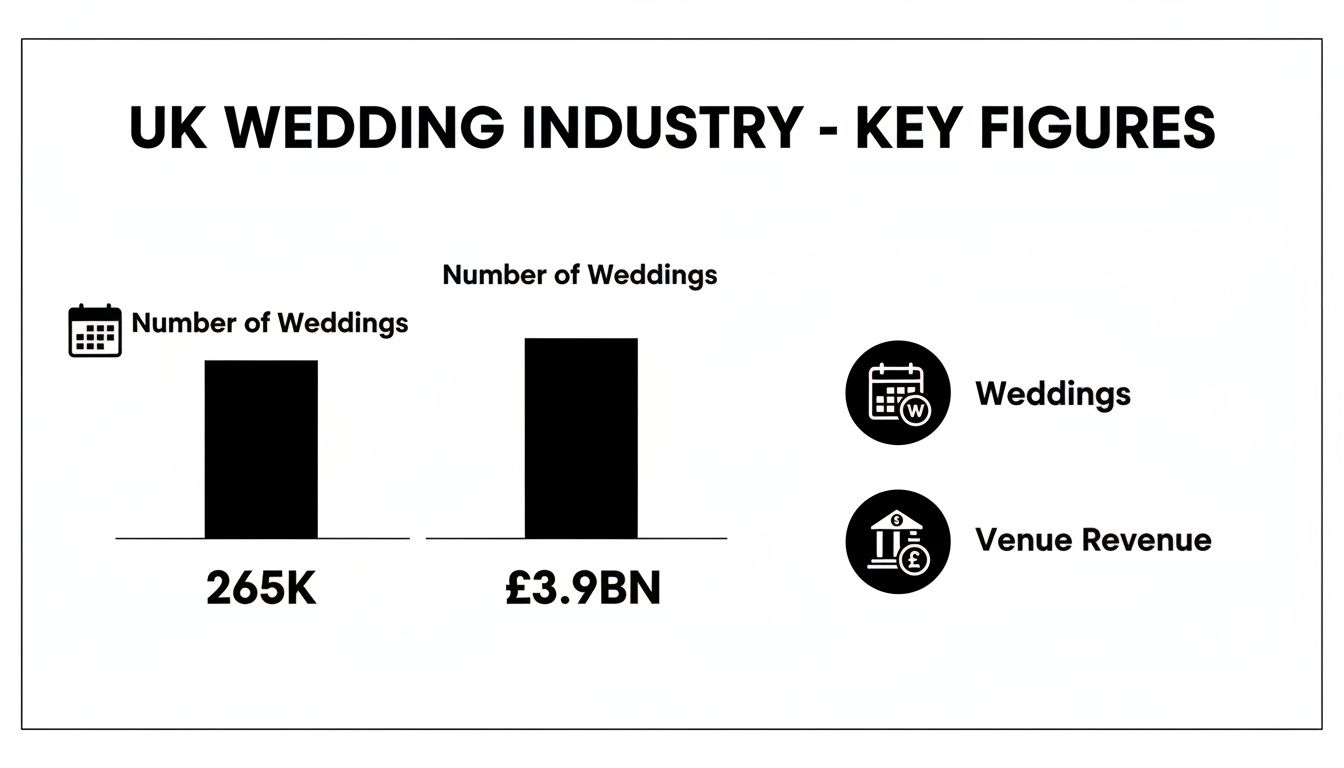
This sheer volume of events and spending just goes to show how much people value top-tier entertainment. A great live band is often the centrepiece of that investment.
Decoding the Costs of Hiring a Band
Nailing down your budget early on is the best way to avoid sticker shock and keep your search focused. In competitive areas like London and Kent, prices are shaped by a band’s reputation, how in-demand they are, and how far they need to travel. A seasoned group with a decade of experience will naturally cost more than a fresh, talented band that’s still making a name for itself.
To give you a clearer picture, I’ve put together a sample budget guide based on typical prices for a standard party or wedding booking in the London and Kent area for 2026. These estimates are generally for two 60-minute live sets.
Sample Band Hire Budget Guide for London & Kent (2026)
| Band Type / Size | Typical Genre | Estimated Price Range (per event) | Best For |
|---|---|---|---|
| Acoustic Duo | Pop, Folk, Soul | £600 – £950 | Drinks receptions, intimate dinners, small garden parties |
| 3-Piece Band | Indie, Rock, Pop | £1,200 – £1,800 | Smaller venues, budget-conscious parties, high-energy events |
| 4-Piece Band | Pop, Soul, Funk | £1,800 – £2,800 | The classic choice for most weddings and private parties |
| 5-7 Piece Band | Soul, Motown, Funk | £2,500 – £4,500 | Larger events wanting a richer sound with keys or brass |
| 8-12 Piece Showband | Pop, Funk, Disco | £5,000 – £10,000+ | High-impact corporate events, luxury weddings, ultimate party |
Keep in mind that these are just estimates. Prices can shift based on the date (bank holidays and Saturdays are prime time), travel distance, and the band’s specific level of demand.
The wider music scene is thriving, too. The UK’s music industry contributed a record £8 billion to the economy in 2024, driven by a huge appetite for live shows. This healthy market means you can find incredible professional musicians at nearly every price point. You can dig into the numbers yourself by reading the full report on the UK music economy.
When you’re putting your budget together, always leave a little room for the extras. Things like travel expenses, accommodation for late finishes, or asking the band to learn a special song can add to the final bill. Always, always ask for a fully itemised quote so there are no surprises.
How to Find and Vet Your Perfect Band
Alright, you’ve got your budget sorted and a vision for the night. Now for the fun part: finding the perfect live music. But where do you actually find top-tier bands that won’t let you down? The good news is there are several reliable places to look when hiring bands for parties, and each has its own perks.
Your first port of call should always be your network. Your venue manager or party planner is an absolute goldmine of information. They see different bands perform every single week and know exactly who delivers a killer show and who just goes through the motions.
Getting a recommendation from them means you’re not just getting a talented act, but one that’s professional, reliable, and probably already knows the venue’s layout and rules. That alone is a massive plus.
Where to Find Your Ideal Party Band
Beyond personal recommendations, online platforms and dedicated agencies are your best bet. Think of these as curated marketplaces, designed to make the whole discovery and booking process much, much simpler.
Here’s where I’d start my search:
- Entertainment Agencies: These companies are like a concierge service for live music. They have a roster of professional, pre-vetted bands and handle all the contracts, admin, and back-and-forth communication. It saves you a ton of time and gives you a brilliant layer of security.
- Online Music Marketplaces: Websites like Encore or FixTheMusic let you post your event details and get quotes directly from bands who are available. It’s a great way to see a wide range of options and compare profiles and prices in one place.
- Social Media and Direct Search: Don’t write off a good old-fashioned Google or Instagram search. Typing in something like “Funk bands in Manchester” can unearth some real hidden gems. Going direct requires more legwork on your end, but you can find unique local talent this way.
No matter where you find your shortlist, the next step is the most important one: the vetting. A slick website and some professional photos don’t mean a thing if they can’t deliver on the night.
Critical Questions to Ask Every Band
Once you’ve narrowed it down to a few contenders, it’s time to dig deeper. You need to understand their musical chops, of course, but also their professionalism and experience with parties like yours. I always insist on a quick phone or video call—it tells you a lot about their personality and whether they’re easy to work with.
Here are the non-negotiable questions you need answers to before making any commitments:
- Experience: “How many private parties do you typically play each year?” and “Have you played at our venue, or somewhere similar, before?”
- Repertoire: “Can we see your full song list? How do you handle tailoring the setlist to our tastes?”
- Special Requests: “Are you able to learn a new song or two for us, like for a specific moment?”
- Logistics: “What are your standard set times and break lengths? Do you provide music during the breaks?”
- Technical Needs: “What are your specific power and space requirements? How long do you need for setup?”
Their answers will tell you everything you need to know about their experience and organisation. A true professional will have these answers ready to go.
The Golden Rule of Vetting
Every band has a polished promo video. They’re meant to look and sound incredible—they’re shot in studios with perfect lighting, multiple takes, and a whole lot of audio sweetening. They show a band at their absolute, theoretical best.
While they’re a nice starting point, they don’t tell the real story.
You have to see what they’re like in a real, live setting. Ask for unedited footage from a recent party or wedding. Watch how they engage with the crowd, manage the energy between songs, and, most importantly, how they actually sound without all the studio magic.
The most crucial rule when hiring bands for parties is this: never book a band without seeing raw, unedited footage of them performing live at an actual event. A high-quality promo reel shows their potential; a shaky phone video from a real party shows their reality.
Understanding Contracts and Technical Riders
So, you’ve found the perfect band. Now it’s time to make it official, and this part is absolutely non-negotiable: you need a proper contract.
Forget handshakes or long email chains. A formal agreement is your only real safety net. It protects you and the band by making sure every detail is crystal clear from the start, preventing the kind of last-minute misunderstandings that can ruin an event.
Any professional band worth their salt will insist on a contract. It’s actually a great sign you’re dealing with experienced musicians who treat their work seriously. If their agreement seems a bit thin, don’t hesitate to ask for more detail. Your peace of mind is worth it.
What Every Band Contract Must Include
A good contract doesn’t need to be written in complicated legal jargon, but it does have to be specific. Before you even think about paying a deposit, make sure these key details are clearly laid out in writing.
Here are the essentials:
- Performance Details: The exact date, venue address, and specific timings are crucial. This means confirming the arrival time, soundcheck window, performance start and end times, and the structure of the show (e.g., 2 x 60-minute sets).
- Payment Schedule: The contract must state the total fee, the deposit needed to secure the date, and when the final balance is due. It should also outline how they accept payment.
- Cancellation Clause: This is vital. What happens if you need to cancel? What if the band has to pull out? A fair clause protects both sides by defining notice periods and any financial consequences.
- Contingency Plans: This covers all the “what if” scenarios. It should explain the band’s policy for member sickness (professional bands use reliable deputy or ‘dep’ musicians) and what happens in the rare case of equipment failure.
Getting these points locked down in a signed agreement turns a casual chat into a professional booking. It’s the foundation for a stress-free event.
Before we move on, it’s worth summarising the most critical contract clauses. Think of this as your final checklist before signing anything. These items protect both you and the band, ensuring there are no grey areas or potential disputes on the day.
Essential Contract Checklist for Hiring a Band
| Clause Category | What to Confirm | Why It’s Critical |
|---|---|---|
| Logistics | Exact Date, Venue Address, Arrival/Start/End Times | Prevents any confusion about where the band needs to be and when the performance starts and finishes. |
| Performance | Number & Length of Sets, Break Durations | Ensures you get the amount of live music you’re paying for and that it fits your event’s schedule. |
| Financials | Total Fee, Deposit Amount, Final Balance Due Date | Locks in the price and payment terms, so there are no surprise costs or late payment issues. |
| Cancellation | Notice Periods & Penalties (for both you and the band) | Protects both parties financially if the event has to be cancelled for any reason. |
| Contingency | Sickness/Emergency Policy (use of ‘dep’ musicians) | Guarantees the show will go on even if a band member is unwell, a sign of a professional outfit. |
| Rider/Tech | Confirmation that the Technical Rider is included/agreed | Acknowledges the band’s essential requirements, ensuring they have what they need to perform well. |
This table covers the absolute bare minimum. A thorough contract is a sign of a professional, experienced band, so never skip this step.
Decoding the Technical Rider
You’ll often find a document attached to the contract called a technical rider. The name sounds a bit intimidating, but it’s really just the band’s checklist for putting on a great show.
This document outlines their technical requirements and some basic hospitality needs.
The rider isn’t a list of diva-like demands. It’s a practical tool that helps the band perform safely and sound fantastic. Fulfilling it is your secret weapon for getting the amazing performance you’re paying for.
Some common things you’ll see on a rider are:
- Power Requirements: The number of safe, independent power sockets needed for their sound system, instruments, and any lighting they bring.
- Stage/Performance Area: The minimum space they need, usually specified in metres (e.g., 5m wide x 3m deep). This is to make sure they can set up their gear properly without being squeezed into a tiny corner.
- Hospitality: This is standard practice in the industry. It usually means providing soft drinks and a hot meal for each member. Remember, they are often on-site at your venue for eight hours or more.
The best thing you can do is share the rider with your venue manager as soon as you get it. A quick chat to confirm everything can be provided will prevent any headaches on the day and help the performance run flawlessly.
Planning for a Flawless Performance
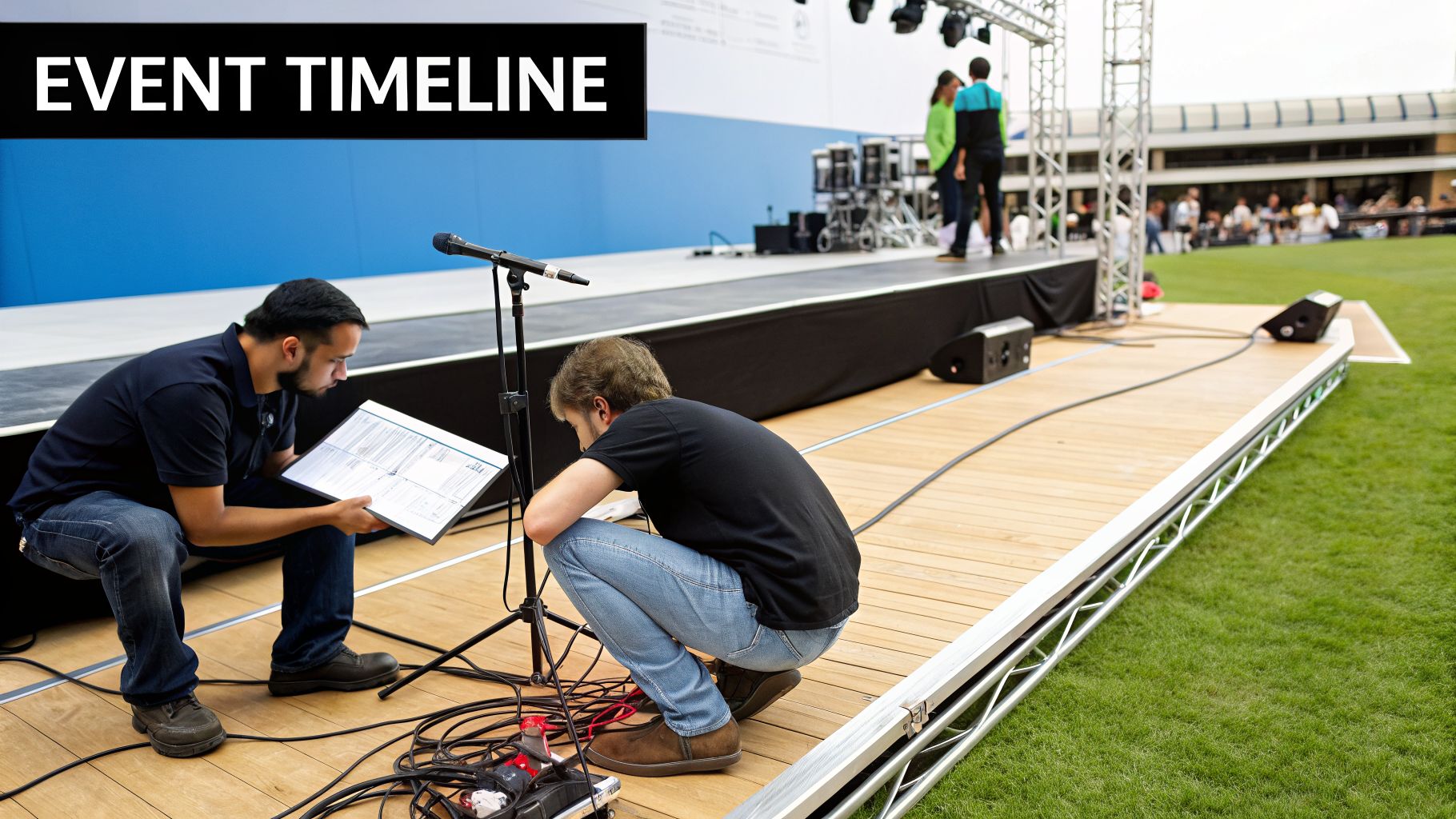
You’ve signed the contract and secured the date. Great. But booking the band is just the start when it comes to hiring bands for parties. Now the real work begins: nailing the logistics. A truly unforgettable performance comes down to solid communication and sharp coordination between the band, your venue, and your schedule.
Your first move? Introduce the band leader to your venue manager. A simple email connecting the two of them is all it takes. This lets them sort out the crucial details themselves—stuff like load-in times, parking, and any specific house rules. A professional band will always appreciate having a direct line of contact. It helps them plan their day without any last-minute surprises or delays.
This all feeds into building a rock-solid timeline that everyone agrees on, from the band’s arrival to their very last song.
Crafting a Seamless Event Timeline
A detailed schedule is your secret weapon. You need to work closely with the band to map out timings that flow naturally with the rest of your party, like speeches, dinner service, or other key moments.
A good event timeline should always include:
- Arrival and Load-In: The exact time the band will show up to start unloading gear.
- Soundcheck: This is non-negotiable. A proper soundcheck needs at least 60-90 minutes in an empty room, allowing the band to balance their levels without blasting your guests.
- Set Times: When each live set starts and finishes. Be precise.
- Breaks: When the band will be off stage and for how long.
Once it’s finalised, share this schedule with everyone. Your venue manager, your caterer, your photographer—anyone who needs to know what’s happening and when. This simple step prevents a thumping soundcheck from drowning out a heartfelt speech.
Preparing for the Unexpected
Even the most carefully planned events can hit a snag. A great host is ready for it. Thinking through potential problems beforehand means a minor hiccup won’t derail the whole party. It’s all about having a solid backup plan for your own peace of mind.
For example, what if the singer gets sick? A good contract will already have this covered, confirming the band will supply a professional deputy of the same calibre. Honestly, it’s a hallmark of a reliable, experienced act.
A band’s plan for dealing with issues is just as important as their playlist. Whether it’s a sick singer or a power cut, their professionalism is proven by how they handle the unexpected. Always ask about their contingency strategies before you book.
Think about other curveballs, too. What’s the plan B for a sudden downpour at your outdoor setup? Have you discussed a rain plan with the venue? And what happens if the power cuts out, even for a moment? Ask the band if they have solutions for brief power issues. Knowing the answers lets you relax and enjoy the music, confident the show will go on no matter what.
When to Choose a DJ Instead of a Band
Look, I love the raw energy of a live band as much as anyone. There’s a certain magic there. But sometimes, a professional DJ isn’t just an alternative—it’s the smarter move. It’s not about which is “better,” but what’s right for your night, your space, and your guests. The perfect party vibe can come from live instruments, but it can just as easily come from a perfectly mixed set.
Let’s be real, space is tight. A full band with drums, amps, and multiple members eats up a lot of floor. In many of London’s best intimate venues, that’s room you simply don’t have. A DJ, on the other hand, can work their magic from a compact booth, leaving precious square footage for what matters most: the dance floor.
Considering Musical Variety and Flow
One of the biggest wins for a DJ is their sheer musical range. If you’ve got guests spanning every generation from 70s disco lovers to current chart-toppers, a DJ can pivot in a heartbeat. That kind of versatility keeps everyone engaged and the energy electric all night long.
A live band is brilliant, but they’re often specialists in a certain sound. A DJ can deliver a far more eclectic journey. And for those moments when you want to hear your favourite tune exactly as you remember it, a DJ is the only way to get that studio-perfect sound.
The real clincher for many is the non-stop music. While a band needs to take well-earned breaks between sets, a DJ keeps the momentum going. There’s never a lull, just a seamless flow of sound that keeps the party alive.
The Art of Reading the Room
A skilled DJ is so much more than a human playlist. They are masters of atmosphere, reading and shaping the energy of the room in real time. There’s a genuine craft to it, and understanding the DJs’ ability to read the crowd shows just how they adapt to what’s landing on the dance floor.
Their talent is in blending tracks, shifting tempos, and dropping the right song at the perfect moment. It creates a completely different kind of immersive experience—one built on smooth transitions and a relentless, curated energy that moves right along with your guests. If that sounds like the right fit for your event, you might be interested in our guide to creating golden vibes with a DJ.
Your Top Questions About Hiring a Band, Answered
Even with the most thorough plan, there are always a few lingering questions when it comes to hiring a band for your party. Getting these sorted will give you peace of mind and ensure everything is buttoned up for a flawless event. Here are the straight answers to the queries we hear most often.
How Far in Advance Should I Book?
For the most in-demand bands, especially for prime dates like summer Saturdays or bank holiday weekends, you really need to be booking 9 to 18 months in advance. The top-tier acts get snapped up incredibly fast, and leaving it to the last minute will severely limit your options.
That said, if your party is on a weekday or during an off-peak month (think January or February), you have a lot more breathing room. For these dates, you can often find a fantastic band with just 3 to 6 months’ notice.
Can the Band Learn a Special Song for Us?
Almost always, yes. Most professional bands are happy to learn one or two special songs that aren’t on their standard setlist. This is perfect for a first dance at a wedding or the birthday person’s all-time favourite tune.
The key is giving them enough warning—a minimum of six to eight weeks is standard practice. This gives them proper time to arrange, learn, and rehearse it until it’s perfect. If you want them to learn multiple new songs, that can get tricky and might come with an extra fee, so it’s always best to have that conversation upfront.
What Happens During the Band’s Breaks?
A great party thrives on a continuous atmosphere, and professional bands get this completely. During their breaks (usually two short ones or one longer one), they’ll play a pre-mixed playlist through their sound system to keep the energy from dipping.
You can almost always provide your own playlist for the breaks if you have specific tracks in mind. Just have it ready on a phone or laptop and, most importantly, clear it with the band leader beforehand so they know the plan.
Do I Need to Provide Food and Drinks?
Yes, this is standard industry practice and a clause you’ll almost certainly see in the contract. A band’s workday is much longer than just their performance time; it often spans eight hours or more when you factor in travel, setup, soundcheck, the gig itself, and packing down.
Providing a hot meal and soft drinks is a professional courtesy. It keeps them refreshed and fuelled, ensuring they have the energy to deliver the amazing, high-octane performance you’re paying them for.
At VinylGold, we believe the right music is the heartbeat of any great party. While we specialise in creating unforgettable atmospheres with perfectly curated DJ sets, we know how to make any event sound incredible. Discover our approach to DJ services in London and Kent for your next celebration.