
If you want your vinyl collection to last a lifetime, learning how to store it properly is non-negotiable. It really comes down to a few golden rules. Get these right, and you’ve won 90% of the battle against warping, scuffs, and groove damage. The core idea is simple: store your records vertically in a cool, dry, dark place, and always, always use protective sleeves.
The Fundamentals of Proper Vinyl Record Storage
Before you start shopping for fancy shelving or climate control units, let’s lock in the basics. These principles are the foundation of good vinyl care, whether you’re just starting with a handful of records or managing a massive collection.
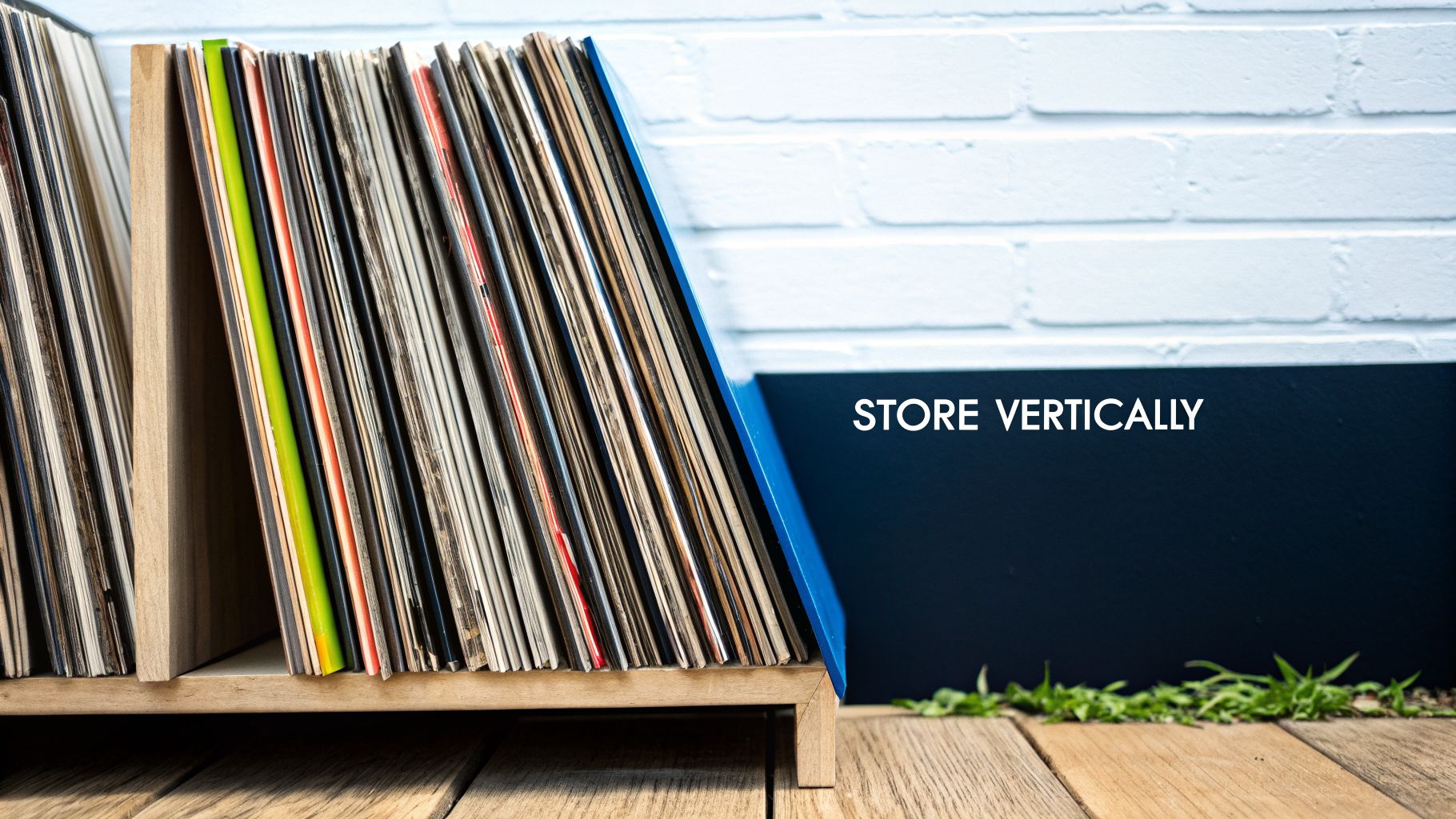
First and foremost, always store your records upright, like books on a shelf. Never, ever stack them flat on top of each other. The sheer weight creates a huge amount of pressure on the records at the bottom of the pile. It’s a guaranteed way to cause warping and permanent groove damage. This one habit is probably the single most important thing you can do for the long-term health of your collection.
Your First Line of Defence
Protective sleeves are your best friend. Think of them as the first line of defence against the everyday enemies of vinyl: dust, fingerprints, moisture, and static. Most new records come in flimsy paper sleeves that actually shed tiny fibres and can create static, attracting even more dust.
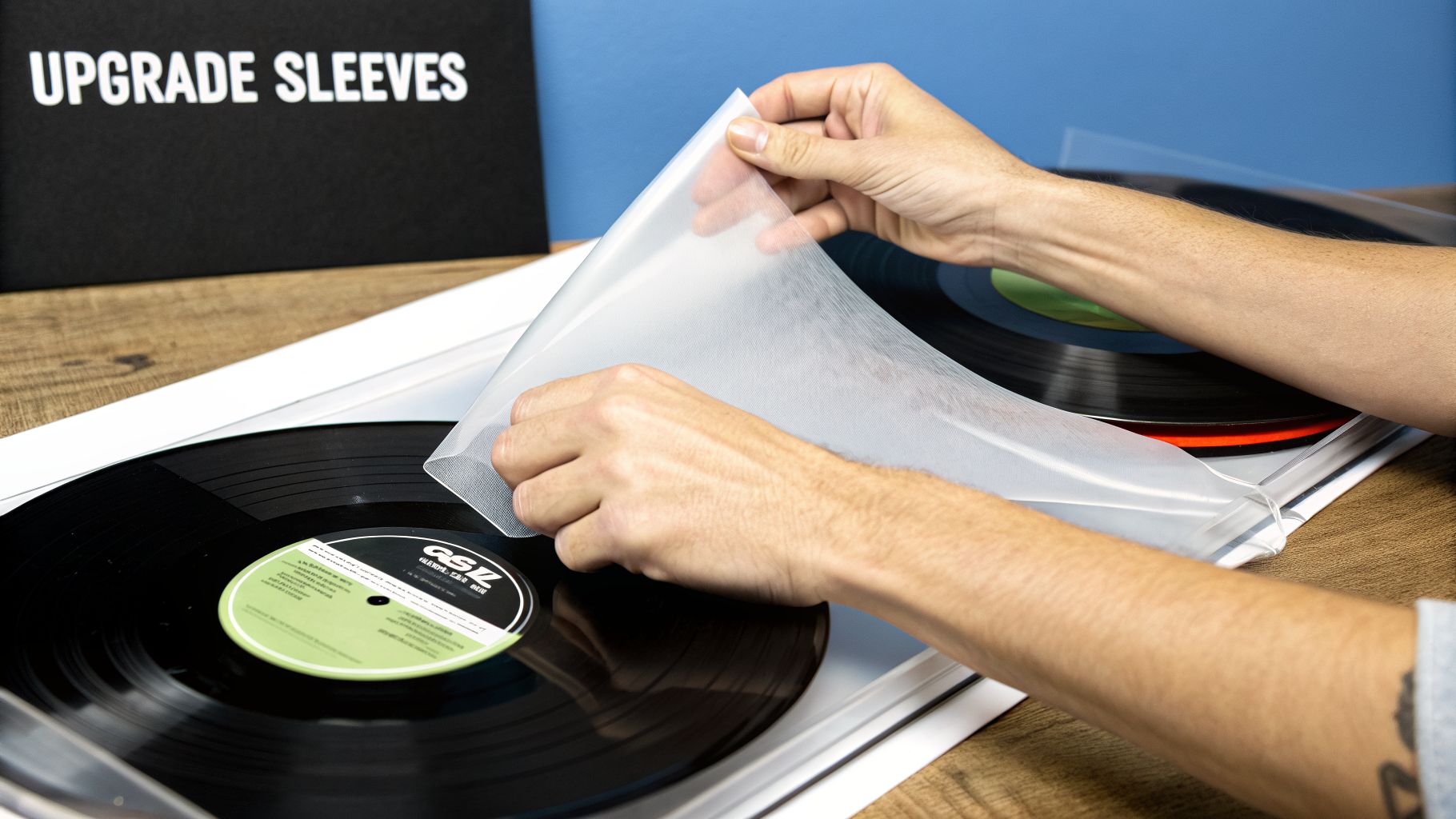
Do yourself a favour and upgrade to some quality anti-static, poly-lined inner sleeves. It’s a small investment that pays off big time by preventing those microscopic scratches that cause pops and crackles.
And don’t forget the jacket. Clear outer sleeves are just as vital, protecting that precious album art from ring wear, scuffs, and fading. If you’re a DJ or a pro who’s constantly pulling records for gigs, this kind of protection is essential for keeping your collection in top condition and preserving its value. Of course, before you sleeve a record, make sure it’s clean. If you need to brush up on your technique, you can find everything you need to know about choosing the right https://vinylgold.co.uk/brush-for-cleaning-vinyl-records/ in our guide.
The Ideal Storage Environment
Where you store your records is just as crucial as how you store them. You need a stable, climate-controlled space that’s well away from direct sunlight, heat sources, and humidity. Heat can warp a record in just a few hours, while damp air is an open invitation for mould to grow on the cardboard sleeves. That means attics, sheds, garages, and damp basements are completely off-limits.
The rule of thumb is to keep your records in a room where you’d feel comfortable. Aim for a steady temperature between 18-21°C (65-70°F) with a relative humidity of around 40-50%. Consistency is key here—big swings in temperature or humidity can cause the vinyl and its packaging to expand and contract, leading to damage over time.
For a deeper dive into the science and strategy behind preservation, there are some great resources out there. Many experts share detailed tips on the Best Way to Store Vinyl Records. Once you get these fundamentals down, you’re well on your way to making sure your entire collection sounds just as good decades from now as it does today.
To help you remember the essentials, here’s a quick cheat sheet covering the most important storage factors.
Vinyl Record Storage At a Glance
| Storage Factor | The Right Way | Why It’s Critical |
|---|---|---|
| Orientation | Store records vertically, never stacked flat. | Prevents warping and groove damage from uneven pressure. |
| Inner Sleeves | Use anti-static, poly-lined sleeves. | Protects from scratches, dust, and static build-up. |
| Outer Sleeves | Use clear polyethylene outer sleeves. | Guards album art against ring wear, scuffs, and fading. |
| Temperature | Keep between 18-21°C (65-70°F). | Prevents warping caused by heat exposure. |
| Humidity | Maintain 40-50% relative humidity. | Stops mould and mildew from growing on sleeves and labels. |
| Light | Store away from direct sunlight and UV light. | Avoids fading of album artwork and potential heat damage. |
| Location | Choose a stable indoor room, not an attic or basement. | Protects from extreme temperature fluctuations and moisture. |
Getting these seven points right is the secret to a happy and healthy record collection that will stand the test of time.
Choosing the Right Sleeves for Your Records
Let’s be honest, the paper sleeves that come with a new record are usually rubbish. They’re a complete afterthought for manufacturers—thin, scratchy, and designed for little more than getting the record from the factory to your turntable.
If you’re serious about your collection, upgrading your inner and outer sleeves is one of the smartest and most affordable investments you can make. It’s a non-negotiable part of storing vinyl properly for the long haul.
Upgrading Your Inner Sleeves
Think of the inner sleeve as your record’s home. Those cheap paper sleeves most records arrive in are notorious for leaving scuffs and shedding tiny paper fibres into the grooves. They also generate a ton of static, turning your pristine new wax into a dust magnet.
The only real fix is to swap them out for anti-static, poly-lined inner sleeves. These are typically made from high-density polyethylene (HDPE) and give your records a silky-smooth, non-abrasive surface to slide against. No more micro-scratches every time you pull a record out.
The anti-static feature is a game-changer. By neutralising the charge, these sleeves actively repel dust and debris. This keeps your grooves cleaner for longer and cuts down on those annoying pops and crackles during playback. For a deeper look, check out our complete guide on the best record inner sleeves to find the right ones for your collection.
Protecting Your Album Art with Outer Sleeves
The outer sleeve is just as crucial. It’s all about protecting your album’s jacket—the artwork, the spine, the corners. Without one, the jacket is exposed to all sorts of damage that ruins its look and value.
A high-quality outer sleeve is your first line of defence against ring wear, scuffed corners, moisture damage, and fading from ambient light. Investing in them maintains both the aesthetic and financial value of your collection.
You’ll want to look for high-clarity polypropylene sleeves. They’re strong, crystal-clear, and don’t yellow over time like their cloudier polyethylene cousins. They let the album art shine through while offering serious protection. As the vinyl revival continues, with UK vinyl sales projected to grow 13.3% to 7.6 million units in 2026, protecting your investment is more important than ever. You can explore more data on the vinyl sales surge on Statista.
Here’s a quick tip I’ve picked up from years of handling records: once your record is in its new inner sleeve, place it back in the jacket but with the inner sleeve’s opening facing upwards. This creates a far better seal against dust when the album is stored vertically. It’s a tiny detail, but it makes a huge difference in keeping your records clean and ready to spin.
Setting Up Your Shelving and Storage Space
So you’ve got your records cleaned and sleeved up. Great. But where you put them is just as critical as how you protect them. Finding the right home for your collection isn’t just about looking organised; it’s about preventing long-term damage.
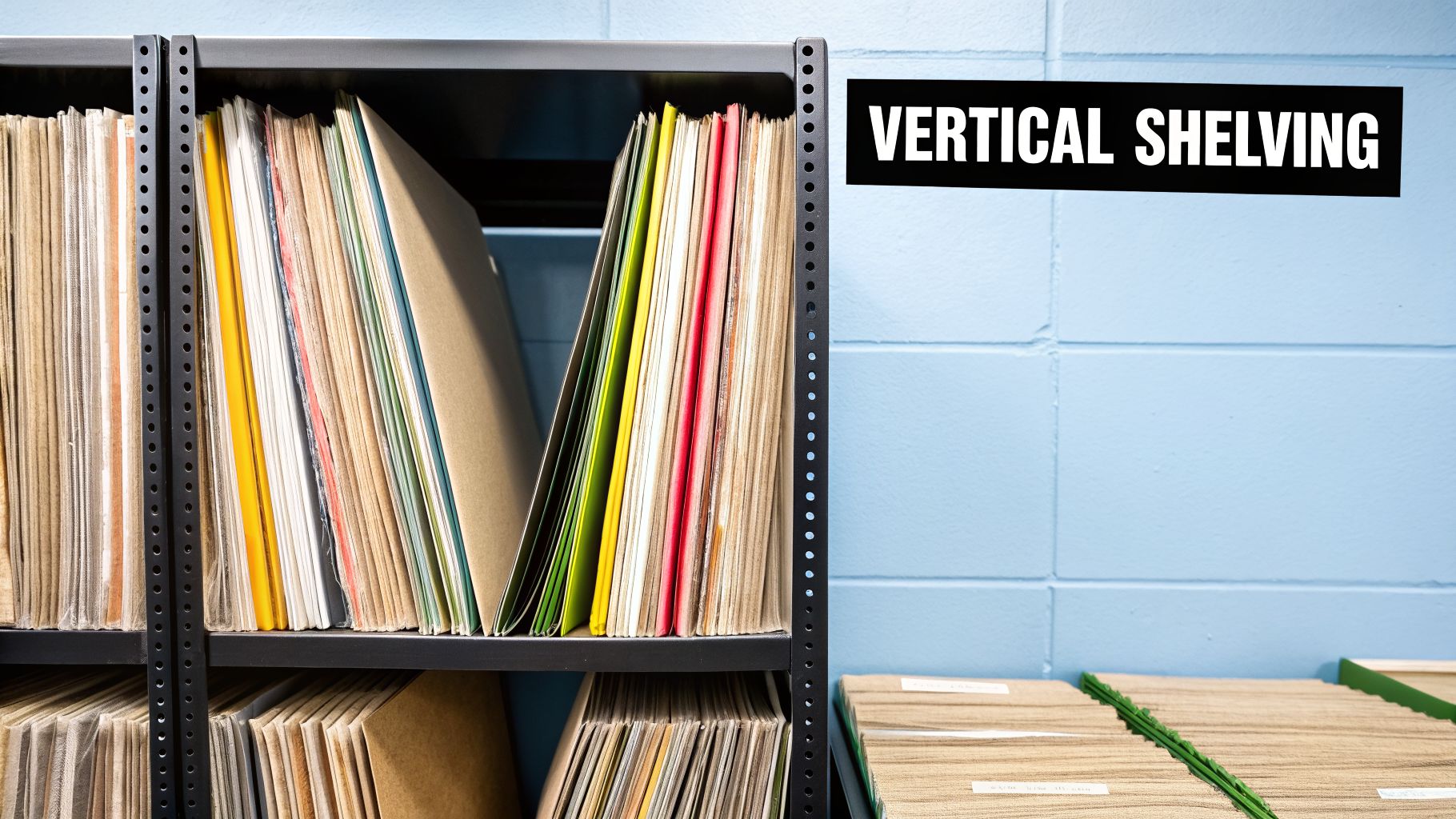
Let’s get the absolute golden rule out of the way first: always store records vertically. Think of them like books in a library. Never, ever stack them flat. The combined weight creates immense pressure, and that’s a surefire recipe for warping—a problem that is notoriously difficult, if not impossible, to fix.
Choosing the Right Shelving Unit
When you’re looking at shelving, you need something strong, stable, and sized correctly. A standard LP jacket is about 31.5cm by 31.5cm (12.5 inches square), so your shelves need to comfortably fit that.
The IKEA KALLAX is practically a legend among collectors, and for good reason. It’s affordable, the cube dimensions are a near-perfect fit, and it’s surprisingly sturdy. But it’s not your only choice. Plenty of furniture shops now offer dedicated record storage, and you can find some beautiful bespoke units from local woodworkers or sellers on Etsy.
Whatever you pick, make sure it can handle the serious weight. Vinyl is dense stuff. A stack of just 50 records weighs around 14kg (30lbs) and only takes up about 33cm (13 inches) of shelf space. Always check the manufacturer’s weight limit for each shelf to avoid a catastrophic collapse.
Preventing the Dreaded Lean
Just lining your records up on a wide shelf isn’t enough. Over time, they’ll start to lean, putting uneven pressure on the vinyl and causing ring wear on the jackets at the end of the row. This subtle pressure can lead to warps, even when you’ve stored them vertically.
The most effective solution I’ve found is to use solid vertical dividers. Placing sturdy supports every 15-20cm (6-8 inches) keeps your records perfectly upright and stops any slumping. This is a complete game-changer for long-term storage.
Some high-end units have built-in dividers, which is ideal. If you’re going the DIY route, you can add your own solid bookends or get some wood panels cut to size to create smaller, more secure sections inside each cube.
The Goldilocks Principle of Packing
How you pack your records onto the shelf is the final piece of the puzzle. I call it the “Goldilocks Principle”—it can’t be too tight or too loose.
-
Too Tight: Cramming records together creates intense sideways pressure. This can damage the spines and makes it a nightmare to pull a record out without scuffing it or the ones next to it. You should be able to slide a record out smoothly.
-
Too Loose: Too much empty space is just as bad. It lets the records slump over, which completely defeats the purpose of vertical storage and brings back the risk of warping. This is where those dividers really earn their keep.
The goal is to have your records standing upright, gently supporting one another with minimal pressure. They need to be snug enough to stay vertical but loose enough that you can easily flip through them to find the album you want to play next. Get that balance right, and your collection will stay secure, accessible, and in pristine condition for years.
Controlling Your Storage Environment
Beyond the right shelves and sleeves, the biggest threats to your vinyl are often invisible. The climate in your storage room can be a silent killer, with heat, sunlight, and humidity being the main culprits. Getting this environment right is a massive part of learning how to store vinyl records for the long haul.
Think of your records a bit like fine wine—they do best in conditions that are cool, dry, and dark. Extreme temperatures, or even big swings in temperature, are a disaster. Heat causes PVC, the stuff records are made of, to soften and warp. A record left near a sunny window or a radiator can become an unplayable mess in just a few hours.
This is exactly why certain parts of the house are total no-go zones. Attics, garages, sheds, and most basements are just awful for a record collection. They suffer from wild temperature swings and often struggle with damp, which is the perfect storm for ruining your vinyl.
Mastering Temperature and Humidity
The ideal climate for vinyl is pretty specific. You want to aim for a consistent temperature between 18-21°C (65-70°F) and keep the relative humidity around 40-50%. Consistency is just as important as the numbers themselves. Rapid changes cause the vinyl and its cardboard sleeve to expand and contract, which leads to wear and tear, and even warping.
A small digital hygrometer is a cheap and brilliant investment for monitoring your room’s climate. These little gadgets show you both temperature and humidity in real-time. If you spot your humidity levels are always creeping up, a dehumidifier is a must-buy. It’ll pull that extra moisture from the air and stop the dreaded growth of mould on your album jackets.
Keeping your collection in a climate-controlled room isn’t just about being overly cautious; it’s about protecting an investment. A stable environment is the single best thing you can do to prevent warping and degradation, making sure your records sound incredible for decades.
The Importance of Darkness
Direct sunlight is another enemy. Its UV rays will fade your precious album art with shocking speed, turning vibrant colours into washed-out disappointments. The heat from sunlight can also get concentrated through a window, creating hotspots that can easily warp a record, even on a day that doesn’t feel that warm.
Simple solutions work best here:
- Use blackout curtains or blinds on any windows in your storage room.
- Set up your shelving so that no direct sunlight ever hits your records.
- If you frame and display records, make sure you’re using UV-protective frames.
With physical media making such a strong comeback, taking these steps is crucial. Physical formats are tipped to make up 15% of music revenues by 2026, so protecting your records’ condition helps preserve both their cultural and financial value. You can read more about these music industry trends and projections on Music Week. By creating a cool, dry, and dark sanctuary, you’re not just storing records—you’re properly archiving them for the future.
Transporting Your Vinyl Safely for Gigs
For a working DJ, your records aren’t just a collection; they’re the tools of your trade. Getting them from your home to the booth and back again in one piece is a skill in itself. How you move your wax can be the difference between a killer set and a crate full of warped, broken vinyl.
Your first big decision is the case. This really boils down to the gig and how you’re getting there.
Hard Cases Versus Soft Bags
A heavy-duty flight case is your ultimate shield. These are the aluminium-reinforced boxes with foam-lined guts, built to survive being chucked in the back of a van or stacked under a PA speaker. If you’re touring, travelling a lot, or know other people will be handling your gear, a hard case isn’t just an option—it’s essential.
On the other hand, padded soft bags give you a lighter, more portable alternative. For a local gig where you’re in control of your records the whole time, a quality soft bag is often far more practical. They’re easier to sling over your shoulder and squeeze into tight spots, but offer almost no protection from being crushed. I find myself using a hard case for any van travel and a soft bag for quick trips across London on the tube.
Pro Tip: Whatever you use, never cram it full. Your records need to be snug enough that they don’t shift around, but not so tight that they’re under constant pressure. You should still have enough room to easily flick through them.
Packing for Performance and Protection
How you organise your crate before you even leave the house is just as important. In a dark, high-pressure DJ booth, you don’t have time to search. I always arrange my records by genre and energy level, using labelled dividers to find exactly what I need in seconds. That prep work saves you every time.
Temperature shock is another real risk. Dragging a case of records from a hot, sweaty club straight out into a cold night can cause the vinyl to contract quickly, which can lead to damage. Give your case a few minutes to acclimatise in a neutral space—like a hallway or cloakroom—before heading outside.
To keep your records safe on the move, here are a few things I always do:
- Use Foam Inserts: Fill any gaps at the end of your rows with foam blocks. Even a couple of tightly rolled T-shirts will do the trick to stop records from slumping or sliding.
- Check Your Sleeves: Make sure every record is in a good anti-static inner sleeve and a solid outer sleeve. This is your first line of defence against scuffs and friction inside the case.
- Keep It Vertical: This rule never changes. Even inside a travel case, your records must always stay perfectly vertical.
Thinking about the best materials for packing a storage unit can spark some good ideas for extra padding, especially if you ever have to use a less-than-ideal box in a pinch. Keeping your collection pristine helps preserve its value, which matters as some pressings get more desirable.
The infographic below sums up the golden rules for creating the right climate, a principle that applies whether your records are at home or on the road.
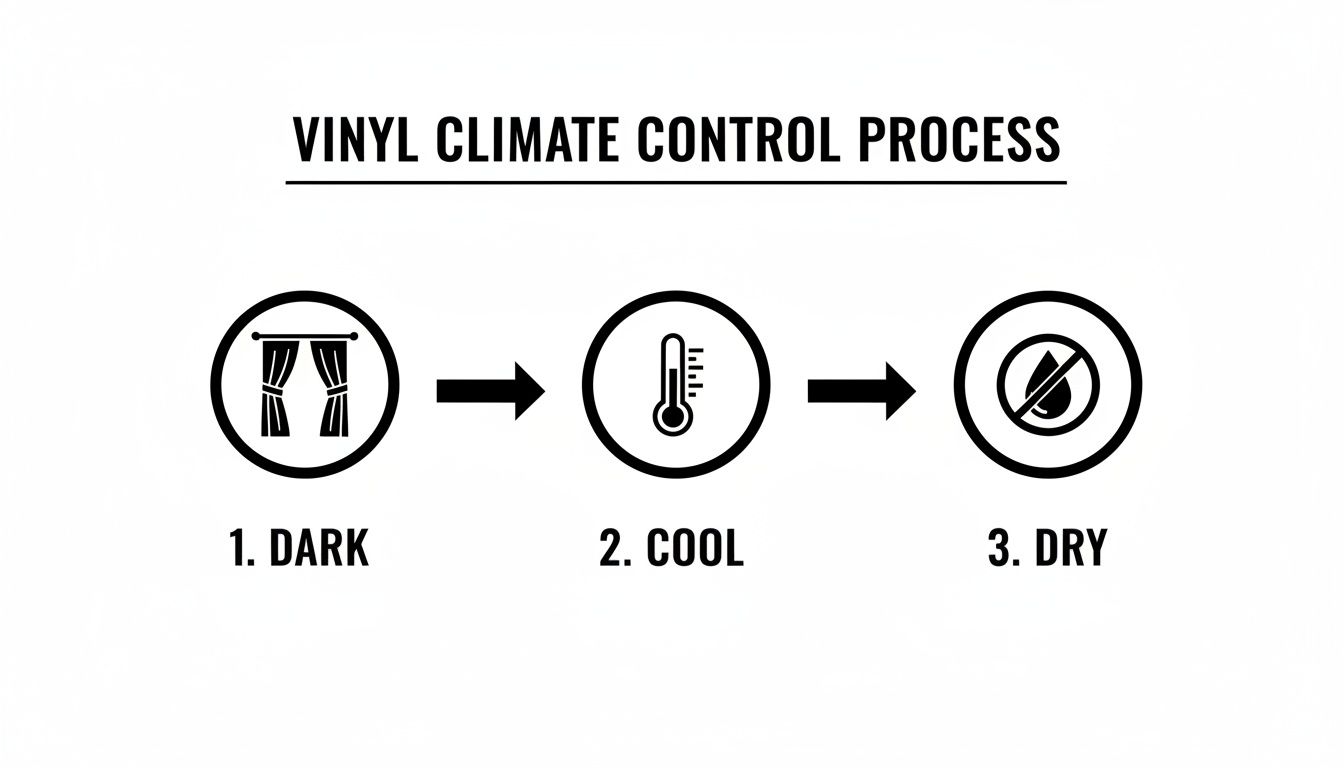
Ultimately, protecting records from light, heat, and damp is a constant battle. A well-packed travel case is just a mobile version of this safe environment, ensuring your prized vinyl arrives, plays, and gets home in perfect shape, every single time.
Common Vinyl Storage Questions Answered
Even when you’ve got a solid system for storing your records, a few specific questions always seem to pop up. We get these all the time from fellow collectors and DJs, so here are some straightforward answers to help you handle the finer points of vinyl care.
Should I Keep Records in the Original Shrink Wrap?
It’s definitely tempting to leave the shrink wrap on to keep that “brand new” look, but you should always take it off. Over time, that plastic can shrink even further, putting constant pressure on the jacket and eventually causing your record to warp.
Even worse, shrink wrap is a perfect moisture trap. Any humidity in the air gets sealed against the cardboard sleeve, creating an ideal environment for mould and mildew to grow. Nothing ruins beautiful album art faster. The best move is to ditch the wrap and slide the whole jacket into a proper, non-PVC outer sleeve.
Is There a Safe Way to Fix a Warped Record?
Honestly, trying to fix a warped record at home is a massive gamble that almost never pays off. You’ll see all sorts of DIY methods online using ovens, heavy books, or panes of glass, but they’re incredibly unpredictable and can easily destroy your vinyl for good. A little too much heat can melt the grooves, and uneven pressure will cause damage that can’t be undone.
For any record you actually care about, the only truly safe option is to find a professional record flattening service. They use specialised gear that applies very gentle, consistent heat and pressure over several hours to safely get your disc flat again. In the end, prevention through proper vertical storage is always your best bet.
How Often Should I Clean My Vinyl?
Getting into the habit of giving your records a quick wipe with a carbon fibre brush before and after every play is a game-changer. It’s a simple move that lifts off any surface dust and kills static before it gets ground into the grooves.
A quick brush is also a great idea before tucking a record away for long-term storage. And if you’ve just picked up a second-hand gem from a shop or record fair, a deep clean is non-negotiable. Always give used finds a proper wash with a dedicated solution before they join your main collection to avoid spreading around years of accumulated grime. Exploring where to buy vinyl records online is part of the fun, just remember to clean whatever shows up at your door.
Are Milk Crates a Good Storage Solution?
Milk crates have a certain retro cool factor and they’re okay for moving records around for a few hours, but they are a terrible choice for long-term storage. Those open-slatted or gridded sides just don’t offer the flat, even support that record jackets need to stay in shape.
That lack of a solid surface will eventually leave pressure marks and indentations on your sleeves. On top of that, they offer absolutely zero protection from dust, light, or the occasional spilled drink. Your collection deserves better. Investing in a proper shelving unit with solid, flat surfaces is a much smarter move for protecting your records.
At VinylGold, we believe that great music deserves to be heard in the best possible quality. From providing the perfect soundtrack for your wedding to supplying DJs with reliable, road-tested gear, our passion for sound is at the heart of everything we do.
Discover our DJ services or browse our curated selection of equipment at https://www.vinylgold.co.uk.