So, you’re ready to dive into the world of buying vinyl online. Fantastic. Whether you’re just starting out or you’re a seasoned digger hunting for that one elusive pressing, this guide is your new best friend. We’re going to walk you through the entire landscape, from the huge global marketplaces to the tiny, curated indie shops that are the heart and soul of the scene.
Your Guide to Finding Vinyl Online in the UK
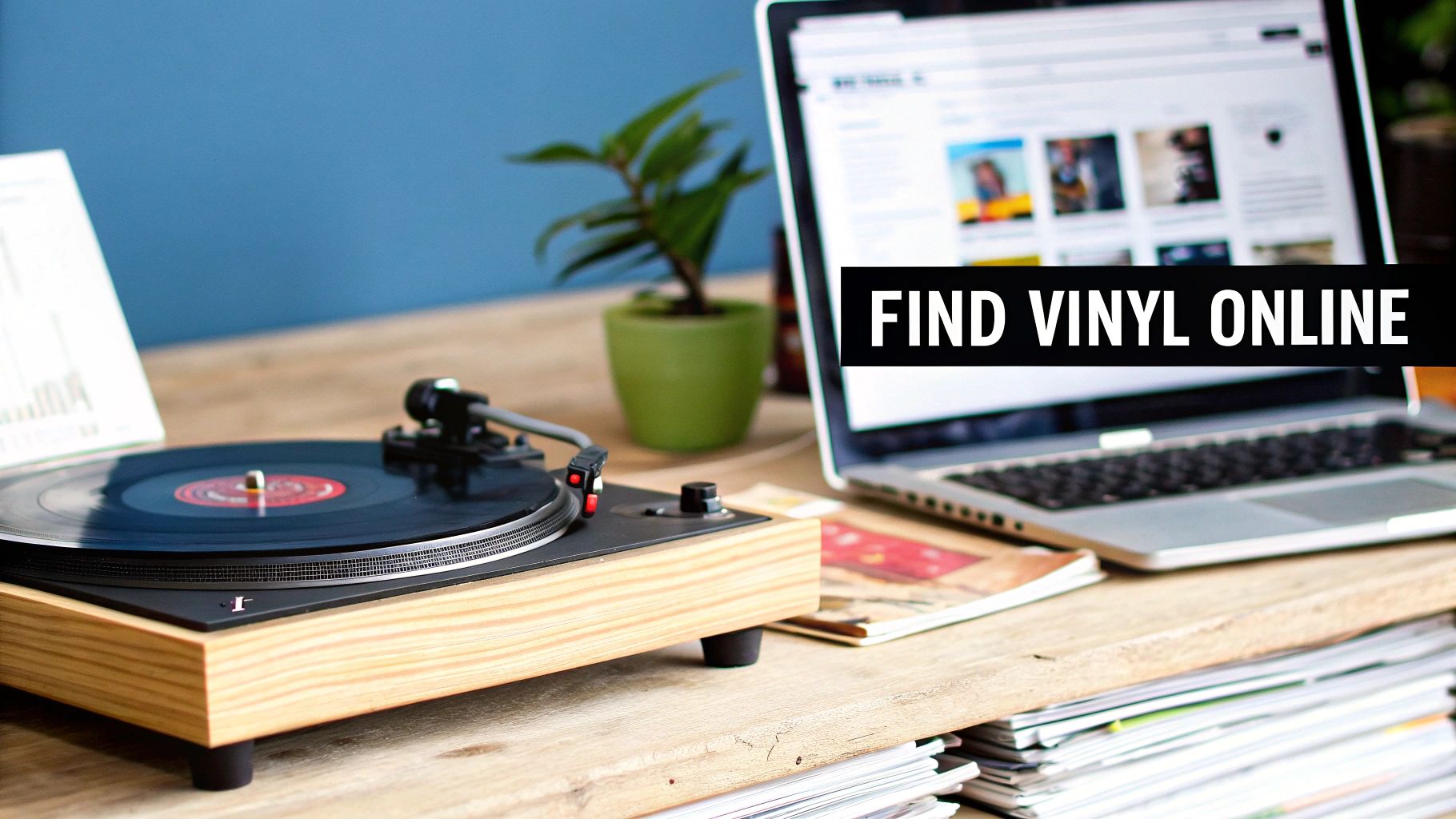
Let’s be clear: the vinyl comeback isn’t just some passing fad. It’s a full-on cultural shift. For a growing number of us, it’s about making a choice to connect with music in a more physical, deliberate way. It’s the difference between mindlessly streaming a playlist and actively dropping a needle on a record you’ve chosen, held, and admired. Think of this guide as the mate who knows all the spots and is ready to help you build a collection that’s uniquely yours.
And this isn’t just a feeling; the numbers back it up. The UK vinyl market just hit a massive milestone, with sales jumping 13.3% to a staggering 7.6 million records sold. That’s the 18th year in a row of growth. It’s not just nostalgia, either. A whole new generation of fans is discovering the magic of the format, wanting a deeper, more tangible connection to the artists they love.
What You Will Discover in This Guide
The online vinyl world can feel like the Wild West at first, but once you know what you’re doing, it’s an absolute goldmine. We’re here to cut through the noise and give you some solid, real-world advice to help you find, buy, and enjoy the music you’re after.
Here’s what we’ll be getting into:
- The Big Players: We’ll show you how to master massive marketplaces like Discogs and eBay, so you can track down specific pressings and learn to spot trustworthy sellers from a mile off.
- The Indie Gems: This is where the real magic happens. We’ll introduce you to some of the UK’s best independent online shops, known for their expert curation and personal touch.
- Buying Like a Pro: You’ll learn the language of record grading, how to properly check a seller’s reputation, and what to expect with things like shipping and returns.
- Keeping It Clean: Once you’ve got your hands on that new record, we’ll give you the essential tips on cleaning and storing it so it sounds amazing for years.
Our goal here is simple: to give you the confidence to explore the vast world of online vinyl. We want to arm you with the knowledge to make smart buys, sidestep the common mistakes, and build a collection that will bring you nothing but joy.
By the time you’re done with this guide, you’ll know exactly where to buy vinyl records online and how to do it without any headaches. For more tips on collecting and music culture, have a dig through our other articles over on the VinylGold blog.
Navigating the Major Online Vinyl Marketplaces

When you’re after sheer, unfiltered access to millions of records, the big online marketplaces are your first port of call. Think of them as a sprawling, digital record fair that never closes, connecting you with sellers from every corner of the globe. Getting to grips with them is a core skill for any collector wondering where to buy vinyl records online.
Each platform has its own flavour, its own strengths, and its own quirks. Learning how to navigate them effectively will save you a world of time, money, and frustration, and ultimately help you land that perfect record you’ve been hunting for.
Discogs: The Collector’s Bible
Discogs isn’t just a shop; it’s the definitive archive for physical music. Its user-built database catalogues virtually every pressing of every record ever made, and that precision is its superpower.
You’re not just searching for an album here. You’re hunting down a specific 1972 UK first pressing with its unique catalogue number. For serious collectors, this level of detail is everything. It’s the difference between owning a copy and owning the copy.
Transparency is baked into the platform. Every seller has a feedback score and detailed reviews from past buyers.
- Check the Seller Rating: Stick with sellers who have a rating of 99.5% or higher. It’s a good sign they know what they’re doing.
- Read Recent Feedback: Pay close attention to comments on grading accuracy, packaging quality, and communication. A few bad reviews aren’t a deal-breaker, but consistent complaints are a major red flag.
- Use the Wantlist Feature: Add specific pressings to your “Wantlist,” and Discogs will ping you the moment a copy goes up for sale. This is an absolute game-changer for tracking down rare finds.
eBay: The Global Auction House
eBay offers a different kind of buzz. While plenty of records are sold with a “Buy It Now” price, the auction format can be a fantastic way to snag a bargain—if you know how to play the game.
Success on eBay is all about patience and strategy. Unlike Discogs, where prices are fixed, auctions bring a competitive streak that can work for or against you. You also need to be a bit more of a detective to verify a record’s authenticity and condition.
Key Strategies for Buying Vinyl on eBay:
- Analyse Photos Carefully: Insist on clear, high-resolution photos of the actual record and sleeve. If the listing only uses stock images, walk away.
- Scrutinise the Description: Does the seller use standard grading terms? Do they mention specific flaws like scratches or seam splits? Vagueness is your enemy here.
- Master the Art of Bidding: Don’t get drawn into a bidding war early on. Instead, decide on your absolute maximum price, and then drop your bid in the final seconds of the auction. This technique, known as “sniping,” stops you from unnecessarily driving the price up.
Amazon: Convenience with a Caveat
Amazon is the undisputed king of convenience, offering fast and often free shipping. But when it comes to buying vinyl, especially used or collectible records, it can feel like a bit of a gamble.
The main problem is the lack of detailed, individual listings for second-hand items. You’re often buying from a generic product page, relying on a brief condition note like “Very Good,” which is totally subjective and often unreliable.
While Amazon is a solid choice for new, sealed reissues sold directly by Amazon or reputable record labels, exercise extreme caution with third-party sellers of used vinyl. The risk of receiving an over-graded record in poor packaging is significantly higher compared to specialist sites.
Once you start building your collection, getting the right turntables and DJ equipment is the natural next step. You can check out our curated selection of gear in the VinylGold shop to find reliable kit that will do your new records justice.
Discovering the Best Independent Online Record Shops
If the big marketplaces are the sprawling department stores of the vinyl world, then independent online shops are the curated boutiques. This is where you stop just finding a record and start discovering music. These stores are run by people who live and breathe vinyl, and you can feel that passion in every part of the experience.
Shopping at an indie store is a completely different game. You’re not just another order number; you’re tapping into a community. You get access to genuine expertise, top-notch service, and a selection of records hand-picked for quality and vibe. For anyone serious about building a collection with real character, knowing where to find these specialists is a must.
Why Go Independent?
The upside of buying from an independent online record shop goes way beyond just supporting a small business. It’s about the quality of the whole process, from the moment you land on their site to the second you drop the needle on your new wax.
You’ll notice the difference pretty quickly. These shops stake their reputation on accuracy, care, and curation. For you, that means a more reliable and enjoyable hunt for your next favourite record.
- Meticulous Grading: Indies live and die by their reputation. Their grading is almost always more conservative and trustworthy than what you’ll find on a huge marketplace. A ‘VG+’ from a specialist is often what a casual seller might call ‘Near Mint’.
- Bomb-Proof Packaging: These folks know the pain of a record arriving with a bent corner or a seam split from being rattled around in transit. They use professional-grade mailers and stiffeners, making sure your purchase survives the journey to your turntable.
- Exclusive Releases and Curated Stock: Lots of indies get their hands on exclusive pressings or limited-run colour variants you won’t find anywhere else. Their stock, especially for genres like funk, soul, and disco, is often hand-selected by expert buyers who know what’s actually worth owning.
Top UK Independent Shops to Explore
The UK has a fantastic scene of independent record shops with brilliant online stores. Each one has its own flavour and speciality, catering to different tastes and collectors. Getting to know a few of them is a great way to expand your musical horizons and find some real gems.
Here are a few of the heavy hitters you should get to know:
It’s always a good idea to know who the key players are. This table breaks down some of the UK’s most respected online retailers, giving you a quick snapshot of what they do best.
A Comparison of Top UK Online Vinyl Retailers
| Online Retailer | Best For | Key Features | Based In |
|---|---|---|---|
| Juno Records | DJs & Electronic Music Fans | Huge stock of new dance music, excellent pre-orders, massive back catalogue. | London |
| Rough Trade | New Indie & Alternative | Exclusive pressings, signed editions, champions emerging artists. | London |
| Sister Ray | Diverse Catalogue & Crate Digging | Deep selection across genres, well-regarded second-hand stock. | London |
| Norman Records | Leftfield & Experimental | In-depth reviews, weekly newsletter with new discoveries, loyalty scheme. | Leeds |
| Piccadilly Records | Eclectic New Releases | “Album of the Year” prestige, passionate staff recommendations. | Manchester |
Each of these stores offers something unique, whether it’s an exclusive pressing from Rough Trade or a deep cut from Sister Ray’s used bins. Exploring them is part of the fun of collecting.
These shops aren’t just selling records; they’re preserving music culture. By buying from them, you are directly supporting the experts who help keep the vinyl scene alive and thriving. Your purchase helps ensure these vital hubs for music discovery continue to exist.
The numbers back this up. The value of physical music in the UK recently soared 11.5% to £368.1 million, with vinyl revenues themselves jumping 18.5%. With the average LP costing around £25-£30, collectors are increasingly turning to trusted specialists like London-based Sister Ray or Flashback Records for accurately graded rare finds that justify the investment. You can read more about the UK’s vinyl sales surge on Music Week.
Exploring these independent outlets is one of the most rewarding parts of being a collector. You’ll unearth incredible funk, soul, and disco gems that will become the stars of your collection, all while getting service that reminds you why you fell in love with vinyl in the first place.
Mastering the Art of Buying Second-Hand Vinyl
Diving into the world of second-hand vinyl online can feel like a treasure hunt without a map. But with a bit of know-how, you can swap that uncertainty for confidence, learning to spot the real gems and sidestep the costly duds. This is your crash course in becoming a savvy buyer of pre-loved records.
Buying used vinyl isn’t just about hunting for a bargain; it’s about discovering a piece of history. Every record has a story, and learning to read the signs of its past life is a vital skill for anyone looking to build a quality collection online.
Decoding the Language of Grading
The first and most important concept to get your head around is the Goldmine Grading Standard. It’s the universal language sellers use to describe a record’s condition, but its terms can be a bit misleading if you don’t know what they actually mean for sound quality. Think of it less as a rigid scientific scale and more as a rough guide to your listening experience.
-
Near Mint (NM): This is as good as it gets for an opened record. The vinyl itself should look practically untouched, with no visible marks. The sleeve should be crisp and clean, showing almost zero signs of handling. An NM record is expected to play perfectly, with no surface noise.
-
Very Good Plus (VG+): For many collectors, this is the sweet spot. A VG+ record will show some light signs of being played, like faint scuffs or superficial scratches that don’t affect the sound. The sleeve might have minor ring wear or slightly bumped corners. You might hear a touch of crackle in quiet parts, but it should never overpower the music.
-
Very Good (VG): This is where you need to start paying serious attention. A VG record has more obvious flaws. Scratches will be deep enough to feel with a fingernail, and you will hear surface noise—pops and clicks—during playback, though it shouldn’t completely dominate the music. The cover will probably have clear ring wear, seam splits, or even some writing on it.
A record graded ‘Good’ or ‘Fair’ is rarely good at all. These grades usually mean the record is heavily scratched, plays with a lot of noise, and might even skip. Unless you’re after a super-rare record just to fill a gap in your collection, it’s almost always best to steer clear of anything graded below VG.
This infographic helps visualise how your search might change depending on what you’re looking for.
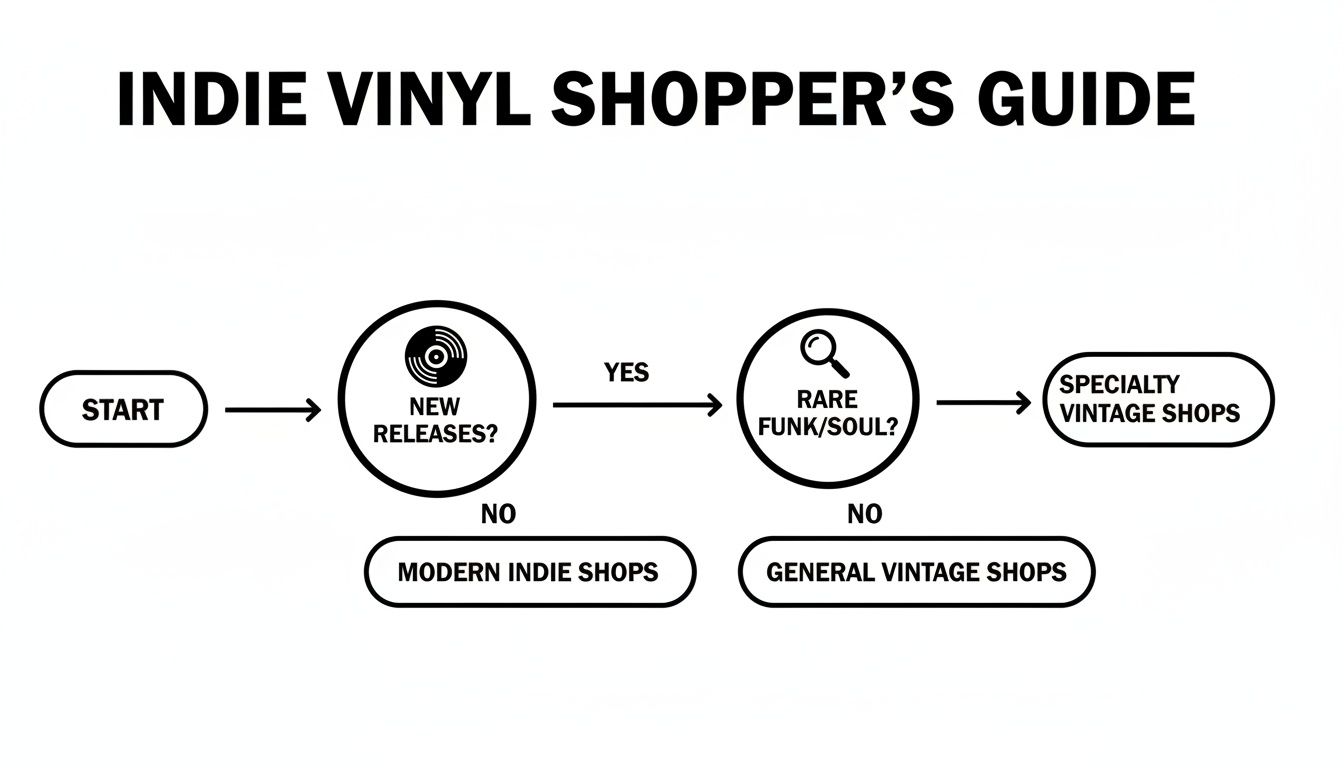
As the chart shows, your strategy shifts whether you’re chasing the latest indie release or digging deep for older, harder-to-find pressings.
Reading Between the Lines
A grade is just a starting point. The real story is in the seller’s detailed description and the photos they provide. A good seller will be upfront about a record’s flaws, not trying to hide them.
Always take a close look at high-quality photos. You want to see clear shots of the vinyl’s surface under a bright light, which can reveal scratches and scuffs that a distant photo would miss. Check the cover for corner damage, seam splits, and ring wear. If the pictures are blurry or just generic stock photos, that’s a massive red flag.
Your Pre-Purchase Checklist
Before you hit that ‘buy’ button, it pays to ask the right questions. Any decent seller will be happy to give you more info to make sure you’re confident with your purchase.
Questions to Ask a Seller:
- “Can you confirm the matrix numbers in the runout groove?” This is the only bulletproof way to verify the exact pressing of a record, making sure you’re getting the specific version you’re after.
- “Has the record been play-graded or just visually graded?” A visual grade is a good start, but a play-grade confirms how the record actually sounds. Some sellers will even provide short sound clips if you ask.
- “Are there any specific issues like audible scratches, skips, or warping?” This pushes the seller to be explicit about any flaws that a simple VG+ grade might not capture.
Finally, always check the seller’s feedback history. Look for recent, detailed reviews that mention grading accuracy and how well they package their records. Consistent positive feedback is the best insurance policy you have when buying second-hand vinyl online. By combining this forensic approach with a solid understanding of grading, you’ll be ready to build a fantastic collection of pre-loved records.
Ensuring Your Records Arrive Safely
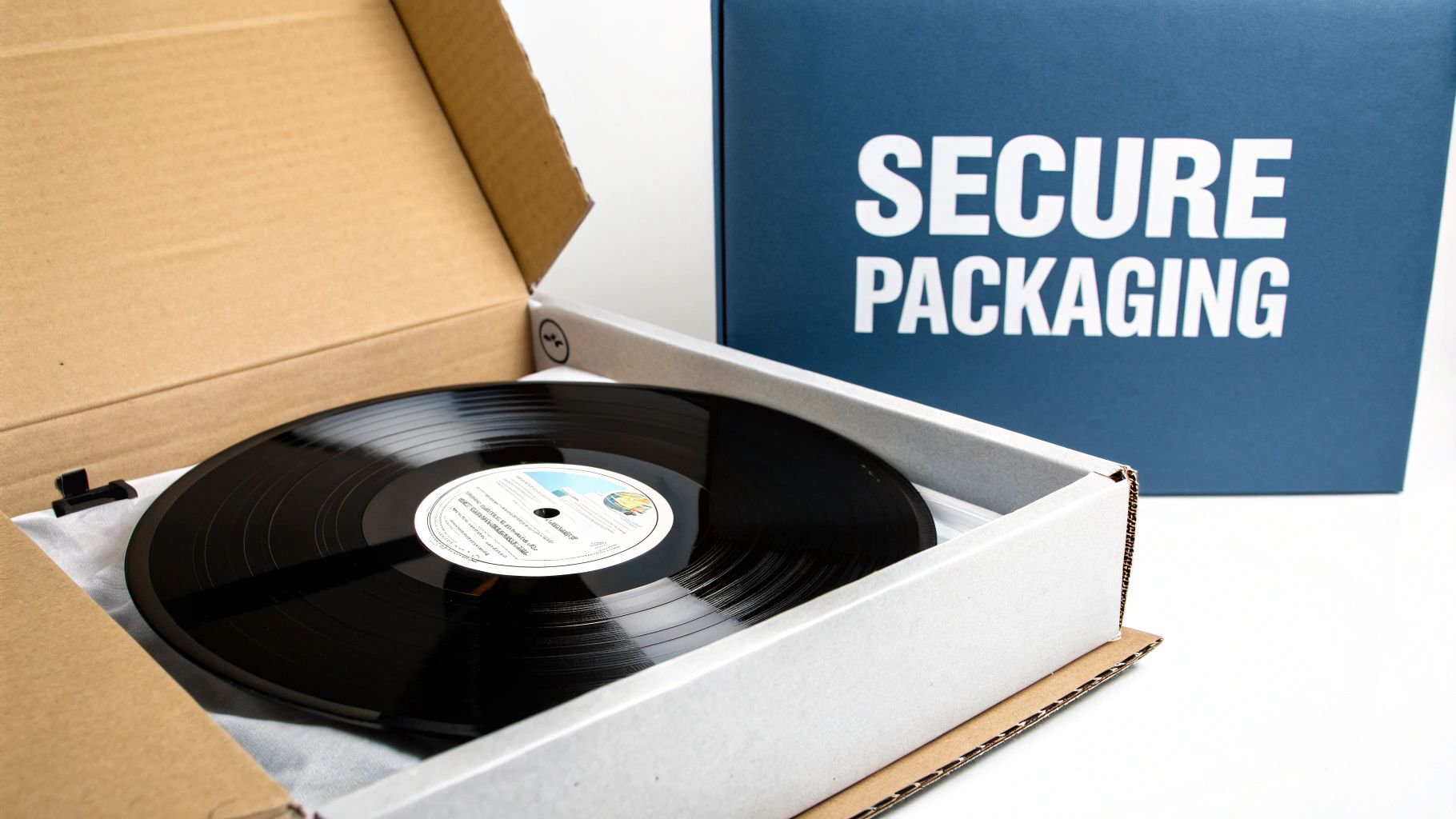
You’ve navigated the digital crates, decoded the grading, and finally clicked ‘buy’ on that record you’ve been hunting for. But the journey isn’t over. Now comes the nail-biting part: waiting for it to arrive. Making sure it survives the trip from the seller’s shelf to your turntable is a crucial last step when you buy vinyl records online.
Think of shipping and packaging as the final, critical layer of your investment. A rare record is worthless if it shows up snapped in half. Understanding what good packaging looks like and how to handle shipping costs will give you peace of mind and protect your growing collection.
Understanding Shipping and Customs Costs
When you’re browsing, the price you see on the screen is rarely the final price. Shipping costs can vary wildly, so it’s vital to factor them in before you commit to buying.
Within the UK, you can typically expect to pay between £4 to £6 for a single LP with a tracked service like Royal Mail. But ordering from international sellers on platforms like Discogs or eBay opens up a whole new world of costs. Shipping from the US or Japan can easily tack on another £20 to £30 to your total.
And it’s not just postage. You also need to be aware of potential customs fees and import VAT, which are charged on goods coming into the UK.
- Customs Duty: This usually kicks in for goods valued over £135.
- Import VAT: This is charged at 20% on the total value of the goods, including postage and insurance.
These charges are collected by the courier before they’ll deliver the parcel and can be an unwelcome surprise if you haven’t budgeted for them. Always check a seller’s shipping policies and use an online import duty calculator to get a rough idea of your final cost.
What Proper Vinyl Packaging Looks Like
Not all packaging is created equal. A flimsy bag or a repurposed pizza box is just asking for disaster, leading to bent corners, split seams, and cracked vinyl. Professional sellers know this, and they use specific materials to guarantee your records arrive safely.
The gold standard is a dedicated cardboard record mailer, often called a ‘cruciform’ mailer. These are designed to fold around the record, creating a rigid, protective buffer zone around the edges that absorbs any knocks.
A conscientious seller will always remove the record from its outer sleeve before packing. They’ll place it in a separate paper or poly-lined inner sleeve right next to the jacket. This tiny detail prevents the record’s sharp edge from slicing through the cover’s seams during transit, and it’s a huge indicator of a seller who actually cares.
If you’re buying something expensive, don’t be afraid to message the seller beforehand to confirm their packing method. A simple question like, “Do you use proper cruciform mailers with cardboard stiffeners?” can save you a world of hassle.
Handling Damaged or Mismatched Arrivals
Even with the best precautions, accidents happen. If a record arrives damaged, or if its condition is clearly not what was described (like being graded VG+ but covered in deep scratches), you have options.
First thing’s first: contact the seller immediately. Take clear photos of the damage to both the packaging and the record itself. A reputable seller will want to sort it out, often by offering a partial refund, a full refund upon return, or even a replacement.
If you can’t reach an agreement, platforms like Discogs and eBay have resolution centres that let you open a formal dispute to get your money back. Your journey to buy vinyl records online should always end with satisfaction, not disappointment.
Caring for Your New Vinyl Collection
That thrill you feel when a new record arrives is just the beginning. How you care for it from day one is the secret to keeping it sounding pristine for decades. You’ve basically adopted a piece of musical history, and now it’s up to you to look after it.
This goes way beyond just avoiding scratches. It’s about fighting the invisible enemies: dust, static, and poor storage. These are the culprits behind a noisy, lifeless sound, but with a few good habits, they’re easy to beat.
Your First Steps After Unboxing
Before that needle even gets close, every single record needs a quick clean. And yes, that includes brand new, sealed ones. Tiny bits of debris from the pressing plant and static from that paper inner sleeve are often lurking on the surface, just waiting to cause pops and clicks.
The most essential tool for this job is a carbon fibre anti-static brush.
- How to Use It: With the record spinning, just hold the brush gently over the surface for a couple of rotations. This kills the static and gathers up any loose dust. Then, just angle the brush slightly and sweep the dust off the edge. Do this before every single play—it’s a simple ritual that makes a huge difference.
For second-hand finds or any record with fingerprints and grime, a dry brush just won’t cut it. That’s when you need a wet cleaning system. These range from simple spray-and-wipe kits to proper record-washing machines that get deep into the grooves and lift out stubborn dirt a brush could never reach.
Investing in a decent cleaning kit is non-negotiable for any serious collector. It is the single most effective way to improve the sound of both old and new records, instantly reducing surface noise and revealing the music’s true clarity.
The Golden Rules of Vinyl Storage
How you store your records is just as critical as how you clean them. Bad storage is the number one cause of warping, a dreaded condition that can make a record unplayable and is nearly impossible to reverse.
Stick to these fundamental rules to keep your collection flat and happy:
- Always Store Vertically: Never, ever stack your records flat. The weight will eventually press warps into the vinyl. Always store them upright on a shelf, just like books. Make sure they aren’t packed in too tight or leaning over at a weird angle.
- Keep Them Cool and Dry: Heat is vinyl’s ultimate enemy. Keep your collection away from radiators, direct sunlight, and damp places like attics or basements. A consistent, comfortable room temperature is perfect for preventing warps and stopping mould from growing on the sleeves.
- Use Protective Sleeves: Ditch the standard paper inner sleeves and upgrade to anti-static, poly-lined ones. They cut down on static and stop the tiny paper scuffs that happen when you slide a record in and out. A clear outer sleeve is also a great idea to protect that beautiful cover art from shelf wear and dust.
Proper care is all about protecting your investment and making sure every listen is as rich and immersive as the artist wanted. And when you’re ready to take your setup to the next level, the right gear from the VinylGold store will help you pull the absolute best sound from your well-maintained collection.
Frequently Asked Questions About Buying Vinyl Online
Jumping into the world of online vinyl buying can throw up a few questions, especially if you’re just starting out. To help you hunt down those gems with confidence, we’ve pulled together some of the most common queries and given them clear, straight-up answers.
Think of this as your go-to guide for those moments you need a bit of clarity. Nailing these basics will help you sidestep common pitfalls and make your collecting journey a whole lot smoother.
How Can I Find Rare or Out-of-Print Records Online?
Tracking down that one elusive record is all about smart detective work and a proactive strategy. The trick is to cast a wide net and let technology do the heavy lifting for you. Don’t just search for a record; set up systems that bring it directly to you.
The best approach comes down to a few key moves:
- Set up a Discogs Wantlist: This is your most powerful tool, hands down. Add the specific pressings you’re after, and you’ll get an email the second a seller lists a copy for sale anywhere in the world.
- Create Saved Searches on eBay: Get specific. Use details like the catalogue number, pressing year, or country of origin (e.g., ‘1971 UK Harvest press’) to create saved searches. This cuts through the noise and pings you when a relevant listing pops up.
- Follow Specialist Shops: Many indie record stores announce rare new arrivals on their social media pages or email newsletters first. Following your favourite funk, soul, or disco specialists gives you a massive head start.
What Is the Difference Between an Original Pressing and a Reissue?
Getting your head around this is central to collecting. An original pressing (often called a ‘first press’ or ‘OG’) is a record from the very first run made when the album was initially released. A reissue, on the other hand, is any pressing manufactured at a later date.
Collectors often hunt down original pressings for their historical value and the belief that they offer the most authentic sound, as close as you can get to the artist’s original intent. But don’t write off reissues. Many modern reissues are expertly remastered from the original tapes and pressed on high-quality, 180-gram vinyl, offering superb sound that can be more affordable and much easier to find.
Is It Safe to Buy Vinyl from International Sellers?
Yes, it’s generally very safe, provided you take a few sensible precautions. Platforms like Discogs and eBay have solid buyer protection policies and transparent seller feedback systems that minimise your risk. The key is to do your homework before you hit ‘buy’.
Always check a seller’s feedback score and read their most recent reviews. Look for comments that specifically mention accurate grading and, most importantly, secure packaging for international transit. A seller with a 99.5% or higher positive feedback rating is almost always a safe bet.
Just remember to factor in higher shipping costs and be prepared for potential UK customs charges on items valued over £135. A good seller will be upfront about all the shipping details. For more info on common queries, you can find further details in our complete guide to frequently asked questions about vinyl. This should help you finalise your decision on where to buy your records online.
At VinylGold, we believe the right gear is essential to truly enjoying your collection. From high-quality turntables that protect your records to DJ controllers that let you share your passion with others, our curated store has everything you need to build the perfect setup. Explore our selection and elevate your listening experience today.
Built with Outrank