

You’re probably in one of two camps right now. Either you’re planning a wedding, birthday, or company party and know you want that big 80s feeling, or you’ve typed “80s tribute band London” into Google and realised the options all look great until you try to compare what they mean for your night.
That is where the key decision starts. An 80s tribute band can turn a room into a mini arena show. A professional DJ can keep the floor moving without gaps, pivots, or stage complications. Both can work brilliantly in London and Kent. Both can also be the wrong fit if the venue, crowd, or running order are working against them.
After years around weddings, private parties, and corporate events, the pattern is usually the same. People do not regret choosing 80s music. They regret choosing the wrong format for the room. The best nights are not built on nostalgia alone. They are built on the right entertainment for the job.
Why 80s Music Still Packs the Dance Floor
A lot of event planning starts with a simple brief. “We want everyone singing.” “We want the dance floor full early.” “We want the music to feel fun without being cheesy.” The 80s does that better than most eras because the songs are instantly recognised across age groups.

That staying power is not accidental. In the first half of the 1980s, UK charts had 146 weeks with bands at number one, which helps explain why 80s group anthems still feel so dominant at parties today, as noted by MusicRadar’s report on UK chart history.
When a room hears the opening bars of a track from that era, people do not need warming up with an explanation. They already know where they are. That matters at weddings, where you may have school friends, parents, work colleagues, and extended family all sharing one floor.
A good 80s event usually works because the music gives you more than one mood at once.
- Big choruses: Songs that groups can shout together.
- Strong rhythm: Tracks that land well for dancing, even with guests who are not regular dancers.
- Visual identity: Fashion, colour, hair, synths, guitars, and stage style all come with the music.
- Emotional range: You can move from glossy pop to rock anthems to slow moments without losing the thread.
There is also a practical advantage. An 80s brief is easy for guests to understand. If you ask for black tie with “a bit of everything”, people arrive with different expectations. If you say 80s night, they arrive ready for a shared idea.
For planners in London and Kent, that clarity helps everything else. Decor decisions sharpen up. Dress code gets easier. The first dance, cake-cutting music, and late-night push all feel more cohesive. Even visually, the era lends itself to a stronger identity, whether you want polished glamour or full retro fun, and that is part of why themed music-led events remain so appealing, as reflected in this VinylGold visual reference.
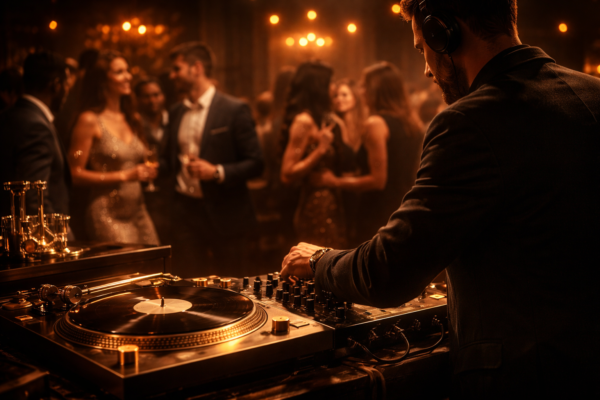
The strongest themed nights are not just about the playlist. They give guests permission to join in.
Understanding the 80s Tribute Band Experience
An 80s tribute band is not the same thing as a standard function band that happens to play a few 80s hits. The better tribute acts build a whole performance around the era.

Consider the difference between hearing a story and walking into a set. A tribute band aims to recreate the look, sound, pacing, and attitude of 80s live performance. That usually means period styling, synth-led arrangements, recognisable stage banter, and a setlist built around songs with instant crowd pull.
More than just playing the songs
A generic covers band often works from a broad brief. One Motown tune, one 90s belter, a recent singalong, then back to some 80s classics. An 80s tribute band narrows the lens on purpose. That focus is the appeal.
You are usually booking them for things like:
- Era immersion: Neon, jackets, visual callbacks, and recognisable performance style.
- Artist-led repertoire: Duran Duran, Wham!, Madonna, Spandau Ballet, Prince, A-ha, and similar staples depending on the act.
- Concert feel: Less “background entertainment”, more “feature performance”.
- Themed identity: Strong fit for retro parties, school reunion style nights, and branded events.
That theatrical side matters. Guests respond differently when the entertainment feels like a show rather than just live music in the corner.
What the set usually feels like
Most strong 80s tribute acts build around momentum. They open with songs people know quickly, move into larger singalong moments, then hit their biggest titles once the room is fully with them. The sequencing is tighter than many standard party bands because the concept depends on keeping everyone in one musical world.
This gives you a better sense of the live format in action:
Where tribute bands shine
If your event needs a centrepiece, this format is hard to beat. A band can create anticipation before they even play a note. Guests see instruments, lighting, and outfits. The room immediately reads the entertainment as part of the occasion, not just a service supporting it.
What works well:
| Event type | Why an 80s tribute band fits |
|---|---|
| Wedding evening reception | Gives the night a focal point and a memorable reveal |
| Birthday or anniversary | Strong nostalgia and lots of guest participation |
| Corporate party | Creates spectacle and a defined entertainment moment |
| Ticketed venue night | Easy theme to market and easy for guests to understand |
What works less well is when the brief needs constant flexibility. If the crowd suddenly wants soul, garage, indie, or current pop after the first wave of retro excitement, a band has less room to manoeuvre than a DJ.
Should You Book an 80s Tribute Band
Many people need an honest answer at this point. Not “are tribute bands good?” They can be excellent. The better question is whether a tribute band is right for your event.

When a band is the right call
Book an 80s tribute band when the entertainment is meant to be watched as well as danced to. If you want guests turning toward the stage, filming the opening song, cheering solos, and treating part of the evening like a live show, a band gives you that in a way a DJ does not.
This is especially effective for:
- Milestone birthdays where the host wants a statement piece
- Corporate celebrations where the entertainment needs visual impact
- Weddings with a clear retro identity
- Venue nights where the theme is the main selling point
A band also helps if your crowd already loves live music. Some audiences naturally respond to musicians on stage. They like the human energy, the applause moments, and the sense that something is happening live in front of them.
Where the trade-offs start to bite
Bands are less forgiving than DJs when the room is awkward. If the stage area is tight, access is poor, or the running order is likely to slip, live performance gets harder to deliver smoothly.
The most common friction points are practical, not artistic.
- Fixed shape of the night: A band works in sets. That means breaks.
- Narrower range: Even a broad 80s repertoire is still a defined lane.
- Longer setup: Load-in, soundcheck, and stage planning all need time.
- Higher impact on the room: Great if you want a show. Less useful if guests need easy conversation early on.
There is also the issue of control. If the dance floor unexpectedly fills with guests who want a different direction, a band cannot instantly pivot the same way a good DJ can. They can read the room to a point, but their toolbox is smaller once the set is locked in.
Ask what the night needs to do
I always come back to one question. Does your entertainment need to be the main event, or does it need to manage the whole night?
If you need a centrepiece, the band makes sense. If you need constant steering from drinks reception through dinner transition through late-night dancing, the answer is often different.
A tribute band is strongest when the event can support a show. It is weakest when the event needs minute-by-minute flexibility.
A quick decision filter
| Priority | Band fit |
|---|---|
| Visual wow factor | Strong |
| Non-stop music with no breaks | Weaker |
| Broad requests across decades | Weaker |
| Stage presence and crowd spectacle | Strong |
| Small venue with limited footprint | Weaker |
| Guests who love live performance | Strong |
A lot of disappointing band bookings come from a mismatch, not a bad act. The act may be excellent. The room, timeline, and guest brief may call for something else.
Costs and Logistics of Booking a Tribute Band
A tribute band can be the line item that makes an 80s night feel special, or the one that starts eating budget and schedule. In London and Kent, that usually comes down to three things. Fee, footprint, and how much work the venue can absorb.
Treat the booking like a live production booking, not just music. The headline price only tells part of the story.
Research from Priceonomics on the rise of tribute bands shows how professional this part of the market has become. The better acts are not casual pub bands in fancy dress. They operate with proper management, rehearsed shows, transport plans, and a clear technical brief.
What the fee usually covers
Clients often compare a band quote to a DJ quote and assume the band is charging more to play the same songs. That is not how the numbers work.
A band fee usually includes:
- Multiple performers: More people to pay, brief, and move.
- Rehearsed show content: Arrangements, medleys, cues, and set structure.
- Technical equipment: PA, microphones, monitors, and often lighting.
- Transport and staffing: Vans, parking, load-in, setup, and pack-down.
- Show presentation: Costumes, staging touches, and front-person performance.
That extra cost can be worth it if you want the entertainment to feel like an event within the event. It is less persuasive if your brief is simple. Keep the dance floor busy, cover requests, and avoid production headaches.
The venue questions that affect cost
Many London and Kent bookings get squeezed at this point. The act may be right, but the building makes the job harder.
Converted barns in Kent, hotel function rooms with tight access, central London venues with strict load-in slots, and heritage spaces with awkward power points all create extra friction. Friction usually means more time, more labour, or compromises on setup.
Before confirming a band, get clear answers on:
- Where the band unloads
- How far gear has to be carried
- Whether there are stairs, lifts, or narrow corridors
- How much clear performance space is available
- What power is available near the performance area
- What time the band can get in and soundcheck
Power matters, but it is best checked against the band’s own rider rather than a generic FAQ page. A professional act should tell you exactly what sockets, stage area, and access they need.
The hidden costs are usually operational
The biggest surprises rarely sit in the performance fee. They sit around it.
You may need earlier venue access. You may need to pay for supplier parking in central London. Your planner or coordinator may need to hold the room clear for setup at the exact point catering wants to turn tables. If the venue has a sound limiter or a hard curfew, a larger live setup can lose some of its impact, which changes the value of what you are paying for.
That is the trade-off.
A band brings more presence. A DJ brings fewer moving parts.
Where tribute bands work best, and where they get awkward
Bands usually earn their keep in venues that can support them properly. Good access, sensible power, enough stage area, and a schedule with setup time built in.
They become harder to justify in rooms with tight changeovers or limited space. I see this a lot at weddings where dinner runs late, speeches overrun, and the couple still expects a full live setup to appear instantly for dancing. It can be done, but somebody pays for that pressure, either in money or in stress.
| Planning issue | Effect on the booking |
|---|---|
| Tight turnaround after dinner | Setup becomes rushed and the evening can start late |
| Limited access or stairs | Load-in takes longer and labour costs can rise |
| Small dance floor or no stage area | The band may need a reduced lineup or tighter setup |
| Noise restrictions | Live impact is reduced sooner than many clients expect |
| Hard curfew | You get less usable performance time for the spend |
For some events, that extra production value is exactly the point. For others, a professional DJ is the cleaner buy. If the brief is strong 80s music, smooth pacing, and less pressure on the room, the practical answer is often the simpler one.
Essential Questions for Any 80s Tribute Band
A polished promo clip is not enough. Ask better questions and you will usually spot the difference between a sharp professional act and a band that knows the right songs.
Start with how live they really are
This question matters more than many realise. Many professional tribute bands use “all-live, no tracks” as a selling point, and that is worth asking about because backing tracks affect authenticity and flexibility, as discussed by Altus Entertainment’s guidance on live 80s tribute acts.
Ask plainly:
- Which parts are fully live
- Do you use any backing tracks or programmed elements
- Who is handling live sound on the night
- Can you adapt the set in real time if the room changes
There is no need to treat backing tracks as automatically bad. Some acts use them sensibly to support a bigger sound. The issue is clarity. If you expect a fully live performance, make sure that is what you are booking.
Then move to performance fit
A good booking conversation should tell you whether the band understands events, not just music.
Useful questions include:
- What does your typical evening schedule look like
- How long are your sets and breaks
- What music happens during your breaks
- Do you provide lighting and PA or only perform through house sound
- What do you need from the venue before arrival
That last one matters. Bands that send a clear technical rider early are usually easier to work with than bands that leave venue details vague until the final week.
If a band cannot explain setup, breaks, and sound needs clearly, planning the rest of the night becomes harder than it should be.
Ask for recent, relevant proof
Not every great festival act is great at weddings. Not every pub favourite suits a black-tie corporate room. Ask for footage that matches your setting.
You want to see:
- Recent live video, not only edited promo clips
- Crowd shots, so you can judge response
- Indoor footage, if your event is indoors
- Events similar to yours, not just public ticketed nights
Finish with the practicals
Before signing anything, pin down the details that usually cause last-minute friction.
A short checklist:
| Question | Why ask it |
|---|---|
| Who is in the lineup on our date | Some bands rotate players |
| What happens if a musician is ill | You need a backup plan |
| Are timings fixed or adjustable | Important for weddings and speeches |
| Is playlist input possible | Helps if you want certain artists included |
| What is not included | Clarifies extras before deposit stage |
If a band answers those without hesitation, that is usually a good sign. Professionals know the concerns before you ask.
The Professional DJ Alternative for 80s Music
A DJ is not the compromise option. For many London and Kent events, it is the smarter format.
The reason is simple. A DJ can protect momentum in a way a band often cannot. If one pocket of the room wants synth-pop, another wants singalong rock, and later the floor shifts toward R&B, soul, or current party music, a skilled DJ can move with the room instead of asking the room to move with the set.
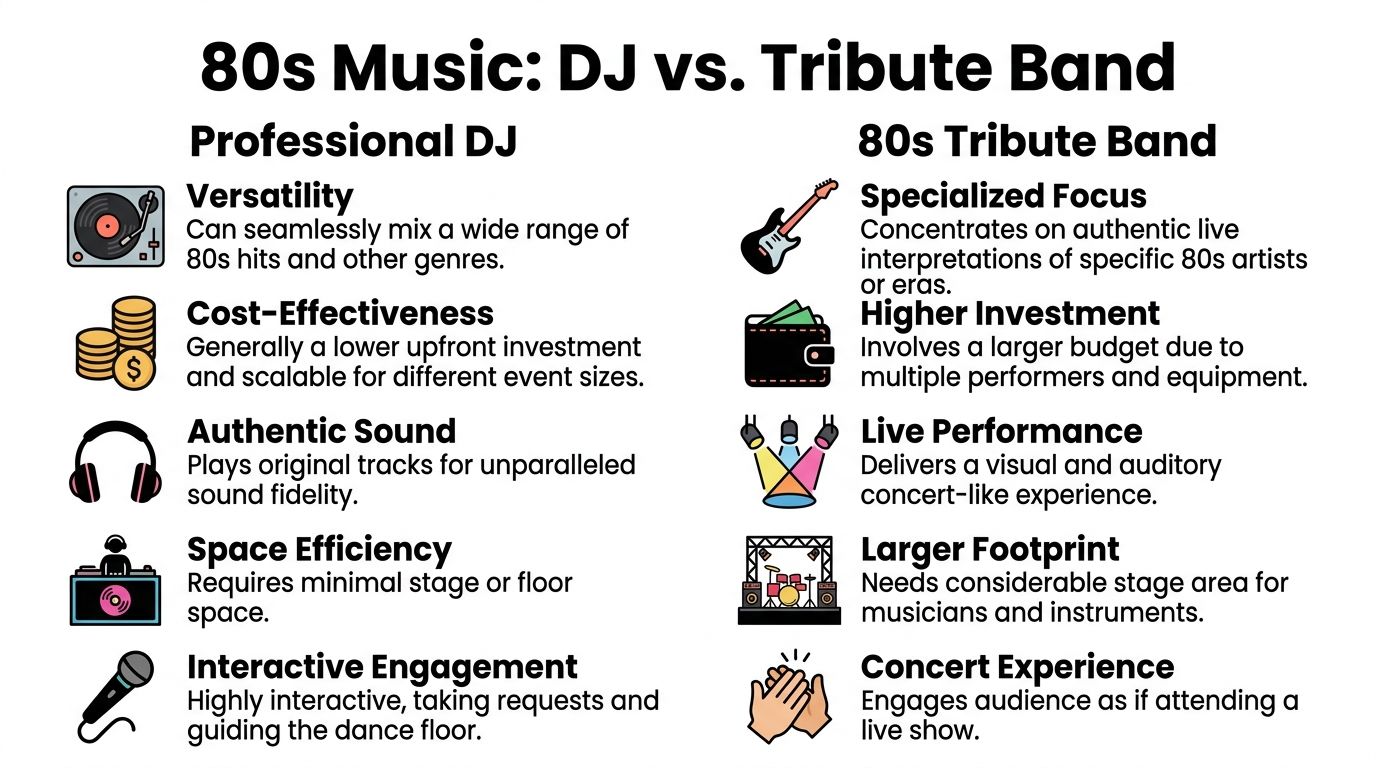
That flexibility has a measurable advantage in mixed-format events. UK gig platform data shows DJs can outperform bands by up to 18% in dance floor retention because they can pivot in real time rather than work from a fixed setlist, according to this UK gig platform comparison.
Why DJs often win the full night
A tribute band can own a headline moment. A DJ can manage the whole event.
That matters when your evening is not a straight concert. Weddings and private parties usually need several jobs done well:
- ease guests in without overloading the room
- build from drinks to dancing naturally
- handle requests without derailing the brief
- cover every transition cleanly
- keep music going without silent reset periods
A specialist DJ can also give you the original records, which matters for 80s music more than people sometimes admit. Certain tracks are loved because of the exact production, drum programming, vocal texture, and mix. A live version can be fun. The original often gets the bigger immediate reaction.
Side-by-side trade-offs
| Factor | Professional DJ | 80s tribute band |
|---|---|---|
| Playlist range | Very broad | Narrower by design |
| Breaks | Continuous music | Set breaks required |
| Space needs | Small footprint | Larger stage area |
| Requests | Easier to handle | Limited by repertoire |
| Visual theatre | Lower unless enhanced | High |
| Adaptability | Strong | Moderate |
A DJ also suits awkward venues better. If you are in a London basement bar, a Kent marquee with a tight power plan, or a venue where speeches have overrun and the evening schedule is compressed, a compact and responsive setup is often the safer choice.
The best fit for mixed-age crowds
Mixed-age crowds are where DJs tend to earn their keep. One generation may want pure 80s for the first burst, but later on the room often needs wider movement. Some guests want disco, some want 90s, some want commercial singalongs, some want a final run of floor-fillers.
A band can deliver a great chapter. A DJ can write the whole night. For events that need that kind of range, a bespoke approach like the one shown in this VinylGold DJ booth image is often closer to what planners are looking for.
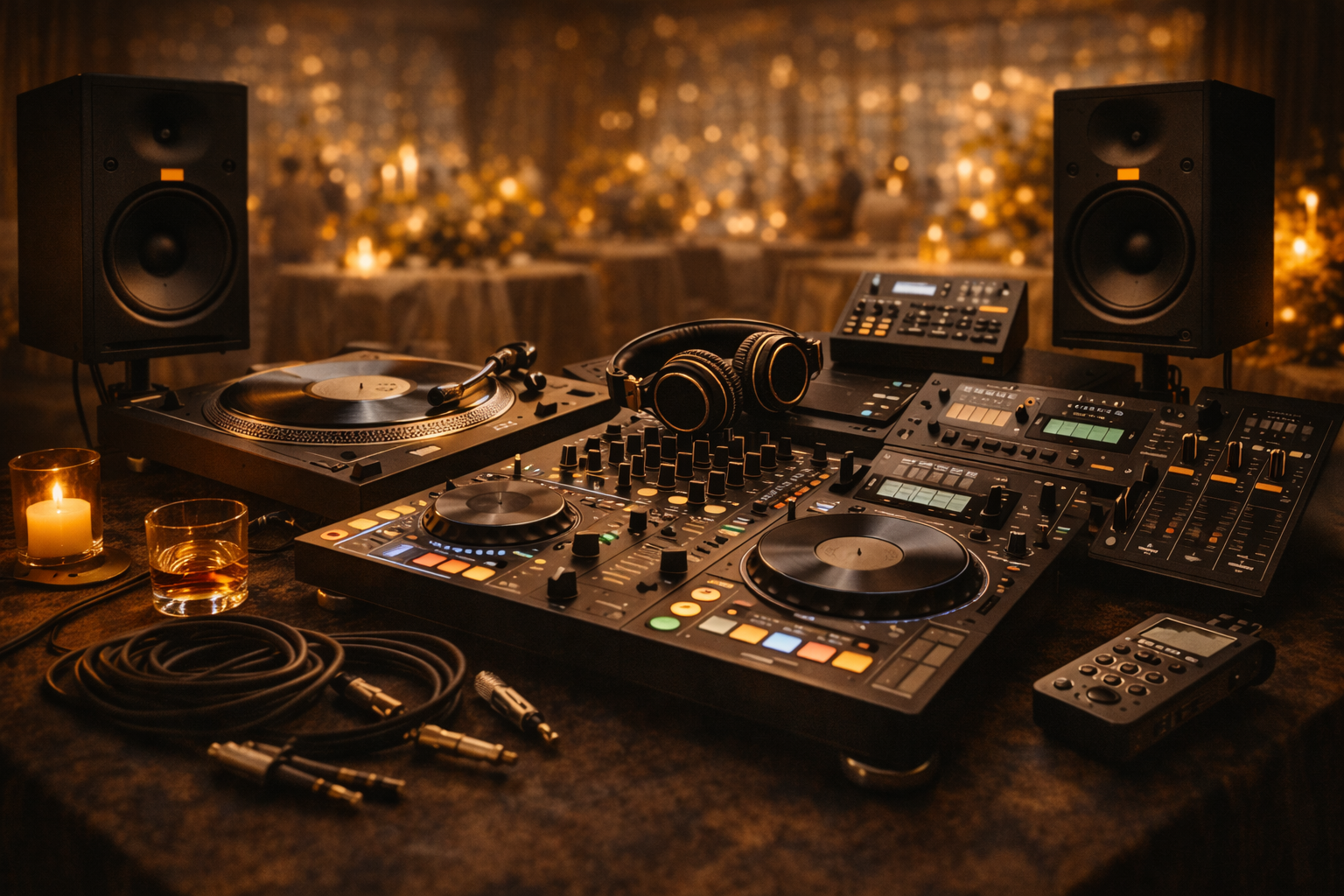
If your priority is a packed dance floor from first song to final track, flexibility matters more than spectacle.
Your Final Decision Band vs DJ
The right answer depends on what success looks like at your event.
Choose an 80s tribute band if you want a visual focal point, your venue can support live production properly, and your budget allows for a more complex setup. A band is the stronger choice when the entertainment needs to feel like a feature. It suits parties where guests will enjoy watching, cheering, and buying into the performance as part of the night.
Choose a DJ if you want control, range, and continuous flow. That is usually the better route for weddings with varied age groups, private parties where requests matter, and corporate events where the night needs to stay polished and adaptable rather than fixed around stage sets.
A simple rule helps. If your brief says “give us a show”, book the band. If your brief says “keep everyone dancing”, book the DJ.
In London and Kent, the practical side often decides it. Access, sound limits, room shape, power, timings, and crowd mix all matter just as much as music taste. Good entertainment starts with honesty about the room.
If you want a concise visual cue for the DJ route, this VinylGold logo reference reflects the polished, curated end of that market.

Your 80s Tribute Band Questions Answered
A typical scenario in London or Kent goes like this. The client loves the idea of an 80s tribute band, then the practical questions start once timings, access, and guest expectations hit the schedule. These are the points to pin down before you book.
How long does an 80s tribute band usually perform for
Most tribute bands work in sets, not one long performance. You will usually get two or three live sets with breaks in between, and the exact running order should be agreed before contracts are signed.
Ask for the timeline in writing. It helps you plan speeches, food, venue sound limits, and the point when you want the dance floor to peak.
Can guests request songs
Sometimes, but within limits. A tribute band can only play songs it has rehearsed, and some acts stay tightly focused on a particular 80s style or artist mix.
If guest requests matter, ask for the set list early and be clear about your must-plays. A DJ is still the easier option if you want the freedom to react to the room on the night.
What happens during the band’s breaks
This catches clients out more often than it should. Some bands include background music or a playlist between sets. Others finish a set and leave silence unless the venue, planner, or client has arranged cover.
That gap matters. At weddings and private parties, a flat room during a break can undo the momentum the band has just built, so confirm who is responsible for music between sets.
Do tribute bands need much from the venue
Usually, yes. Live 80s acts need practical support from the room, not just enthusiasm from the client. Power, stage space, load-in access, setup time, and a sensible soundcheck window all need checking in advance.
As noted earlier, some bands specify multiple standard mains sockets near the performance area. If your venue is a basement bar in Soho, a tight pub in Kent, or a listed building with strict sound rules, those details can decide whether a band is realistic at all.
Is a band or DJ better for a smaller London or Kent venue
In smaller rooms, a DJ is often the cleaner fit.
A professional DJ takes up less space, gets in and out faster, keeps music continuous, and can switch from synth-pop to soul, disco, or current floor-fillers without stopping the night. A tribute band can still work in a compact venue, but only if the room has the footprint, power, and access to support it properly. That is why I usually advise clients to choose the atmosphere first, then check whether the venue can deliver it.
If you want 80s energy without the planning headache, VinylGold delivers customized DJ sets for weddings, parties, and corporate events across London and Kent, with smart programming, reliable sound, and a dance floor that never loses momentum.